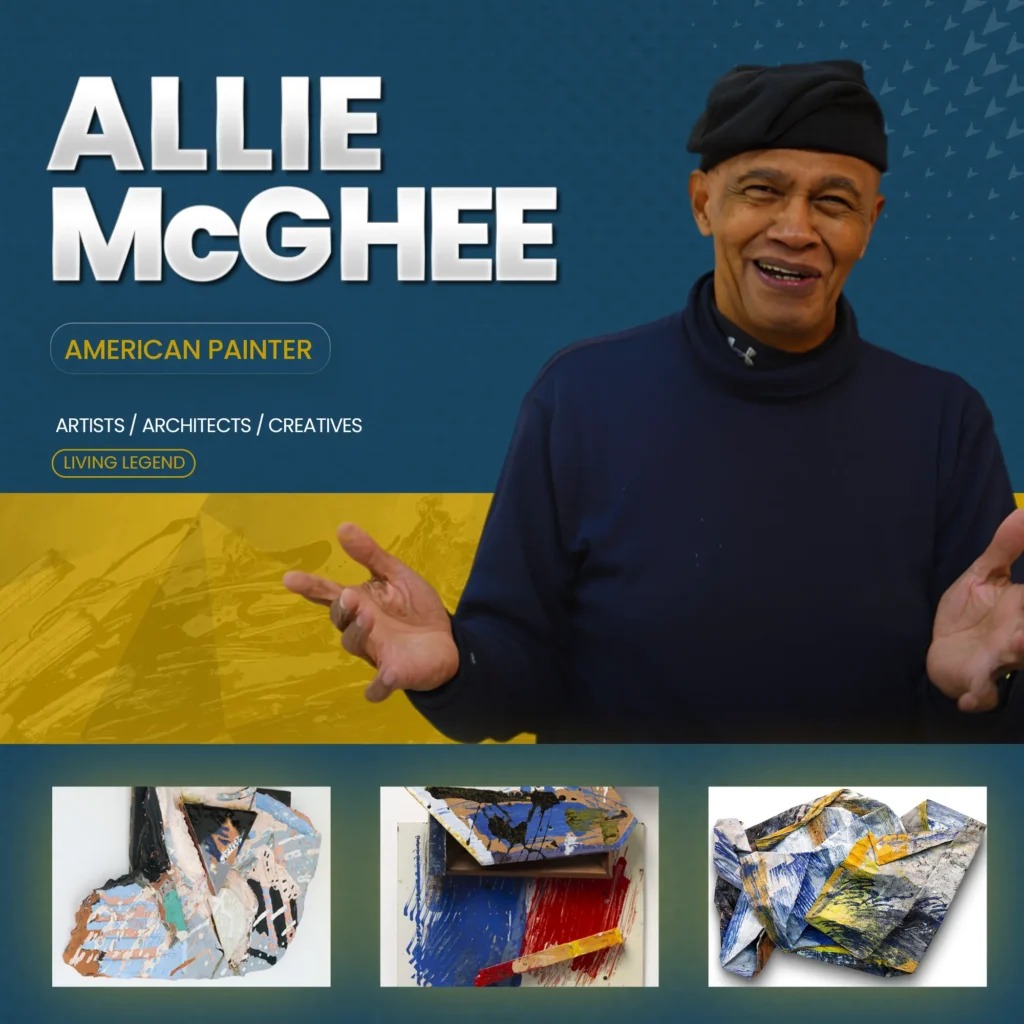
McGhee was raised in West Virginia and grew up in Detroit’s east side neighborhoods during a time when the city was defined by its assembly lines of cars going in and out of factories and jazz clubs every night – scenes that would remain lodged in McGhee’s imagination.
His technical training took place at the College for Creative Studies/Detroit Society of Arts and Crafts, where he gained experience from being exposed to realism and figurative painting, studying African art, modernist pioneers, and most importantly, jazz – the music of Detroit’s streets and clubs.
By the late 1960s, McGhee had found his own voice within abstraction.
He uses swirling forms, intense colors, and gestural marks to suggest cosmic energy and urban dynamism.
His canvases are improvisations: brushstrokes like riffs, shapes as chords, colors like rhythms that clash and harmonize.
For McGhee, abstraction is no escape, but a way of telling deeper truths about movement, spirit, and survival – especially given the fact that he was raised during the height of Detroit’s 1960s turmoil and Black Arts Movement.
While his contemporaries turned to figurative protest art, McGhee insisted that abstraction could be just as radical. He suggested that Black artists need not be confined to struggle – that abstraction could represent Black consciousness, power, and resilience just as well.



 Please check your email for your login details.