

 Please check your email for your login details.
If Detroit is a city known for teaching by doing, Marcus Belgrave taught by playing.
His infamous horn was more than just an instrument…
It was a welcome mat, an open door, a signal to come in and stay awhile.

Eternal Legend
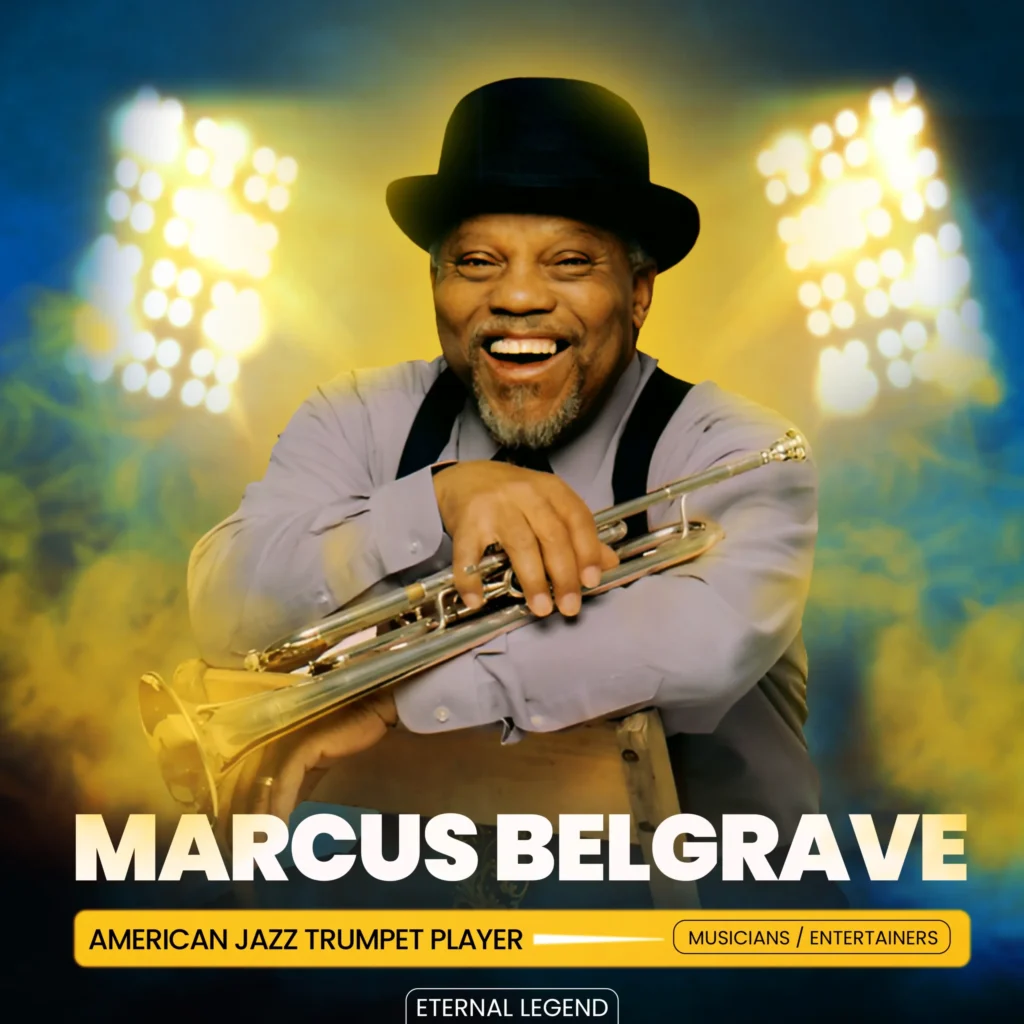
Born: June 12, 1936, Chester, Pennsylvania
Died: May 24, 2015, Ann Arbor, Michigan
Detroit Era: 1963–2015
Legacy: Jazz trumpeter, Motown session player, educator, and mentor to generations of Detroit musicians. Motown's unofficial jazz ambassador, cementing the lineage of Louis Armstrong and Clifford Brown into a uniquely Detroit sound: warm, soulful, and endlessly generous.
If Detroit is a city known for teaching by doing, Marcus Belgrave taught by playing.
His infamous horn was more than just an instrument…
It was a welcome mat, an open door, a signal to come in and stay awhile.
Belgrave’s path started in Chester, Pennsylvania, where he was mentored by the legendary musician Clifford Brown.
By his early 20s, he was touring with Ray Charles and taking in the intersection of jazz, blues, and gospel that would go on to define his style.
In 1963, he arrived in Detroit to play with Motown Records’ studio band, and just like that, what had started out as just another gig quickly evolved into an expansive career.
In Motown, Belgrave’s trumpet could be heard on recordings by Stevie Wonder, Martha Reeves, the Vandellas, the Temptations, and Marvin Gaye.
He could move from clear, brassy fanfare to delicate, breathy phrasing without ever sacrificing the groove.
He seamlessly fused jazz and rock, and in doing so, he helped define Motown’s musical footprint.
The studio, however, was only one part of his story.
The jazz clubs of Detroit — Baker’s Keyboard Lounge, Cobb’s Corner — quickly became his second home.
Belgrave understood that the city’s music scene is only as strong as the next generation.
During the 1970s, he founded the Detroit Jazz Center and later taught at the Oberlin Conservatory, Michigan State University, and numerous workshops in Detroit Public Schools.
His student body was like a who’s who of contemporary jazz: Karriem Riggins, Geri Allen, Kenny Garrett, Regina Carter, and Robert Hurst.
He didn’t just teach notes — he taught trust, hustle, and how to carry yourself as if you belong on any stage.
Whether he was performing in a smoky night club or at the Detroit International Jazz Festival, Belgrave’s playing had a conversational intimacy.
In his work, you could hear the joy of collaboration and the city’s seamless blend of grace and raw strength.
He was just as at home with straight forward bebop as he was Motown funk or avant-garde.
To Marcus, genres weren’t just fences… they were doors.
Marcus Belgrave didn’t just make music for Detroit…
He connected eras, crossed genres, and turned students into likeminded peers.
Wherever he lifted his horn, it felt more like being part of an intimate conversation than a performance.

Victoria Jackson (Editor In Chief)
Victoria Jackson is a lifelong student and sharp-eyed documentarian of all things Detroit, from its rich musical roots and cultural icons to its shifting neighborhoods, storied architecture, and underground legends. With her finger firmly on the pulse of both the city’s vibrant past and its rapidly unfolding future, she brings a deeply personal, historically grounded lens to every piece she writes.
Published on: August 19, 2025