or

By signing in, I accept the Rebuildetroit.com Terms of Use.

Agent Registration

Find Your Agent Profile

Agent Registration

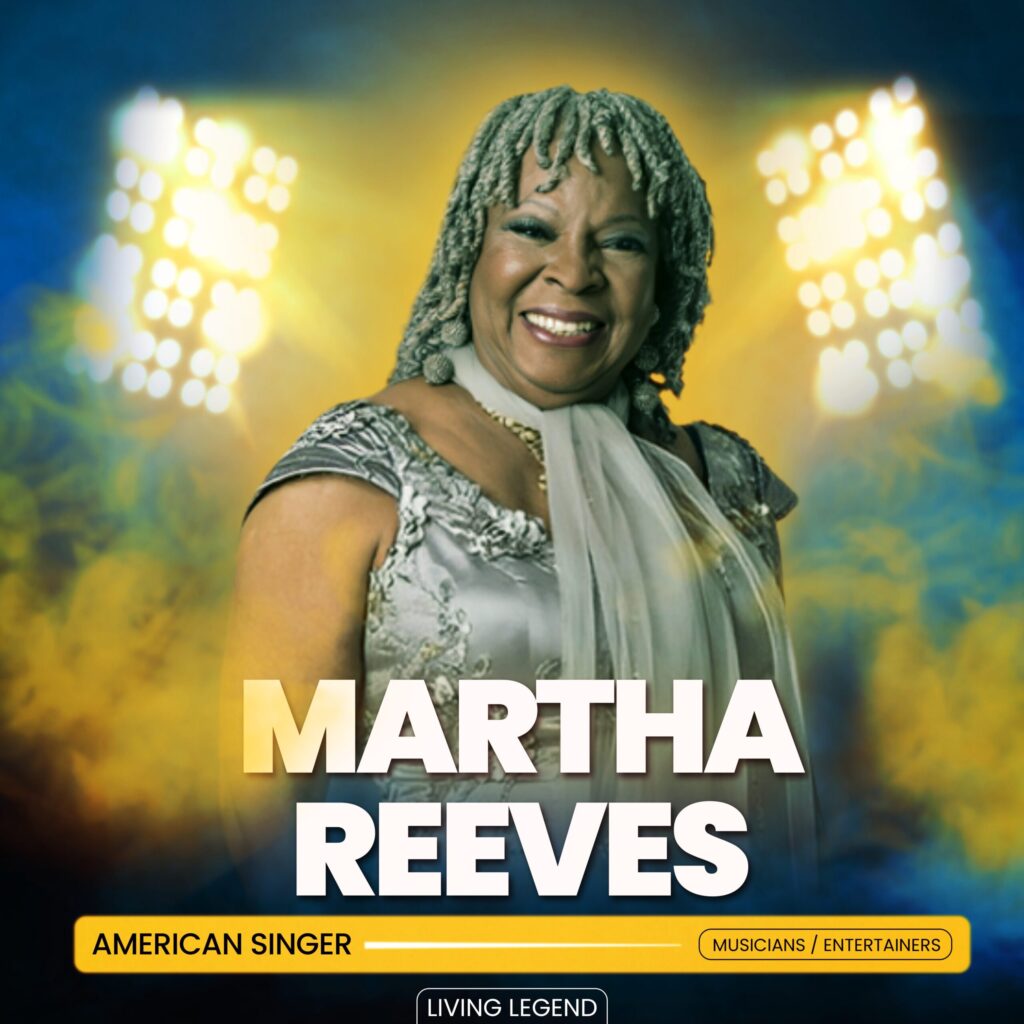
Martha Reeves: Motown’s Fiery Soul Siren

313 Legends

Martha Reeves

Living Legend

Martha Reeves: Motown’s Fiery Soul Siren

Born: July 18, 1941, in Eufaula, Alabama

Raised: Detroit, Michigan

Detroit Years: 1943-present

Legacy: Lead singer for Martha and the Vandellas

Introduction

By the time Martha Reeves first picked up a microphone, she already had that signature Detroit aesthetic. 

The energy. 

The edge. 

In the face of polished perfection, Martha delivered something wilder – sweaty church exuberance mixed with downtown strut.

She didn’t whisper…she belted.

And if she told you it was time to dance in the streets, you did so without questioning it.

The Early Years of an Icon

Martha moved to Detroit from Eufaula, Alabama as a baby with her family, part of the Great Migration of Black families seeking work, dignity, and opportunity.

Hers was a sacred house where music was played daily: Gospel in the morning and blues at night.

One of 11 children, she sang in the Detroit Metropolitan Church choir and took vocal lessons in her youth.

Martha’s rise was no slow, shy road to stardom.

In the 1950s, Detroit was a musical furnace, one where every bar contained a stage and every block had its hustlers, leading Martha to start working as a singer long before most teens even started dating.

At Northeastern High School, she sang in local talent shows and joined a girl group called The Fascinations, but her big break came in the most mundane way imaginable…by simply answering the phone.

Martha Goes Motown

Martha worked a day job at a dry cleaner and sang nights at Detroit clubs like The 20 Grand, a hot spot for emerging R&B stars in the 1960s. 

She also played a solo gig one night at Detroit’s Club 20, and that’s where she would be discovered by William “Mickey” Stevenson, a talent scout and A&R man for Motown Records.

Stevenson requested that she audition, but when she went to Hitsville to sing for him, she was told no appointment was available. 

Her response?

She did what any self-respecting Detroit girl would do: she made herself useful.

She began answering phones, typing memos, running errands, and filling in for background singers whenever sessions were needed.

It was the kind of down-home hustle she’d go on to make history for.

Heatwave Strikes & Radio Riots

In the 1960s, Martha led a trio formerly known as the Del-Phis, who quickly became known as the Del-Phis and the Vandellas.

It was a time when Motown was at its golden age, and Martha and the Vandellas stood out among a sea of polished girl groups.

Where the Supremes were refined and meek, the Vandellas were loud and brassy, encouraging their listeners to get up and move.

The group released “Come and Get These Memories,” followed by “Heat Wave” in 1963.

The latter was more than a hit – it was an eruption.

Finally, the Vandellas had their first Top 10 hit: a gospel-charged, rhythm-filled anthem that burned through speakers nationwide.

Then came “Quicksand” and “Nowhere to Run,” followed by the iconic dance anthem “Dancing in the Street” in 1964, cowritten by Marvin Gaye, William Stevenson, and Ivy Jo Hunter – a protest cloaked in a party anthem that would go on to become the soundtrack of revolution.

Vietnam. 

Civil rights. 

Detroit’s 1967 rebellion.

“Dancing in the Streets” bassline roared through it all.

When Martha said, “All we need is music – sweet music,” she was not only inviting joy – she was giving people permission to dance their way through even the most painful days. 

The Fire and the Fade

Martha and the Vandellas remained one of Motown’s biggest acts through the mid-1960s, but they too were eventually pulled in by changing tastes, label politics, and personal tensions.

By the late 1960s, the hits had slowed, with mega stars like the Supremes, Stevie Wonder, and Marvin Gaye all but replacing Motown with their solo careers.

And when Berry Gordy moved the label to Los Angeles in the early 1970s, Reeves remained – her heart still rooted in Detroit.

She started a solo career with modest success but never forgot her roots.

Detroit wasn’t just where she was raised – it was who she was.

Public Office, Personal Struggle, and Resilience

Offstage, Martha Reeves battled mental health and addiction.

She told the truth about her rehabilitation and refused to shroud her pain behind Motown’s tinsel and glamour, her willingness to confront her own demons becoming a kind of superpower.

This all culminated when Martha did something that few soul queens ever dared to do: she ran for public office in 2005 and won, going on to represent Detroit on the Detroit City Council for one term with a focus on the arts, youth programs, and city revitalization efforts.

In short, she brought that same passion to politics that she had brought to music: blunt, honest, and always full of a genuine love for her city.

Martha’s Lasting Legacy

“Dancing in the Street” is still a much-loved anthem, one regularly heard at festivals, in commercials, in flash mobs, and even at political rallies.

As for Reeves – she has never stopped performing. 

Some of her modern stage appearances have included Europe’s White House and the Rock and Roll Hall of Fame in 1995, making her a core part of Motown’s living legacy.

Yet through it all, she has always remained rooted in Detroit. 

All in all, Martha Reeves is much more than just a nostalgic act.

She’s what Detroit sounded like in its heyday. 

When it believed it could be something more than a place of struggle and strife.

Martha sang like a diva, but her voice was like a freight train – one bursting through heartbreak. 

She did not beg for respect. 

She earned it with a voice that broke down walls.

She gave soul music edge.

And she gave Detroit a soundtrack it will never forget, reminding us that sometimes the revolution is sung – not televised.

About the Author

Victoria Jackson

Victoria Jackson (Editor In Chief)

Victoria Jackson is a lifelong student and sharp-eyed documentarian of all things Detroit, from its rich musical roots and cultural icons to its shifting neighborhoods, storied architecture, and underground legends. With her finger firmly on the pulse of both the city’s vibrant past and its rapidly unfolding future, she brings a deeply personal, historically grounded lens to every piece she writes.

Published on: July 25, 2025