or

By signing in, I accept the Rebuildetroit.com Terms of Use.

Agent Registration

Find Your Agent Profile

Agent Registration

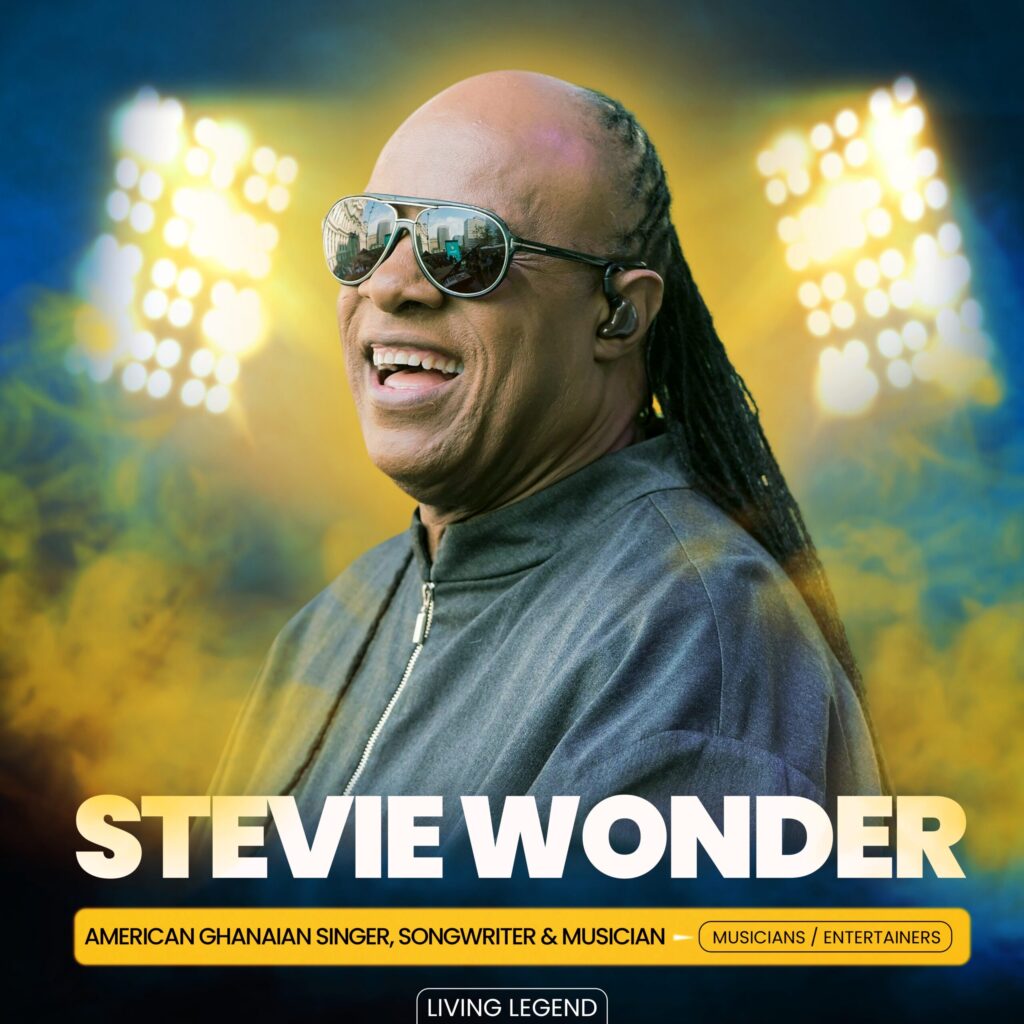
Stevie Wonder: The Sound of Detroit

313 Legends

Stevie Wonder

Living Legend

Stevie Wonder: The Sound of Detroit

Born: May 13, 1950, in Saginaw, Michigan

Raised: Detroit, Michigan

Detroit Years: 1955 to present (strong legacy and ongoing ties)

Legacy: kid prodigy, musical genius, social visionary, Motown's miracle man, Detroit's eternal heartbeat.

Introduction

Stevie Wonder is the kind of musician that only Detroit can produce – one-part church, one-part factory, one-part raw emotion.

He didn’t get his start because he wanted to perform.

He wanted freedom.

A blind boy from the east side of the city with a gift that most grown-ups could not comprehend, Stevie rose to fame like a prophecy. 

He was a Motown miracle: 

A musical powerhouse with a soul far too big for any box.

Little did anyone know – they had a future hitmaker on their hands.

Little Stevie from the Projects

Born Stevie Hardaway Judkins (Morris) in Saginaw, Michigan, on May 13, 1950, Stevie would later move to Detroit as a toddler with his mother Lula Mae shortly after his parents separated. 

They settled down in the infamous Brewster-Douglass housing projects – the same place Diana Ross and other Motown legends grew up – a concrete jungle where gospel and doo-wop were just as commonly heard as the clang of the city’s many factories.

Stevie went blind in infancy due to retinopathy of prematurity – a condition linked to his premature birth = and though he wasn’t able to see the world through his eyes…no one heard it quite like he did.

By the age of four, he was banging on pots and pans, by five, he was playing the piano, and by age eight, he had mastered the drums and harmonica.

Considered a natural, he joined the choir at Whitestone Baptist Church – a place where even the elders sat straighter when Stevie sang. 

There was simply something unreal about his sound…something that did not make sense coming out of such a small body.

Something that did not feel earthly. 

Signed, Sealed, and Delivered at 11

Ronnie White of The Miracles brought Stevie to Berry Gordy at the age of 11.

Gordy took a quick listen and immediately said yes, and then, “but we have to do something about that name.”

Such was the story of Little Stevie Wonder – a child prodigy signed to Motown’s Tamla label in 1961.

His first albums were shows of talent, but 1963’s “Fingertips (Part 2)” recorded live would be what launched him into the annals of history. 

By age 13, Stevie became the youngest recording artist to ever top the Billboard Hot 100.

Practically overnight, Detroit had another musical icon on their hands.

This time, one of wonder.

Growing up with Motown—and Outgrowing it

Through the 1960s, Stevie shed the “Little” and evolved with rare accuracy, putting out hit after hit:

“Uptight (Everything’s Alright)”

“I Was Made to Love Her”

“My Cherie Amour”

“For Once in My Life”

He was not just performing.

He was writing, producing, reimagining – all before he had barely even graduated high school.

And yet, even with endless hits, Stevie still wanted something more than just Motown polish. 

He wanted freedom.

The Genius Era: From Talking Book to Innervisions

By the time Stevie turned 21 in 1971, he had renegotiated his Motown contract, demanding full artistic control and ownership of his master recordings – a move most artists never make but one Stevie achieved before he was even old enough to legally drink.

What followed was an incredible album release streak from 1972 to 1976, which would later become known as “the Stevie Wonder Years”:

“Talking Book” (1972)

“Innervisions” (1973)

“Fulfillingness’ First Finale” (1974)

“Key of Life” (1976)

All of these albums are masterpieces – a symphony of gospel, jazz, funk, classical, reggae, and soul.

“Superstition” burst onto the scene like a siren. 

“Living for the City” was a social protest disguised as a ballad.

“Isn’t She Lovely” was his love letter to his newborn daughter. 

And “Village Ghetto Land” was a string quartet portrait of poverty.

This was Stevie’s world as he saw it – a stunning autobiography of America with Detroit positioned right at its forefront.

In the span of four years, Stevie won the Grammy Award for Album of the Year three times, each for a different album during his highly acclaimed “classic period” in the 1970s: 

  • Innervisions at the 16th Annual Grammy Awards in 1974. 
  • Fulfillingness’ First Finale at the 17th Annual Grammy Awards in 1975. 
  • Songs in the Key of Life at the 19th Annual Grammy Award in 1977. 

This made him the first Black artist to win it three times in a row.

He was not just crossing over…he was communicating soul without sight.

Music with a Mission

Even at the height of his fame, Stevie was not content with simply remaining in the studio. 

He wanted to use his newfound fortune as fuel for fighting injustice, civil rights, disability advocacy, and Black empowerment.

In the 1980s, he put in work supporting the creation of Martin Luther King Jr. Day as a national holiday, marching, lobbying, and even writing an anthem for King’s birthday.

He also raised money for inner-city schools, backed voter drives, and spoke out about race, inequality, and injustice, never forgetting the city that made him.

Later Years, Endless Influence

As time went on, radio began to change, and with it, so did tastes – yet Stevie remained timeless.

From “Part-time Lover” (1985) to “Overjoyed” (1986) to “That’s What Friends Are For” (1985, with Dionne Warwick & friends) – his voice continued to have a major influence on Detroiters and the world at large.

Even well in the 1990s and 2000s, he remained a symbol of integrity. 

A spiritual elder. 

A reference point in hip-hop, R&B, and soul, going as far as to perform at Obama’s inauguration.

He was also honored at the Kennedy Center, and everybody from Coolio to Drake has sampled his work.

Yet through it all, Stevie always remained loyal to Michigan, regularly returning to Detroit for graduations, fundraisers, community events, and funerals long after permanently moving to L.A. 

The Prodigy from Detroit

Stevie Wonder is no ordinary Detroit success story.

He’s Detroit personified – gritty, gifted, flawed, hopeful, and always creative. 

He took black brilliance and faced the world without sight, making Motown universal in the process.

From a little boy in the Brewster projects to the voice of global change – he has never forgotten his Detroit roots.

About the Author

Victoria Jackson

Victoria Jackson (Editor In Chief)

Victoria Jackson is a lifelong student and sharp-eyed documentarian of all things Detroit, from its rich musical roots and cultural icons to its shifting neighborhoods, storied architecture, and underground legends. With her finger firmly on the pulse of both the city’s vibrant past and its rapidly unfolding future, she brings a deeply personal, historically grounded lens to every piece she writes.

Published on: July 25, 2025