


 Please check your email for your login details.
Before the radio hits, the Grammys, and the worldwide recognition, Big Sean (birth name Sean Anderson) was just Sean from the West Side – an outgoing kid known for freestyling in hallways, battling it out in high school ciphers, and dreaming bigger than anyone else around him.
Big Sean: Detroit’s Platinum Prodigy
Categories: MUSICIANS & ENTERTAINERS
313 Legends
Big Sean
Living Legend
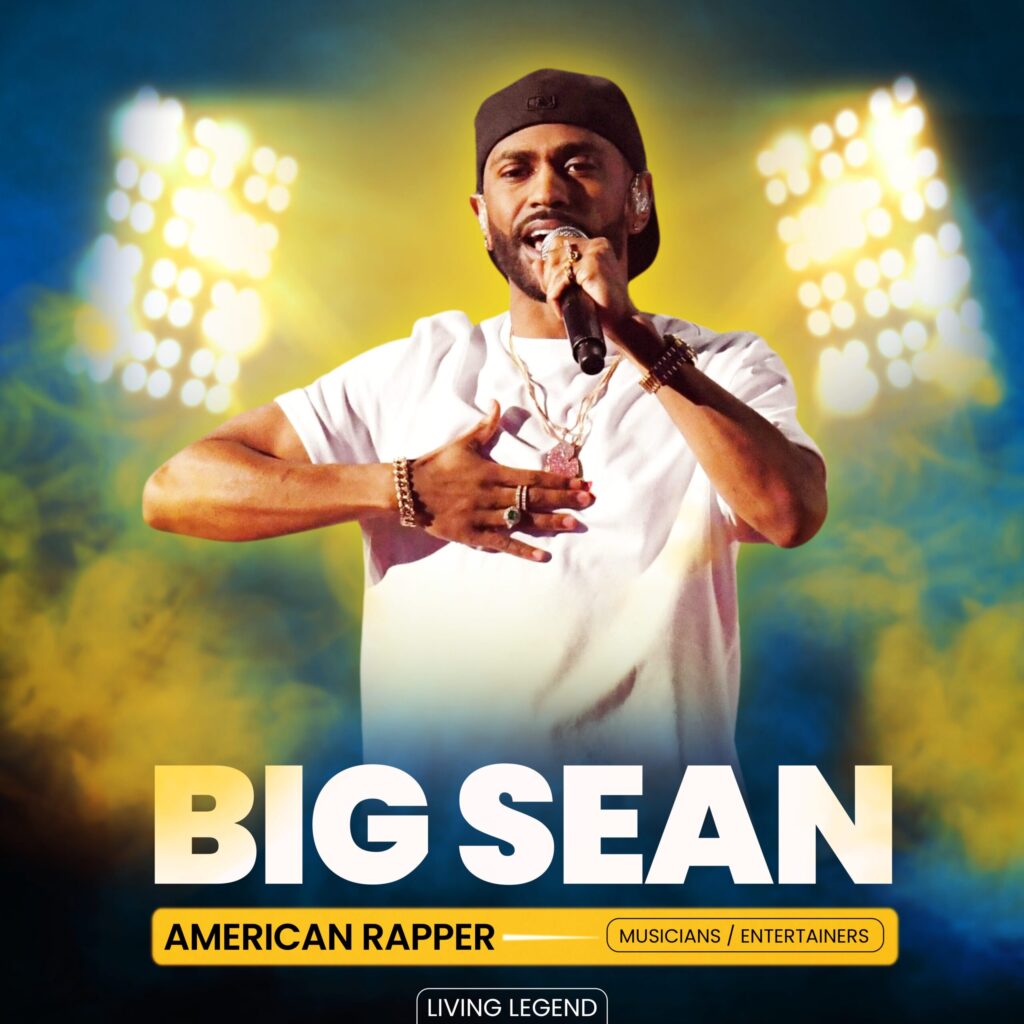
Born: Sean Michael Leonard Anderson, March 25, 1988, in Santa Monica, California.
Raised: Michigan, Detroit, Michigan (moved at three months old)
Legacy: Grammy-nominated rapper, philanthropist, entrepreneur, and modern lyrical voice of Detroit's young Black ambition.
Introduction
West Side Beginnings
Sean was born in Santa Monica, California, but his parents returned to their West Side Detroit roots when he was just three months old, which was where he got the bulk of his upbringing.
He grew up in a multigenerational Black household: his mom, Myra Anderson, was a schoolteacher, and his grandmother, Mildred V. Leonard, was a WW II veteran and one of the first Black female captains in the United States.
These women were his foundation and fire – not mere caretakers.
Sean attended the Detroit Waldorf School and then Cass Technical High School, one of the city’s elite magnet schools.
That said, his real curriculum came in the form writing bars, fighting for a seat at the table, and recording music whenever he could sneak into a studio or a radio station.
The Kanye Moment
In 2005, Sean made the kind of bold move Detroit values.
A local radio station, Hot 102.7, said Kanye West was visiting.
Not willing to let that opportunity slide between his fingers, Sean skipped class, showed up at the station, and slid Kanye his demo tape, getting him to stay long enough for a freestyle.
What followed was Sean rapping for an impressive ten minutes straight, barely taking a breath.
Needless to say, Kanye was impressed.
It didn’t happen overnight, but Sean signed to G.O.O.D. Music shortly thereafter – a boutique label under Kanye – eventually signing on to Def Jam two years later.
Just like that, Detroit had sent another one of it’s shining sons straight to the top.
Finally Famous
In 2011, Big Sean released his first album, “Finally Famous,” which opened with “My Last” featuring Chris Brown and “Dance” featuring Nicki Minaj.
The album was slick, confident, and full of inside jokes, clever metaphors, and just enough backpack-rap authenticity to keep his early fans hooked.
But Sean was not content being a one-hit wonder.
He followed “Finally Famous” up with the raw “Beware” and the introspective “Fire,” both of which were also included in his album “The Hall of Fame” (2013), then the album “Dark Sky Paradise” (2015) which included hits like “Blessings” featuring Drake and “I Don’t F*ck with You” (produced by DJ Mustard and Kanye) – a viral breakup song and unofficial theme for petty revenge.
Slowly, his flow sharpened.
His storytelling deepened.
And Detroit – and the world at large – became more and more enamored.
Detroit: The Mixtape, The Mindset
Sean dropped “Detroit, the mixtape,” in 2012 – a love letter to the city that had made him, not just another viral marketing move.
It included references to Seven Mile, Belle Isle, Coney Island spots, and post-bankruptcy Detroit, featuring artists like Kendrick Lamar, J Cole, Wale, and French Montana.
He was not glorifying the struggle.
He was saying: Still here, still standing, still strong.
In 2020, the sequel – “Detroit 2” – debuted at number 1 on the Billboard 200 with the reflective “Deep Reverence” featuring Nipsey Hussle and the explosive “Friday Night Cypher” featuring 42 Dugg, Tee Grizzley, Kash Doll, Royce da 5′ 9, and Eminem – in other words, multiple generations of Detroit emcees all on one track.
It wasn’t just an album.
It was a reunion.
Style, Struggles, and Soul
Though his exterior – expensive clothes, icy jewelry, and commercial success – may portray Big Sean as just another mainstream rapper, his interior says otherwise.
His lyrics alternate between braggadocio and profound introspection, touching on complex subjects like:
Mental health struggles, with him speaking out about therapy, depression, and suicidal thoughts in albums like “I Decided” (2017), which is full of existential questions, spiritual seeking, and rebirth themes.
Spirituality and legacy, especially since he was born a Christian yet always curious about alternative paths, often mixing law of attraction talk with street metaphors referencing prayer, meditation, reincarnation, and vibrational energy.
His loyalty to Detroit as a man with a deep connection to his hometown, often sporting Detroit Pistons, Tigers, or Lions gear and quoting local legends like Aretha Franklin, J Dilla, and former classmates.
In short, Sean represents a new kind of Detroit artist – one who builds globally but never stops supporting the place that made him.
Mogul Moves and Heartwork
in May 2012, Big Sean started the Sean Anderson Foundation for education, mental wellness, and community uplift.
Through his foundation, he has:
Donated laptops and school supplies to Detroit Public Schools.
Opened the Mogul Prep program for students learning the business of music.
Worked in partnership with Ford Motor Company and the Boys & Girls Clubs of Southeastern Michigan.
Advocated for black entrepreneurship, mental health visibility, and Detroit revitalization that doesn’t erase native Detroiters.
In short, Sean knows the danger of success: that it can often make you forget where you came from.
Lucky for Detroit…he’s not a man who forgets.
The Legacy Continues
Big Sean has amassed:
Six studio albums, not to mention multiple Platinum plaques and Grammy nominations, becoming one of hip-hop’s most consistent and respected lyricists – all without ever changing his voice.
You can still hear the sound of Detroit’s West Side in his cadence.
You can still see glimpses of that Cass Tech kid who skipped lunch to rap in the hallways and the boy who slipped into radio stations chasing dreams.
Big Sean never turned his back on Detroit.
He took Detroit with him.
About the Author

Victoria Jackson (Editor In Chief)
Victoria Jackson is a lifelong student and sharp-eyed documentarian of all things Detroit, from its rich musical roots and cultural icons to its shifting neighborhoods, storied architecture, and underground legends. With her finger firmly on the pulse of both the city’s vibrant past and its rapidly unfolding future, she brings a deeply personal, historically grounded lens to every piece she writes.
Published on: July 25, 2025