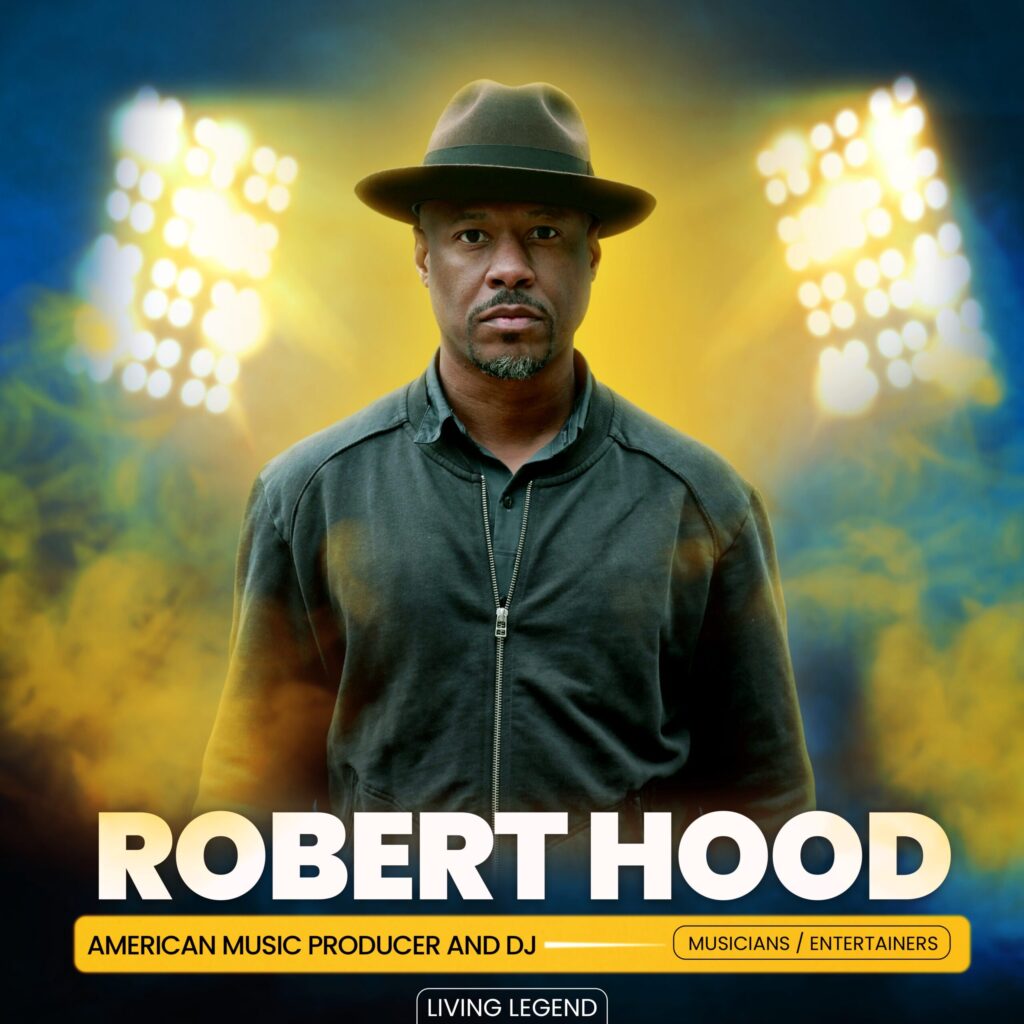
Born onto Detroit’s east side, where factories had long since closed their doors and white flight was the norm, Hood found rhythm where others found ruin.
He’s one of Motown’s sons and the architect of a new kind of gospel: technology as a form of resistance, not escape.
It was a desire that would lead to him becoming one of the founding members of Underground Resistance (UR), a militant musical collective alongside Jeff Mills and “Mad” Mike Banks in the late 80s and early 90s.
This was no ordinary music group.
They wore ski masks.
They released tracks without faces.
And they weren’t seeking fame.
They merely wanted change.
In short: UR wasn’t music – it was a manifesto.
Hood’s contribution?
A sharper blade.
He single-handedly invented minimal techno – cutting out the excess, the decoration, and getting to the raw, unrelenting pulse below.
But this was never just about sound.
It was a statement on survival – something far from the norm in Hood’s Detroit.
In an era where jobs were disappearing, families were crumbling, neighborhoods were falling due to blight, and the mainstream had moved on, the underground was thriving.
Tracks like “Minus” and entire albums like “Internal Empire” were not just club bangers.
They were lyrical structures – little cathedrals of repetition, movement, and refusal.
This was rejection of capitalist excess.
A sonic protest you could get lost in.
One that led to an inevitable shift.



 Please check your email for your login details.