
or

By signing in, I accept the Rebuildetroit.com Terms of Use.

Agent Registration

Find Your Agent Profile

Agent Registration

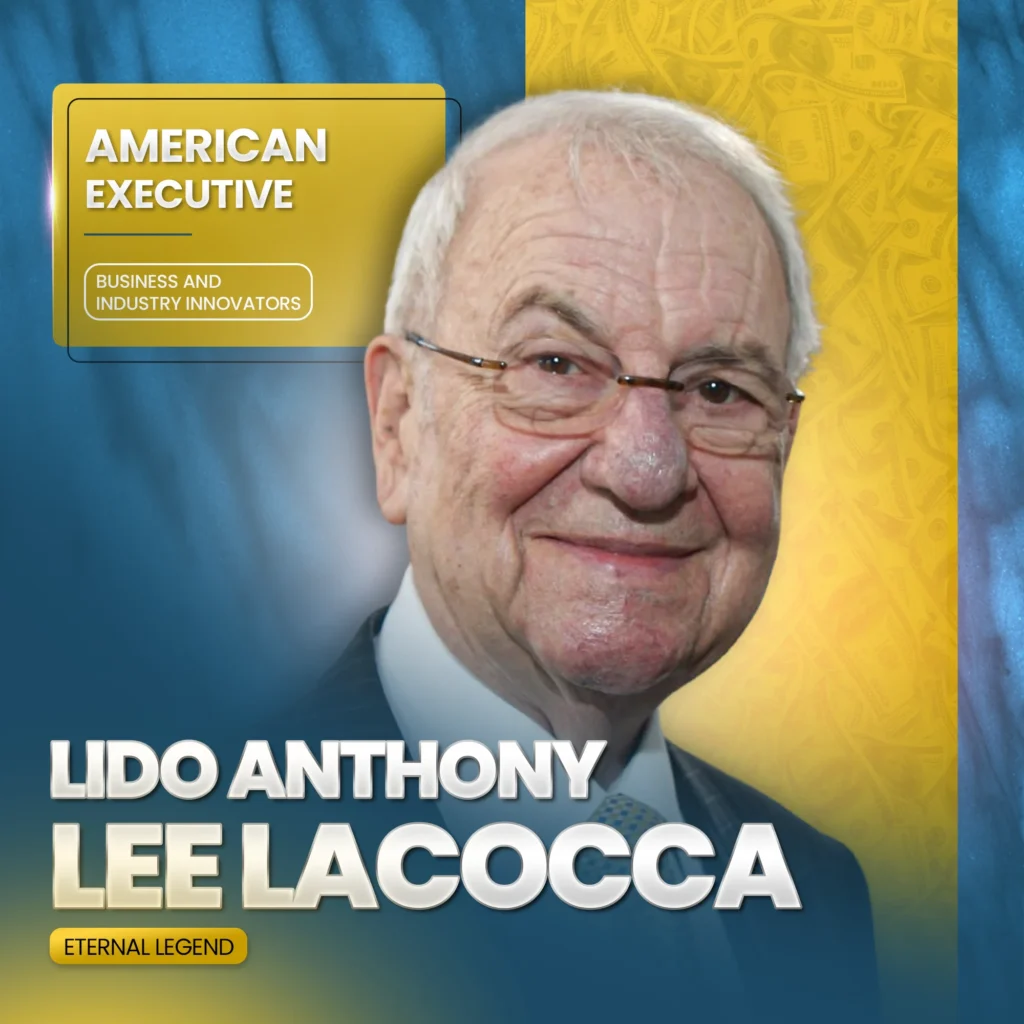
Lido Anthony “Lee” Lacocca: The Showman Who Saved Chrysler and Gave Detroit a Second Act

313 Legends

Lee Lacocca

Eternal Legend

Lido Anthony “Lee” Lacocca: The Showman Who Saved Chrysler and Gave Detroit a Second Act

Born: October 15, 1924, in Allentown, Pennsylvania.
Died: July 2, 2019, in Bel Air, California.
Detroit Era: 1946-1992
Legacy: Creator of the Ford Mustang and Chrysler Corporation. Public face of the American auto industry's fight for survival.

Introduction

Lee Lacocca did not merely walk into Detroit.

He stormed in wearing a three-piece suit with a calculator in one hand and a comeback story in the other.

He wasn’t born in the Motor City, yet Detroit became his stage, and he worked it like no one who has ever come before or after: a blue-collar evangelist in a white-collar war, a steel-willed CEO who made middle America believe again – in cars and in American grit.

If Henry Ford was the prophet and Walter Chrysler the engineer, Lacocca was the salesman and resurrectionist.

And in the 1980s, when Chrysler was on life support and Detroit was bleeding out jobs, he did something few others thought was possible: he brought a dead company – and through it, a wounded city – back to life.

From Allentown to the Assembly Line

Lido Anthony Lee Lacocca was born in Allentown, Pennsylvania, in 1924 to Italian immigrant parents.

Early on, his father – a hot dog vendor turned entrepreneur – taught him the importance of hustle, image, and risk, core tenets that would have a lifelong impact on him.

He would later go on to graduate from Lehigh University and then earn a master’s degree from Princeton – an unusual turn for someone used to working on Detroit’s shop floors.

But such was the plan.

Lacocca worked briefly during WW II for a chemical company before joining Ford Motor Company in 1946 just as the city was entering the post-war boom, starting in engineering until he realized his gift wasn’t drawing boards – it was convincing people that what they were building was worthwhile.

The Mustang: Detroit's Coolest Gamble

By the 1960s Lacocca was Vice President and General Manager of the Ford Division.

What he came up with would become one of the most iconic American cars ever built: the Ford Mustang, which launched in 1964 and sold over 400,000 models in its first year.

This wasn’t just a car – this was a cultural experience.

Speed, rebellion, and the American Dream on four wheels.

Lacocca didn’t just market it as a product.

He started a movement that reached into the soul of a generation just as Detroit was showing strain.

Success with the Mustang made Lacocca a legend at Ford – and its president by 1970.

But corporate kingdoms are brittle.

And egos are just as easily ignited.

Fired by Ford & Hired by History

In the wake of skyrocketing profits, Lacocca clashed with Henry Ford II, the founder’s grandson.

Their relationship was like oil and water: Lacocca was brash, Ford was proud.

This ultimately led to Lacocca being fired in 1978, sending shockwaves through the industry.

But he didn’t sulk.

He didn’t retreat.

Instead, his next chapter became the greatest corporate comeback story in American history. Because across town, Chrysler was dying.

Saving Chrysler: Detroit's Industrial Resurrection

In the late 1970s, Chrysler was in a freefall – underwater in debt, losing market share to Japanese automakers, and losing jobs in a city stricken by white flight and deindustrialization.

They needed a miracle.

And they got Lacocca.

He became CEO in 1979 and did something no other auto executive had ever done before: he asked Washington for a bailout.

“Not for greed,” he said, “for survival.”

He also famously said:

“I was not hired to officiate at a funeral. I came to give birth to a rebirth.”

The federal government agreed, giving Chrysler a $1.5 billion loan.

Lacocca then axed executive salaries, closed plants, renegotiated with unions, and pushed innovation even harder.

In the end, Chrysler repaid the loan in full seven years later, in 1983.

It was nothing less than miraculous, and Lacocca was a national folk hero who even starred in his own TV commercials, proudly stating:

“If you can find a better car, buy it.”

The Minivan Revolution

Ford had the Mustang, but Lacocca gave Chrysler the minivan – a drab box on wheels that changed the suburban family forever.

In 1984, the Dodge Caravan and the Plymouth Voyager hit the market, changing how Americans traveled, parented, and packed for soccer practice.

It wasn’t sexy, yet it was brilliant all the same.

The minivan would prove to be the most successful vehicle category of the decade – and with it, Chrysler was back in full force – with Lacocca’s fingerprints on every door handle.

Detroit's Showman-in-Chief

Lee Lacocca wasn’t just Chrysler’s CEO.

He was the unofficial face of Detroit’s industrial comeback.

He appeared in Time magazine.

He considered running for president.

He dined with Reagan, sparred with Congress, and spoke at union halls.

While most Americans feared decline, Lacocca preached resilience.

He fought for fuel efficiency before it was popular.

He funded Statue of Liberty renovations when others dropped the project.

His stay in Detroit came as most of the corporate class moved to the suburbs.

He believed in the city because he believed in its workers.

And in return, they believed in him.

Later Years and Legacy

Although Lacocca left Chrysler in 1992, he remained influential in its core operations for decades to come.

His two best-selling autobiographies are some of the best ever written, and he remained a frequent commentator on business, politics, and America’s waning middle class before dying in 2019 at the age of 94 with a legacy that stretched far beyond cars.

To Detroiters, he wasn’t just a man who saved a company.

He was a man who taught a city how to fight for itself.

Final Word

Lee Lacocca always remembered his roots.

He never let anyone tell him the game was over.

And he never apologized for thinking big.

The American car wasn’t invented by him, yet he redefined what it meant for a generation losing faith, giving Detroit its second wind.

For that, the city will never forget him.

About the Author

Victoria Jackson

Victoria Jackson (Editor In Chief)

Victoria Jackson is a lifelong student and sharp-eyed documentarian of all things Detroit, from its rich musical roots and cultural icons to its shifting neighborhoods, storied architecture, and underground legends. With her finger firmly on the pulse of both the city’s vibrant past and its rapidly unfolding future, she brings a deeply personal, historically grounded lens to every piece she writes.

Published on: August 18, 2025