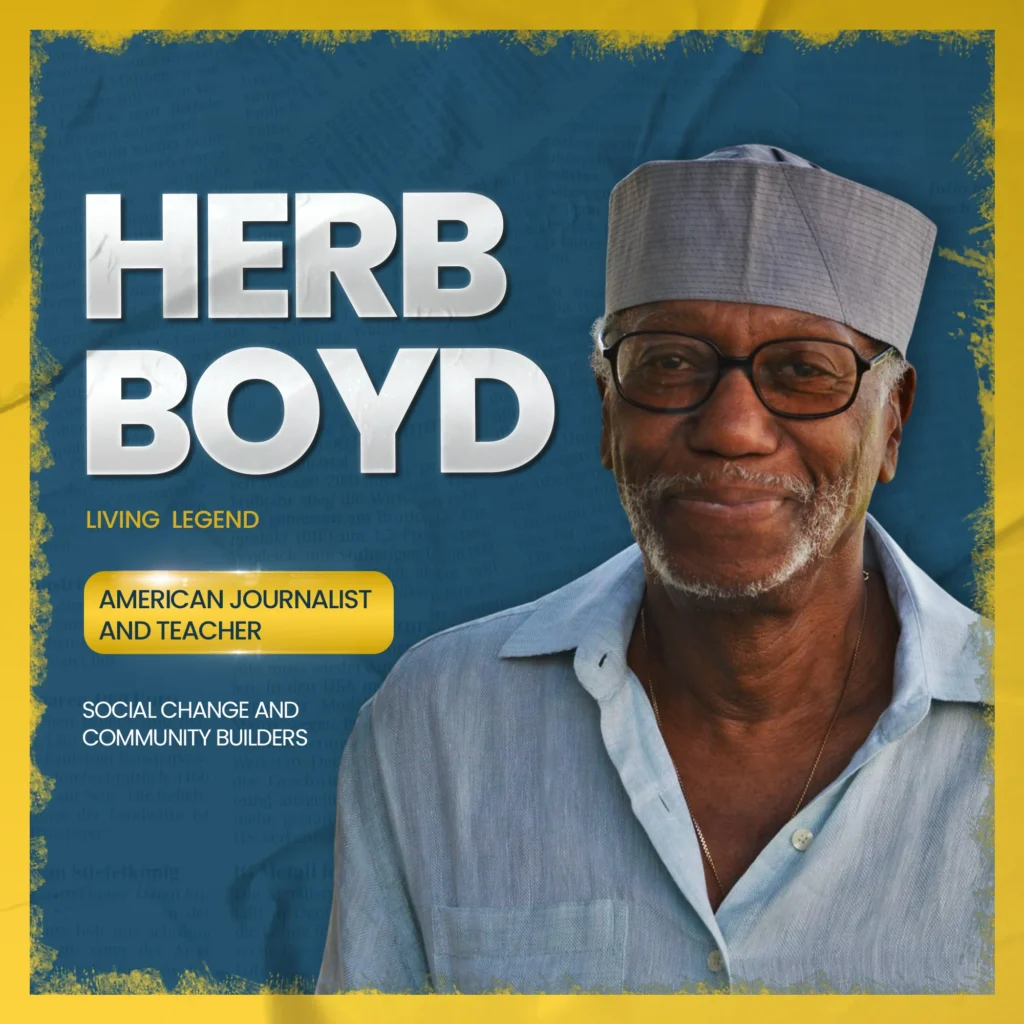
Outside of journalism and community activism, Boyd has decades of teaching experience under his belt, first at Wayne State University and later at the City College of New York, where he taught everything from journalism to African American history.
That said, he wasn’t just a professor.
Many of his former students regard him as more of a mentor – one who helped connect what he taught in his classes to real-world experience.
According to Boyd, history isn’t just found within textbooks.
Its spirit is alive and well in Detroit’s neighborhoods and civil rights leaders, many of whom have been largely ignored by mainstream narratives.
Over the course of his career, Boyd has also published over two dozen books on African American history and the role Detroit has played in it.
Take “Black Detroit: The People’s History of Self-Determination”, for instance – a literary journey tracing the history of the city’s Black population from slavery to the Great Migration to labor struggles to Motown into the modern era.
His books are regarded not just as scholarly, but as intimate, with many of his stories about people Herb personally knew and lived among at the height of Detroit’s civil rights era.
For Boyd, writing is about testimony – not just feeding his own ego. That said, his own story is intricately tied in with the city that raised him.
He has chronicled Detroit’s highs and lows, its victories and wounds, its leaders, and everyday people with a critical yet loving voice.
For Detroiters, Herb Boyd is more than just a journalist or an author – he’s a chronicler, one who brings its history, its struggles, and its triumphs to life in a way that always feels authentic.



 Please check your email for your login details.