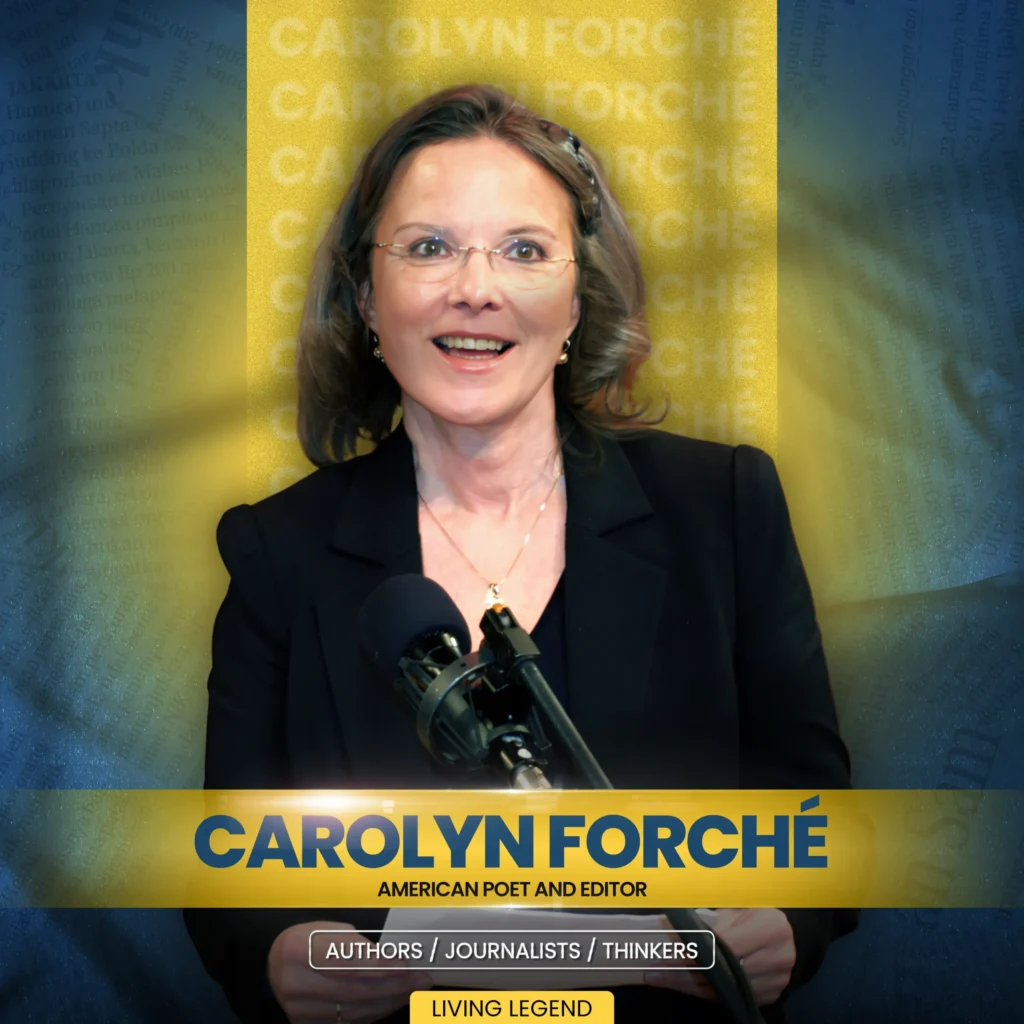
Carolyn Forché was raised in a working-class household on the west side of Detroit.
Her dad worked as a tool-and-die maker for General Motors, while her mother was a homemaker.
It was a time when the city was full of industry, hardworking immigrant families, and racial and class divides.
The Detroit Carolyn knew in the 1950s was both vibrant and deeply fractured – an industrial powerhouse with serious inequities.
With its mix of cultural chaos and resilience, those early years in Detroit helped Carolyn develop a sensitive understanding of human struggle that would go on to define her work later in her later years.
As a method of coping, she took refuge in books, spending her time at the Detroit Public Library, which opened up portals to other worlds and taught her poetry as a language of resistance- eventually leading to her studying creative writing at Michigan State University.
As an undergraduate, Carolyn became attracted not only to the lyrical composition of poetry but to the moral weight it was capable of carrying.
She saw writing as a method of confronting history, not escaping it, further expanding her creative talents through her time spent working overseas in places like South Africa, El Salvador, Lebanon, and Spain, places where violence was always right around the corner and testimony was dangerous.



 Please check your email for your login details.