
or

By signing in, I accept the Rebuildetroit.com Terms of Use.

Agent Registration

Find Your Agent Profile

Agent Registration

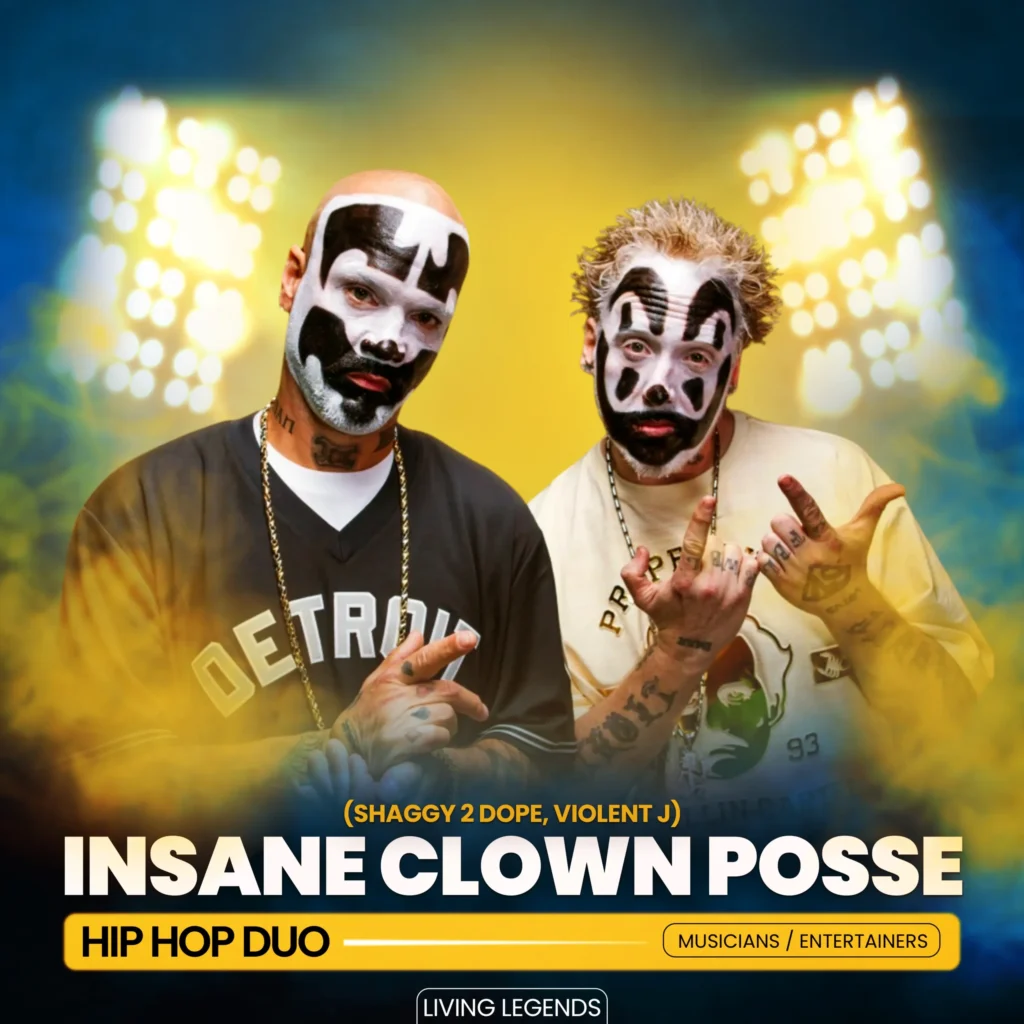
Insane Clown Posse: The Wicked Clowns of the 313

313 Legends

Insane Clown Posse

Living Legend

Insane Clown Posse: The Wicked Clowns of the 313

Formed: 1989 – Detroit, Michigan
Detroit Era: 1989–Present
Legacy: Pioneers of the Horrorcore genre, founders of Psychopathic Records, underground rap icons, and architects of the Juggalo subculture.

Introduction

Insane Clown Posse are many things:

Loved, hated, ridiculed, revered—yet never ignored.

They’re not a group that ever asked anyone for permission to exist.

They simply show up: faces painted, clownish attire, cursing, howling, and spraying Faygo into the sky like holy water.

And, like any jester, you either laugh and roll your eyes, scrunch up your nose, clutch your pearls, and look away, or follow them into the carnival.

From an Inside Joke to a Global Empire

Joseph Bruce (Violent J) and Joseph Utsler (Shaggy 2 Dope) met as teenagers on Detroit’s southwest side.

They got their start as breakdancers, then as down-and-dirty backyard wrestlers, later forming the Inner-City Posse, a rap group that was an imitation of the early gangsta rap scene.

That said, that market was already more than flooded with rising talent, so instead, the duo pivoted, changing their name, painting their faces, and fully embracing an unhinged horrorcore aesthetic that was an ode to everything from wrestling promos to carnival freakshows and Detroit hip-hop.

The result would be the birth of the Insane Clown Posse.

Carnival of the Underground

ICP’s music was never intended to be radio friendly.

Albums like the 1992 “Carnival of Carnage” unfolded like psychotic comic books where they would tack on more mythology with every new release, branding their universe the “Dark Carnival,” a moral realm where wicked normies are punished and the outcasts rise to take the throne.

They rapped about everything from murder to class warfare and spiritual reckoning—at all times cloaked in blood and slapstick—and while critics hated it, black sheep suburban kids begged for more.

By the time “The Great Milenko” dropped in 1997 (an album that briefly ran into trouble with Disney-owned Hollywood Records), ICP had gone platinum—without mainstream airplay, radio, or widespread critical support.

Birth of Psychopathic Records & the Juggalo Nation

That said, where ICP truly made history was outside the recording booth.

In 1991, they launched Psychopathic Records, an independent label that would go on to birth a new wave of like-minded artists, including Twiztid, Blaze Ya Dead Homie, etc., not to mention an entirely new subculture:

Juggalos.

These were ICP’s diehard fans: Faygo-drenched clowns with painted faces who showed up to their shows like family reunions, rejoicing in their societal outcast status with like-minded company.

In 2000, ICP launched the first-ever Gathering of the Juggalos, a multi-day festival that brought together music, carnival games, wrestling, and all manner of chaos.

From there, what started as a mere sideshow spectacle became a full-scale phenomenon, an annual event drawing in thousands each year like clockwork.

Legal Woes, Loyalty, and Legacy

In 2011, ICP was dealt a major blow when the FBI listed Juggalos as a “loosely organized hybrid gang organization.”

Backed by the ACLU, they sued the federal government in response, stating that their fans were being profiled, harassed, and woefully mischaracterized.

Little did they know, that lawsuit (along with their long history of being mocked and belittled by the press) would go on to shift public perception on ICP.

Suddenly, people viewed them not as a long-running joke, but as cultural forefathers who weren’t afraid to fight for their fans regardless of the backlash.

ICP also continued to release albums in the face of their struggles – totalling an impressive 15 studio records, as well as hundreds of mixtapes, DVDs, and documentaries filmed in their home base of Michigan.

Final Word: Chaos with Structure

Insane Clown Posse never asked to be understood.

They simply crafted a world, opened the gates to allow others in, and said: even if you don’t fit in anywhere else in the world, you’re always welcome here.

In that way, they aren’t just a band.

They are Detroit’s loudest cult icons—wicked, utterly unkillable, and proud of it.

About the Author

Victoria Jackson

Victoria Jackson (Editor In Chief)

Victoria Jackson is a lifelong student and sharp-eyed documentarian of all things Detroit, from its rich musical roots and cultural icons to its shifting neighborhoods, storied architecture, and underground legends. With her finger firmly on the pulse of both the city’s vibrant past and its rapidly unfolding future, she brings a deeply personal, historically grounded lens to every piece she writes.

Published on: September 17, 2025