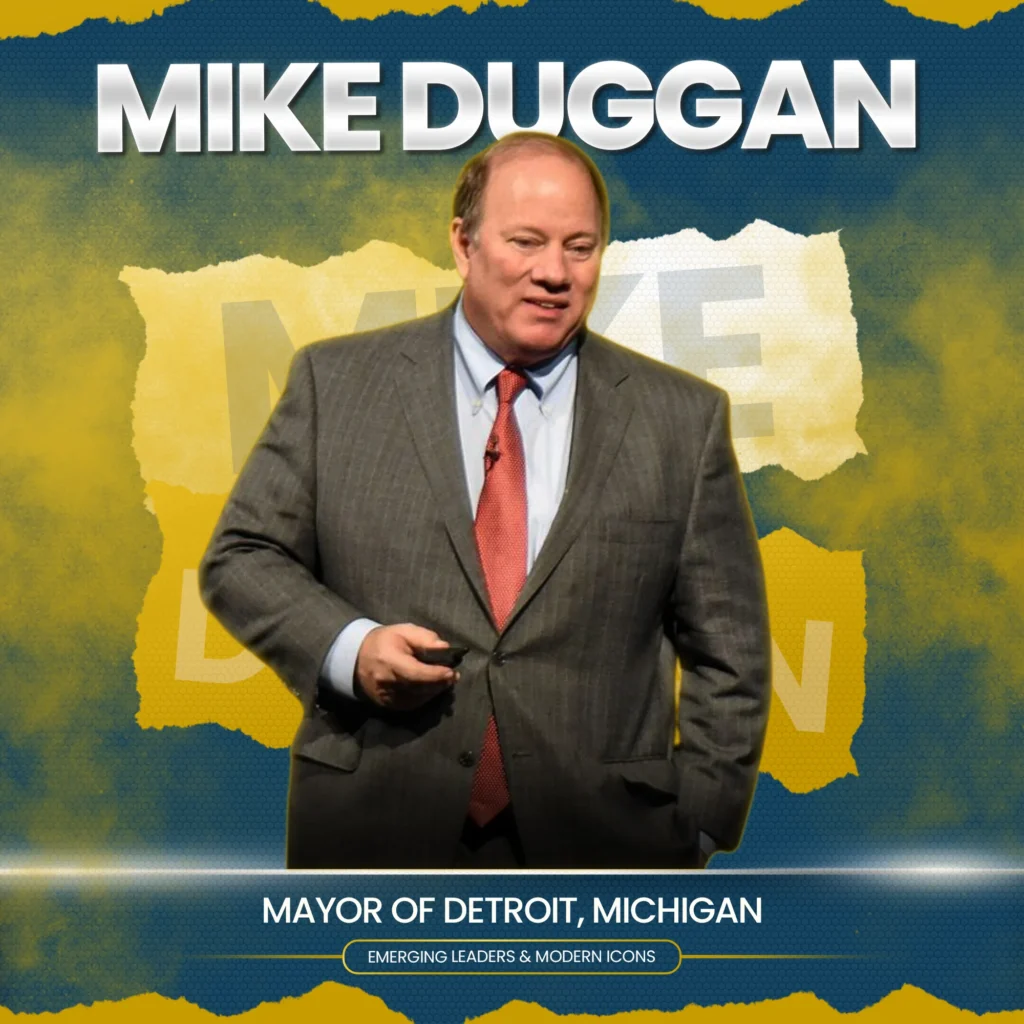
Duggan took office in 2014 during a time when Detroit was in major blight, facing unreliable services and financial insolvency.
He put immediate priority on restoring essential services by implementing:
- Widespread city street light installation
- Quicker emergency response times
- One of the nation’s most ambitious crime reduction programs
- The “Detroit at Work” program, which placed out of work residents in jobs
His administration also stressed measurable outcomes based on efficiency and accountability, streamlining city services, improving infrastructure, and attracting new businesses and residents – leading Detroit in making major economic investments and stabilizing its long-declining population.
Of course, Duggan wasn’t beyond criticism.
Some community members wondered whether revitalization benefits were distributed fairly – especially in terms of affordable housing and support for long-time residents.
His administration also faced criticism over transparency – including the deletion of emails about a city-affiliated nonprofit.
This all culminated in 2024 when Duggan announced he would not run for a fourth term as mayor and would instead run independently for Michigan governor in 2026.
His break with the Democratic Party indicated a desire to move beyond partisan divides and instead apply his technocratic governance style to state issues.



 Please check your email for your login details.