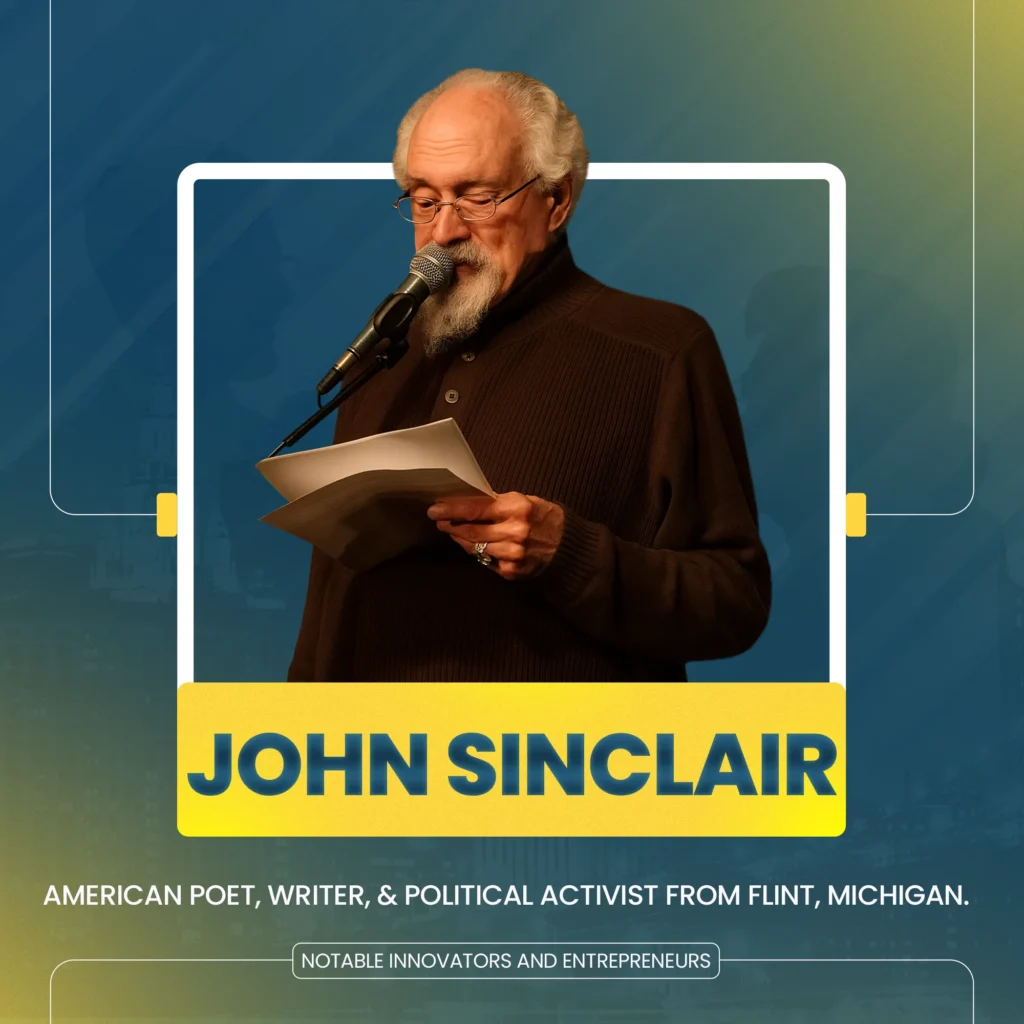
Sinclair received ten years in prison in 1969 for selling two joints to an undercover cop – an extreme sentence many believe was handed down because of his activism work.
It was a move that was not without its backlash.
The “man” wanted to turn Sinclair into an example, but instead, they turned him into a martyr.
Three days after John Lennon, Yoko Ono, Stevie Wonder, and Allen Ginsberg held a protest concert outside his cell, Sinclair left prison smiling, unbroken, and unapologetic.
His sentence had stirred up immense outrage and momentum, and laws started to change in the face of it.
Eventually, the headlines faded, but Sinclair never softened.
He spent the rest of his life doing what most men only ever pretend to do: living by a strong moral code.
He did radio shows, poetry open mic performances, taught history in the back rooms of record stores and cafes, and at one point even sued the federal government and won.
He also attended Michigan’s first Hash Bash and lived long enough to legally buy cannabis from a dispensary in the same state that once locked him up for it when it became legal there in 2019.
It was a true full-circle moment.



 Please check your email for your login details.