
or

By signing in, I accept the Rebuildetroit.com Terms of Use.

Agent Registration

Find Your Agent Profile

Agent Registration

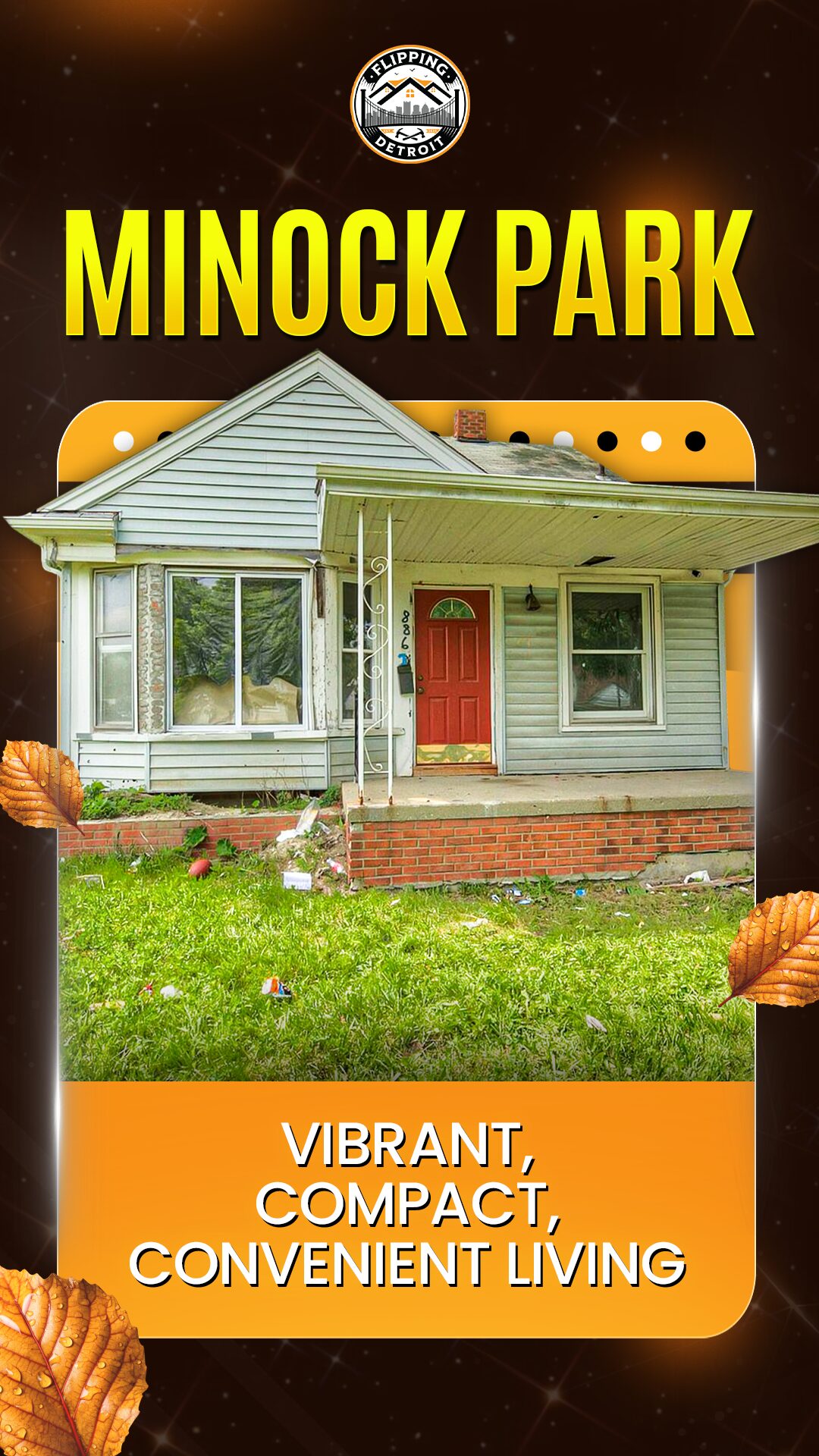
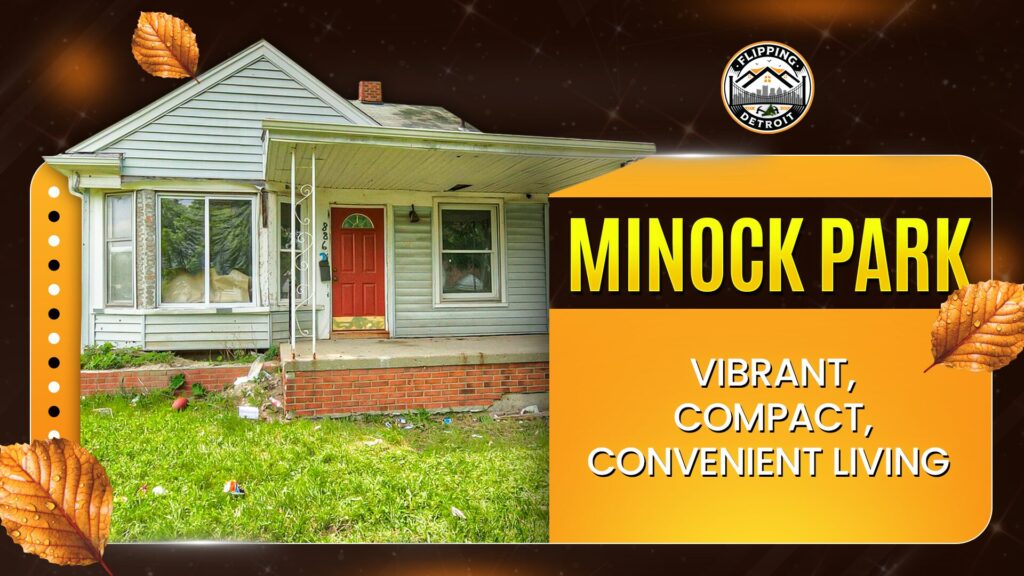
Minock Park: Detroit’s Northwest Side Green Sanctuary

Minock Park is a lovely little Northwest Detroit suburb developed in the 1920s and 1930s during the rise of the city of Detroit’s auto industry that gets its name from its park, which serves as a main community anchor where locals are often seen going on morning jogs, walking dogs, hosting summer picnics, and organizing cleanups.

Originally intended for the employees of Ford, Chrysler, and General Motors and their families, Minock Park is the kind of neighborhood that isn’t flashy but instead makes a quieter yet just as lasting impression. 

Located near Grand River and Outer Drive, Minock Park brings a small-town feel right within city limits, with its curved streets, mature trees, eye-catching colonials and Tudors, and overall vintage feel.

A well-preserved community, it’s the kind of place where the neighborhood’s older residents still fondly reminisce over things from the old days, like the early homeowners’ association, which started in local living rooms and church basements in the 1940s.

This tradition continues to this day, bringing together generations of residents through lively community events and local restoration efforts.

Recreation, Dining, and Fun Around Grand River and Outer Drive

Minock Park’s residential calm isn’t its only strong point.

The area is also well-anchored by the hustle and bustle of nearby Grand River Avenue, a historic corridor that has been a main artery of the neighborhood for nearly a century, easily connecting Minock Park residents to the rest of northwest Detroit and beyond. 

As for area favorites, Motor City Java House is a go-to for a warm brew and networking, the historic Redford Theatre is great for catching a classic film on the weekends, and Sweet Potato Sensations, a family-owned sweet potato-centered bakery, is a staple for residents with a sweet tooth.

For even more recreation and entertainment, the nearby Rosedale Park and North Rosedale districts are both known for their wide array of community events (farmers markets, block parties, etc.) and Minock Park neighbors often volunteer with local youth programs and park cleanups, keeping the area beautiful and welcoming year-round.

It’s the kind of place where the lawns are always well-manicured, the porch lights stay on, block clubs still have monthly newsletters informing residents of upcoming events and updates, and long-time residents are seen planting flower beds beside new families planting roots.

Final Word

In summary, Northwest Detroit’s Minock Park offers a rare glimpse of the city’s laid-back side. It’s the kind of place where the beauty is in the details, and pride is seen on every block.

Take a slow drive down Minock, Warwick, or Dolphin Street, and you’ll see it yourself. 

Just be sure to wave to the locals—they’re very friendly, and you’ll likely get a wave back. 
Miller Grove: History and Soul in Northwest Detroit

Miller Grove is a northwest side Detroit suburb located just south of Seven Mile and close to Evergreen and Lahser, defined by its beautiful brick colonials, mid-century ranches, clean curbside appeal, and mature tree-lined streets.

Born during Detroit’s postwar boom, when veterans went to work at Ford and GM and settled down in the area, this charming pocket of Wayne County carries the energetic signature of the many generations who helped build the city’s middle class from the ground up.

A neighborhood deeply focused on its labor-centered legacy, the name “Miller Grove” stands as a tribute to those early settlers.

It’s the kind of place where you’ll find the elderly educating the younger generation on how things used to be, neighbors engaging in block clubs and competing in “best yard” competitions, lively summer block parties, garage sales, and the like.

Neighborhood Life: Parks, Churches, Local Hangouts

Places of worship are a major part of the neighborhood signature in Miller Grove. The area is home to a number of small churches that offer community resources such as youth mentorship, food pantries, and even community gardens.

Expect to see busy streets full of well-dressed people during Sunday Service, which is usually followed up by bustling neighborhood barbecues at O’Hair Park, an area anchor for morning jogs, picnics, youth sports games, and weekend get-togethers. 

As for shopping and dining, locals are well served by Evergreen Plaza, a modest strip mall with everything from a beauty supply store and barber shop to carryout spots serving up mouthwatering Detroit favorites like wings and soul food.

Swing by any of the above locations on a busy Saturday, and you’ll be sure to overhear discussions about city politics, last night’s Lions game, or which local restaurants are serving the best food.

Miller Grove’s Authentic Community Spirit

What sets Miller Grove apart from so many other Detroit living communities is its sense of balance.

It’s peaceful without being uptight, proud without being pretentious – a warm pocket of the city where you’ll still find neighbors watching after one another. 

Make no mistake, though: like most of Detroit, the Miller Grove neighborhood has weathered its fair share of ups and downs. What makes it different from the rest is its quiet endurance and loyal, devoted residents who reclaim abandoned homes and lots and hunker down instead of fleeing when the going gets tough. 

It’s not a place defined by nightlife or flash, but that doesn’t make it any less valuable. 

Take a slow drive through at sunset, and you’ll be able to see it for yourself: the everyday beauty of neighbors interacting, children playing in the streets, and above all else… Detroit’s historic roots continuing to prosper.

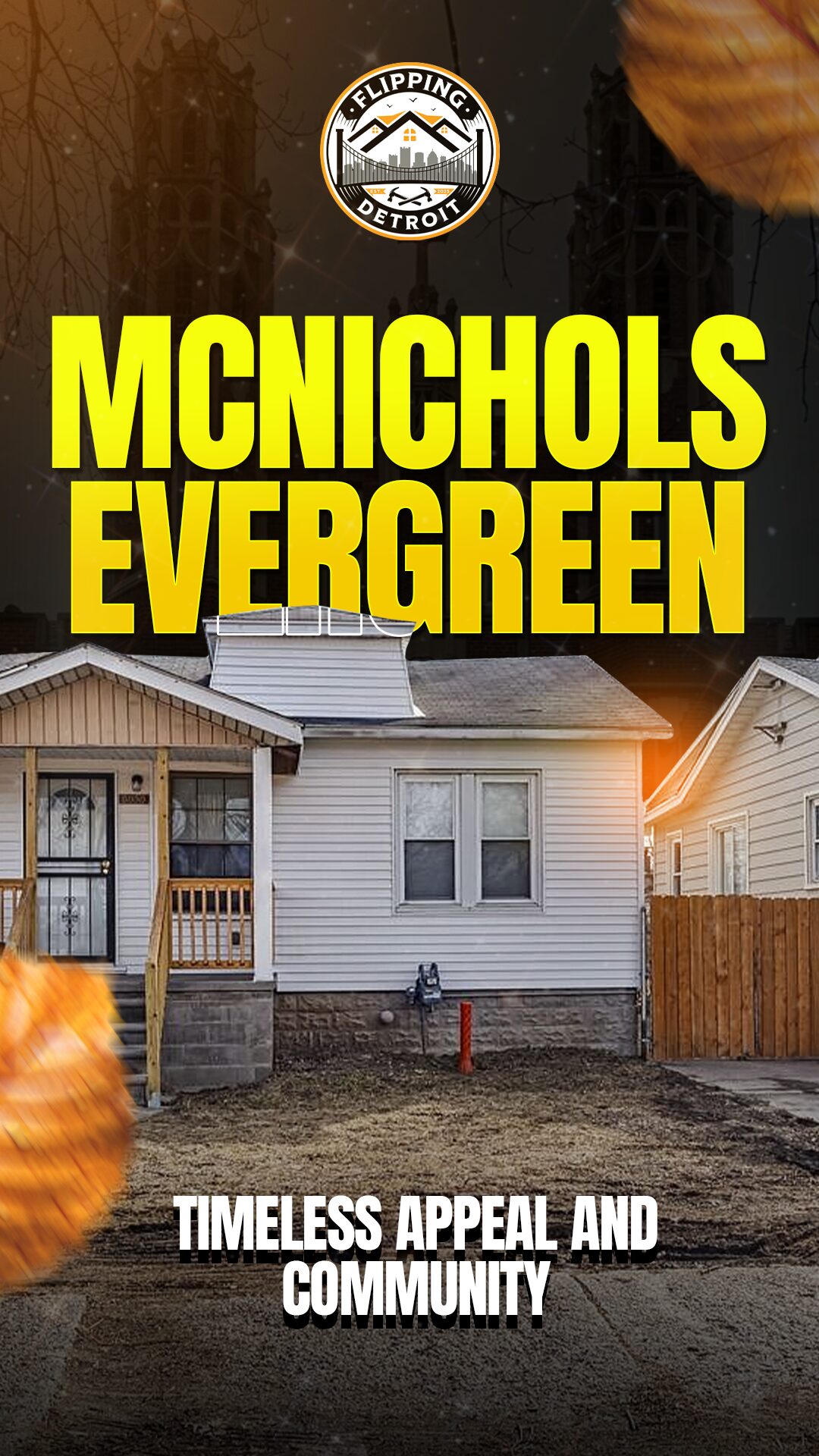
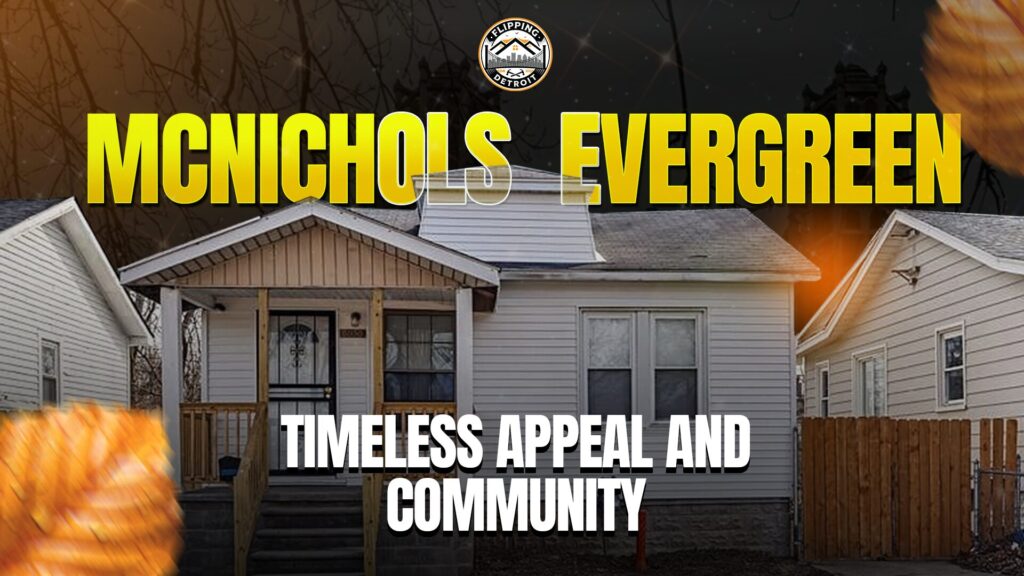
McNichols-Evergreen: Detroit’s Northwest Hidden Gem

Detroit’s McNichols-Evergreen is one of Northwest Detroit’s best-kept secrets.

Located in the 48219 zip code, the area known as McNichols is simply “Six Mile” to Detroit locals, whereas the other half of its namesake, Evergreen, spans the north side of the region stretching out near the nearby Redford border.

Right at the point where these two roads meet, you get McNichols-Evergreen, a peaceful community best known for its neighborly energy, sturdy brick bungalows, and endless amenities. 

Mornings on Six Mile bring plenty in the way of conversation and coffee thanks to the area’s beloved Motor City Java House on Grand River, and on weekend afternoons, you can follow that up with a classic film at the historic Redford Theatre, an early 20th-century movie palace on Lahser, known for its powerful pipe organ, themed movie nights, and twinkling star lights.

Gardens, Parks, Eats, and the Spirit of the Block

Right around the corner from the Redford Theater, you’ll find Sweet Potato Sensations, a delicious sweet potato-centered local bakery that is family-owned and operated.

Sweet Potato Sensations keeps this stretch of McNichols-Evergreen smelling incredible and brings a comforting warmth to the area.

Swing by to grab a hot piping slice of sweet potato pie, then head east on McNichols and enjoy the many lush side-lot gardens filling up lots that were once abandoned.

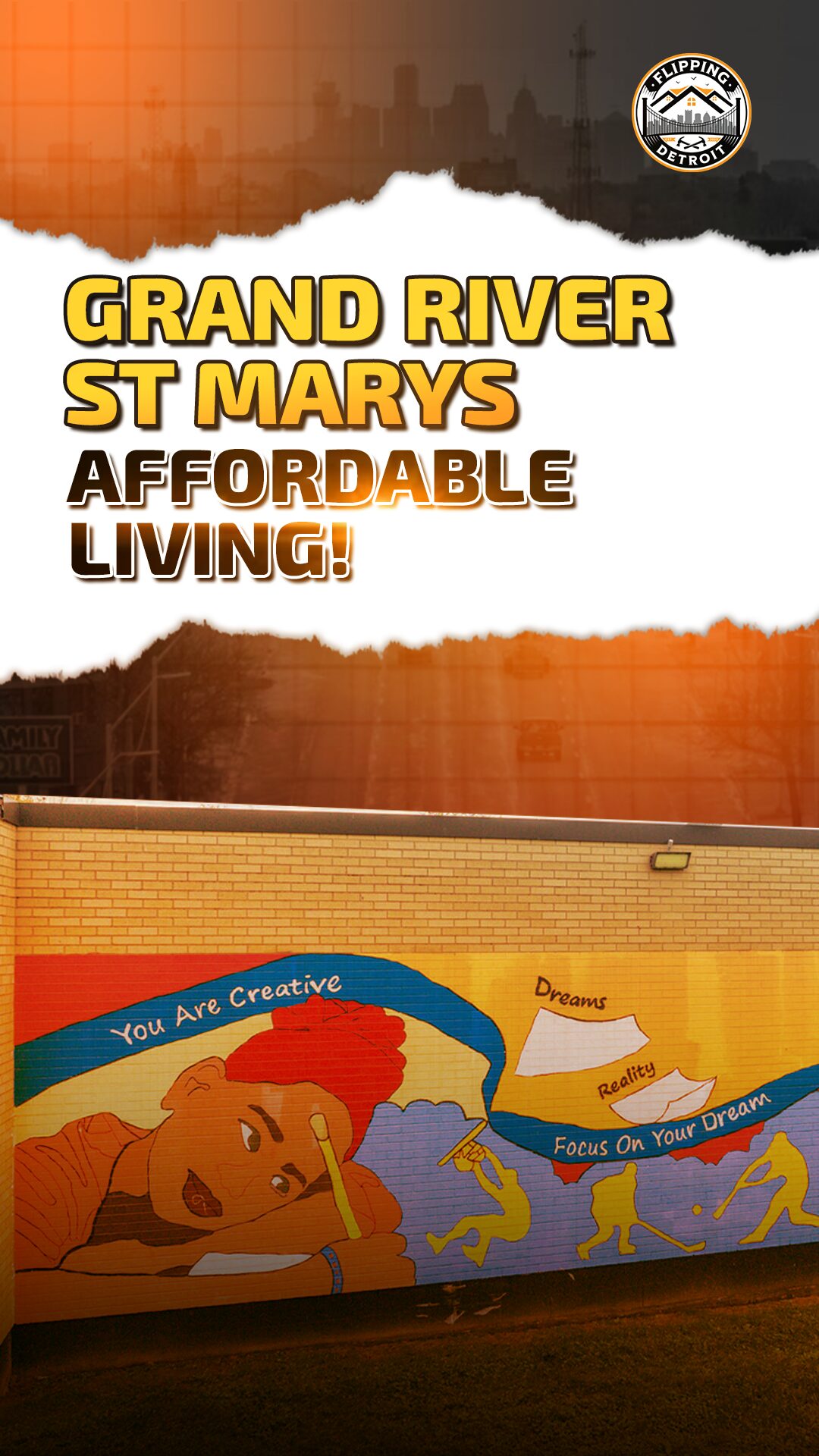
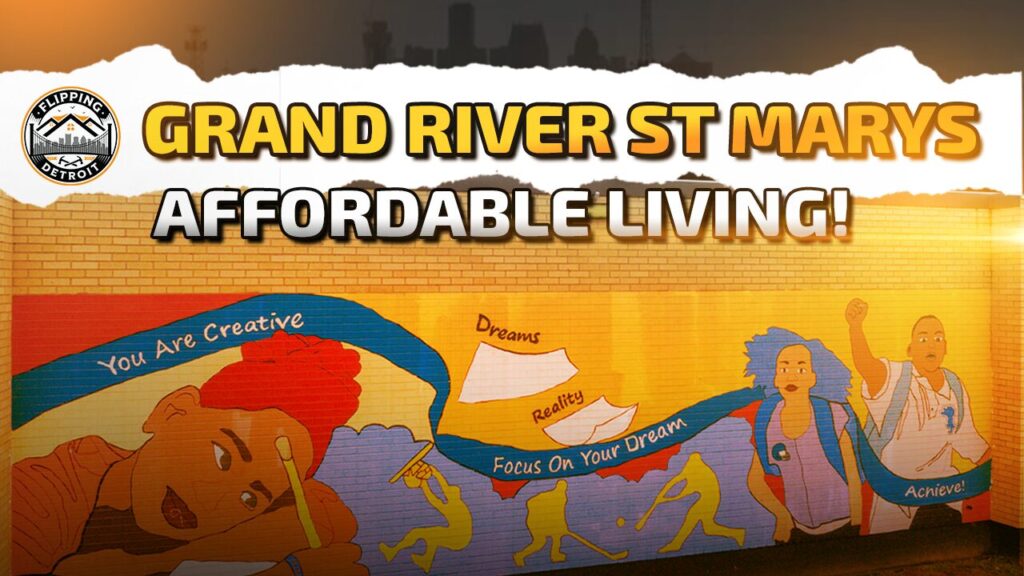
And if the art scene is more your thing, head on over to Lahser and Grand River to check out the Artist Village murals – vibrant, eye-catching community canvases that celebrate the resilience of Detroiters.

Looking to spend time outdoors?

Look no further than O’Hair Park, one of Detroit’s largest parks and the McNichols-Evergreen areas main outdoor recreation anchor. 

It’s also the place where you’ll find a retiree everyone refers to as “Coach” (real name, Mr. Lewis), passing out ice cream cones on warm days and educating neighborhood youth on the art of basketball. 

As for foodies, small carryout restaurants are a staple of McNichols-Evergreen, bringing quick-eat Detroit favorites like chicken wings, and fried fish, corned-beef on rye, and endless soul food options. 

Nighttime is the Best Time in McNichols-Evergreen

McNichols-Evergreen residents love magic hour.

The after-work energy here is second to none here thanks to the hum of the nearby Southfield Freeway, the scent of people grilling, Motown music drifting out from rolled-down car windows, and the overall sense of neighborhood camaraderie that is hard to come by in so many other Detroit neighborhoods.

Whether you’re catching a double feature at the Redford or ending the night at Sweet Potato Sensations, enjoying a piece of pie before they sell out…you’ll never be without something enjoyable to do here come those after-sunset prime-time hours

Local Tip

Detroiters value respect above all else, and McNichols-Evergreen residents aren’t any different.

If you’re not from here and are just passing through, make sure you park legally, shop and dine locally, layer up in the event of a lake-effect chill, and treat others the way you’d want to be treated.

Do that, and McNichols–Evergreen will welcome you with open arms.

Grand River–Saint Marys: A Peaceful Place to Call Home in Northwest Detroit

Grand River–Saint Marys is a Northwest Detroit neighborhood that came into existence during Detroit’s automative boom period between the 1930s and 1950s, a time when Grand River Avenue became one of the city’s busiest commercial hubs.

Located in the 48227 ZIP code, Grand River-Saint Marys offers affordable housing close to all the main arteries of District 1, offering residents easy access to the many food, dining, churches, schools, and recreation options that have anchored the area for decades. 

It’s a charming, easy-going living community defined by resilience, familiarity, and the camaraderie of neighbors who still look out for one another.

Its housing is an ode to mid-century Detroit with its stunning colonials, sturdy bungalows, and Tudor-inspired cottages.

It’s the kind of aesthetically pleasing neighborhood catching the attention of both investors and younger families looking to invest in a stable area right within city limits. 

That said, Grand River-Saint Marys hasn’t been without its struggles.

The neighborhood has weathered the city of Detroit’s down periods with quiet endurance, standing strong even as mass layoffs led to nearby factories closing up shop.

As difficult of a time as it was, Grand River-Saint Marys residents never lost their pride in where they lived, continuing to do whatever was necessary to maintain their homes and the community’s curbside appeal. 

Recreation, Churches, and Schooling

Grand River-St Marys residents have plenty of dining, shopping, and recreation options readily available thanks to nearby Grand River Avenue, including bakeries, coffee spots, coney islands, barbecue restaurants, and even a few small grocery stores for everyday needs.

As for larger chain options, the plazas on Greenfield and Outer Drive are also right within reach.

This eclectic mix of long-standing local favorites, mom-and-pop shops, healthy quick eat locations, and big box stores keep the corridor bustling with energy year-round.

It’s also not uncommon to see residents gathering at nearby O’Hair Park on the weekends for family get togethers, barbeques, youth sports, or simple relaxation under the park’s mature trees.

As for schooling, Grand River-St Marys falls within the Detroit Public Schools Community District and is anchored by nearby learning institutions like Communication and Media Arts High School and Cooke STEM Academy. 

Churches also play a major role in the neighborhood’s overall vibe, with St. Mary’s of Redford Catholic Church one of its core pillars thanks to the community services it provides, from educational support to cultural events and food drives.

Conclusion

Grand River-Saint Marys stands as a model of Detroit’s resilience: hardworking, historic, and hopeful. 

With its affordability, recreation options, active block clubs and engaged residents, and strong focus on tradition, it’s one of northwest Detroit’s most dynamic communities.

What the future has in store for it…we will have to wait and see.

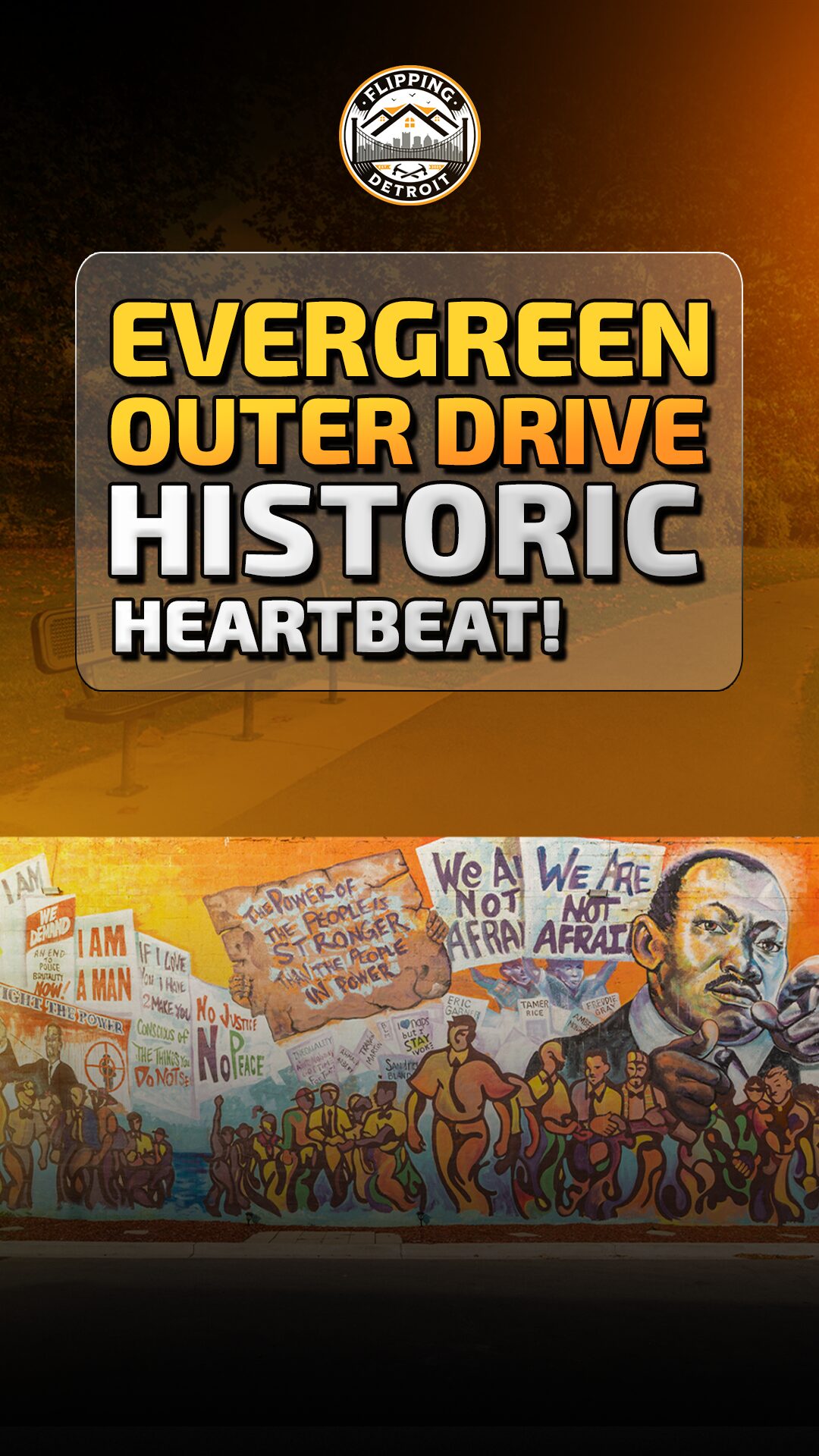
Evergreen-Outer Drive: Northwest Detroit’s Corner of Quiet Strength

Evergreen-Outer Drive is the kind of living community defined by generational continuity – a calm, well-kept corner of northwest Detroit located within Wayne County’s 48219 ZIP code. 

Situated between Evergreen Road and Detroit’s historic Outer Drive corridor, Evergreen-Outer Drive manages to fuse mid-twentieth century residential charm with big city convenience thanks to its location along major city routes, making it one of the northwest side’s most valued living communities. 

As for its history, the neighborhood first came into existence during Detroit’s westward expansion during its automobile boom period, which saw developers wanting to create a residential community for working and middle-class families looking for a quieter way of life right within city limits. 

From that, Evergreen-Outer Drive was born: a neighborhood that came to be known for its curved street layout, abundance of trees, and laid-back suburban atmosphere.

Within decades, Evergreen-Outer Drive overflowed with Cape Cods, colonials, brick ranches, and the like, many of which would go on to be passed down through the generations within the same families. 

The housing stock here is District 1 at its finest: sturdy single-family homes with landscaped front yards, huge front porches, classic mid-century detailing, detached garages, and above all else…loyal owners who do what it takes to maintain curbside appeal.

A Recession-Proof Living Community with Plenty of Nearby Recreation Options

Even in the face of rapid economic highs and lows, Evergreen-Outer Drive managed to remain remarkably stable, retaining its charm and sense of permanency. 

Look no further than the neighborhood’s moderate median home value, one of the most affordable options for Detroit locals seeking stability without having to give up access to the many amenities that come along with big city living.

It’s the kind of place that radiates a quiet warmth, where residents who enjoy spending time outdoors are within minutes of popular recreation spots like Lahser Playground and Eliza Howell Park for jogging, walking, biking, and weekend gatherings with family and friends.

There’s also nearby Grand River and Rouge Park, both of which are directly connected to Evergreen-Outer Drive via bike and walking paths.

For everyday amenities, Evergreen-Outer Drive residents greatly benefit from the area’s close proximity to grocery stores, pharmacies, and family-owned restaurants along Grand River Avenue that serve Detroit’s favorite comfort foods, such as coney dogs, fried fish, and slow-smoked barbecue.

Local bakeries, carryout spots, and coffee shops also add a personal touch to daily life, while Southfield and Redford provide access to larger retail options. 

Food and fun often go hand in hand here: think lively block parties, neighborhood picnics, and church cookouts that go a long way in helping maintain a sense of pride, fellowship, and belonging.

Schooling and Places of Worship

For schooling, Evergreen-Outer Drive residents are served by Detroit Public Schools Community District learning institutions, such as Communication and Media Arts High School and Cooke STEM Academy.

The area is also bolstered by a number of great churches that serve as cornerstones of Evergreen-Outer Drive’s spiritual and civic life by providing youth mentorship, food drives, and a number of other intergenerational community services, including Apostolic, non-denominational, and Baptist congregations.

Many of these churches host tutoring programs, mentorship initiatives, and seasonal food drives that reinforce the neighborhood’s intergenerational strength.

Conclusion

Evergreen–Outer Drive stands as a model of northwest Detroit’s quiet excellence. While the community has not been immune to the issues that have plagued the city of Detroit as a whole (i.e., sporadic blight, aging infrastructure, vacant homes, and a lack of services), strong homeownership and local engagement keep it running like a well-oiled machine.

Residents are deeply proud of the neighborhood’s peace and calm, often describing it as one of the rare safe zones within the city.

It’s not a neighborhood chasing headlines… it’s one sustaining Detroit’s historic roots block by block, household by household.

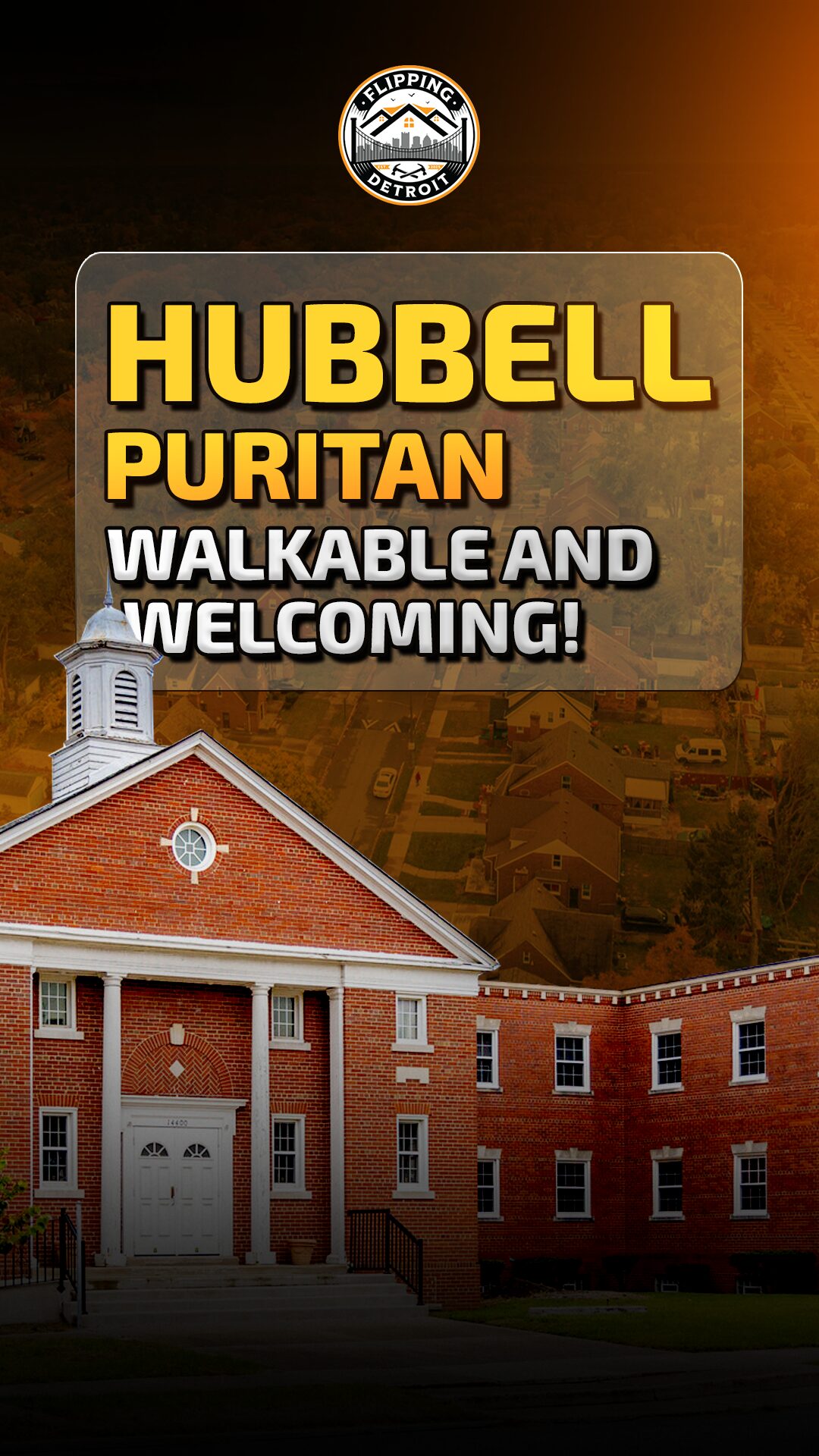
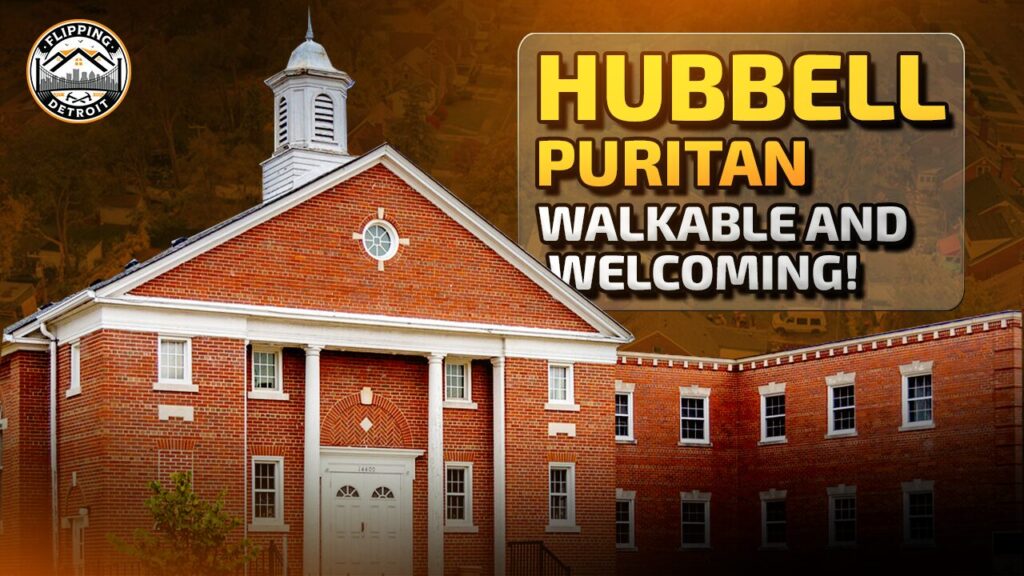
Hubbell–Puritan: Tradition Meets Resilience on Detroit’s Northwest Side

Hubbell-Puritan is a northwest side Detroit neighborhood located within Wayne County’s 48235 ZIP code that stands as a model of the city’s enduring values: hard work, creativity, always looking out for your community, and taking pride in where you call home.

With its charming brick homes, mature tree-lined streets, and generations of homeowner stability, it’s easy to see why property values in Hubbell-Puritan are slowly rising in 2025 and beyond.

Location, Roots, and Culture

Hubbell-Puritan sits near the intersection of Hubbell Avenue and Puritan Street, an area known for its beautiful mid-century architecture, places of worship, and tight-knit neighborhood energy.

First emerging during Detroit’s mid-century automotive boom, Hubbell-Puritan got its start as an affordable living community for families that wanted to be central to good schools, factories, and recreation options like those found on nearby Grand River Avenue and Livernois. 

These early residents included auto workers, hospital employees, teachers, young families, and small business owners – in other words, the heartbeat of Detroit’s postwar prosperity period.

That said, Hubbell-Puritan did not manage to come out of Detroit’s economic downturn unscathed.

Like many suburbs, it was hit hard by challenges such as factory closures, population decline, factory closures, and rising maintenance needs in the face of low city investment.

It was only thanks to the neighborhood’s devoted residents that it was able to eventually climb its way out of all of that, finding somewhat solid footing again thanks to the presence of block clubs, neighborhood renewal groups, and the local churches. 

Today, Hubbell-Puritan stands as living proof of the perseverance of Detroiters when it comes to the city they love.

Housing and Streetscape 101

Hubbell-Puritan’s housing stock reflects Detroit’s signature craftsmanship, with Cape Cods, single-family brick bungalows, and colonials dominating the landscape, often featuring arched doorways, stained glass windows, large front bay windows, and detailed masonry work. 

As for the area’s curb appeal, expect to find plenty of homes with long driveways, fenced-in yards, spacious front porches, and detached garages under mature oaks and maples.

In short: there’s a simple kind of charm here, one that has kept many residents around for decades.

As for schooling, the neighborhood is served by the Detroit Public Schools Community District, with local churches like Greater Emmanuel and various Baptist congregations also putting in work to support and uplift Hubbell-Puritan area youth before the streets can find them.

Parks, Food, and Community

Community life is one of Hubbell-Puritan’s greatest strengths.

For dining, shopping, and everyday needs, look no further than Puritan Avenue and Grand River, where you’ll find endless small businesses, local markets, bakeries, and carry-out spots offering Detroit favorites like coney dogs, soul food, BBQ, and other comfort food classics.

As for green space for sports, picnics, and youth events, one of northwest Detroit’s largest recreation areas is just a short drive away: O’Hair Park.

O’Hair is a beloved outdoor social spot in Detroit’s district 1 where it’s common to see families gathering on the weekends and neighborhood unity being reinforced through events like monthly clean-ups and block parties.

Conclusion

All in all, Hubbell-Puritan is a place of quiet resilience – a neighborhood backed by strong pillars like tradition, faith, and resident pride, where the aroma of barbecue is just as common as overhearing gospel music drifting from a car or church event.

Hubbell-Lyndon: The Heartbeat of Detroit’s Residential West Side

Detroit’s Hubbell-Lyndon is a prime example of the city’s resilient nature: hardworking, grounded in its unique past, and hopeful. 

Unlike many Detroit communities, its strength lies not in its ability to reinvent itself, but in its perseverance in the face of systematic challenges and economic downfalls.

Located within Wayne County’s 48227 ZIP code, Hubbell-Lyndon is a neighborhood defined by its working-class energy, sturdy brick homes, and warm, neighborly relations. 

With Grand River Avenue to the north and Tireman to the south, Hubbell-Lyndon is situated within some of west side Detroit’s most historic hubs.

In fact, it derives its name from two of its oldest roadways — Hubbell and Lyndon Streets.

History and Culture

Hubbell-Lyndon was born out of the mid-twentieth century housing boom, a time when Detroit’s auto industry workers, small business owners, and young families flocked to the area in search of stability and comfort.

From the 1930s and 1960s, developers got to work filling Hubbell-Lyndon with sturdy brick bungalows, colonials, and small Tudor-inspired houses, all within walking distance of neighborhood schools and churches.

That said, the area hasn’t been immune to the challenges faced by Detroit as a whole.

Infrastructure wear, vacancy, resident flight, and the need for stronger investment are just a few of the battles it continues to face, all without ever losing its backbone and resilient aura. 

The area is also backed by a number of great schools within the Detroit Public Schools Community District, with Cooke STEM Academy and Communication and Media Arts High School being two of the top choices.

As for faith and worship, Greater Emmanuel and local Baptist congregations provide everything from outreach programs to food drives to youth mentorship and tutoring. 

It’s the kind of place where resident pride is measured in freshly mowed lawns and neighbors who have never stopped looking out for each other. 

The area also sits comfortably below citywide averages as far as home pricing is concerned, making it an attractive option for first-time home buyers and families seeking long-term stability and growth.

Life in Hubbell-Lyndon

Hubbell-Lyndon’s location on Grand River Avenue puts residents right in the center of the action when it comes to food and shopping.

It’s the kind of place where Detroit’s beloved staples (coney dogs, fried fish, ribs) are never in short supply, as well as culturally specific offerings like Caribbean and soul food.

For more extensive shopping and larger chain stores, simply head on over to the Southfield and Greenfield recreation districts. 

As for outdoor fun, O’Hair Park, one of Detroit’s most popular recreation spaces, is just a short drive away, as well as a number of sports fields, smaller playgrounds, and trails.

Final Word

Detroit’s Hubbell-Lyndon is the kind of down-to-earth living community where it’s not uncommon to see residents having weekend cookouts, children riding bikes, or residents participating in park cleanups, festivals, and community watch patrols.

Civic engagement is vibrant and visible here, and it’s all thanks to the generations of devoted residents who have kept the area safe, clean, and protected even in Detroit’s darkest hours.

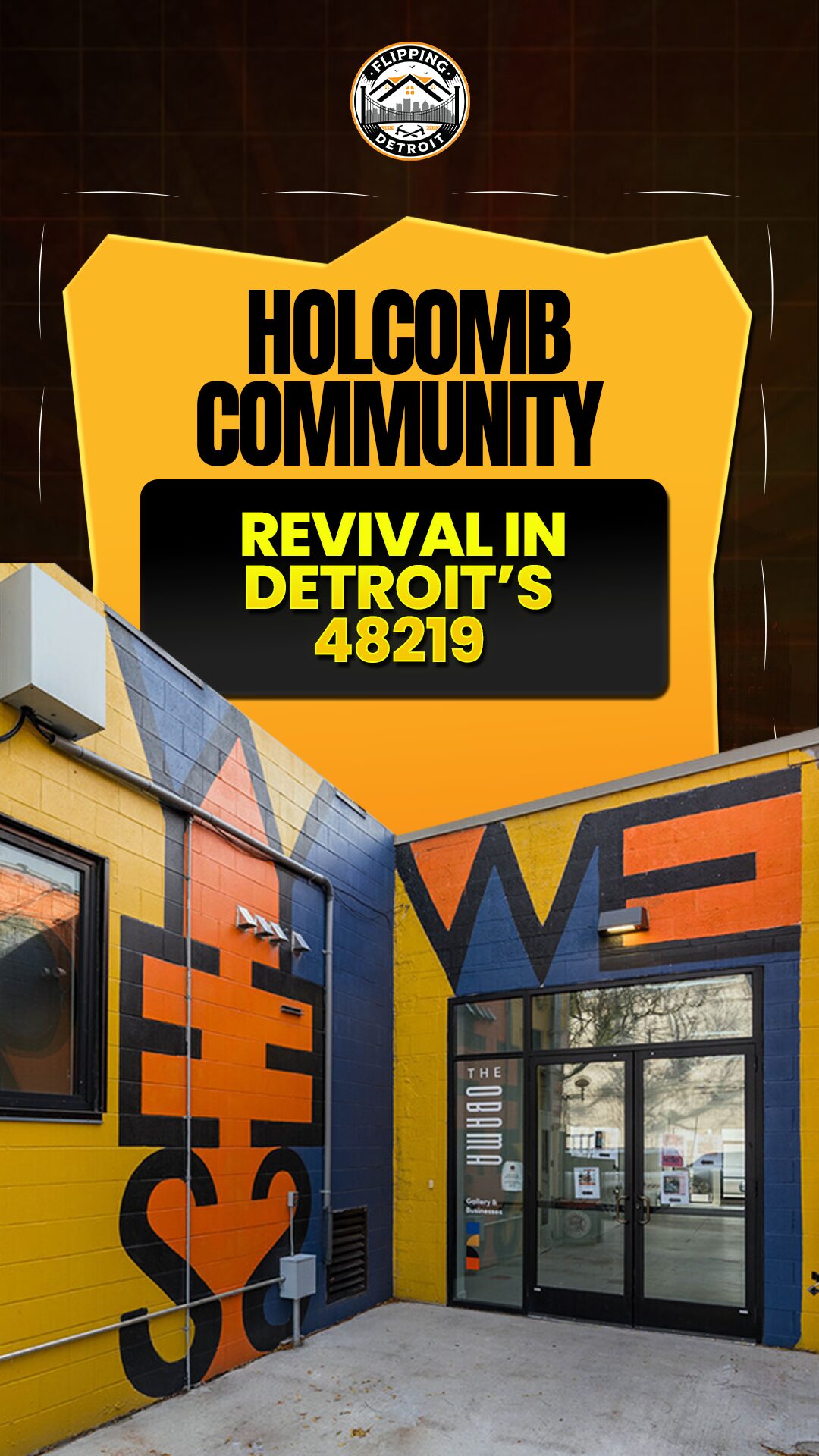
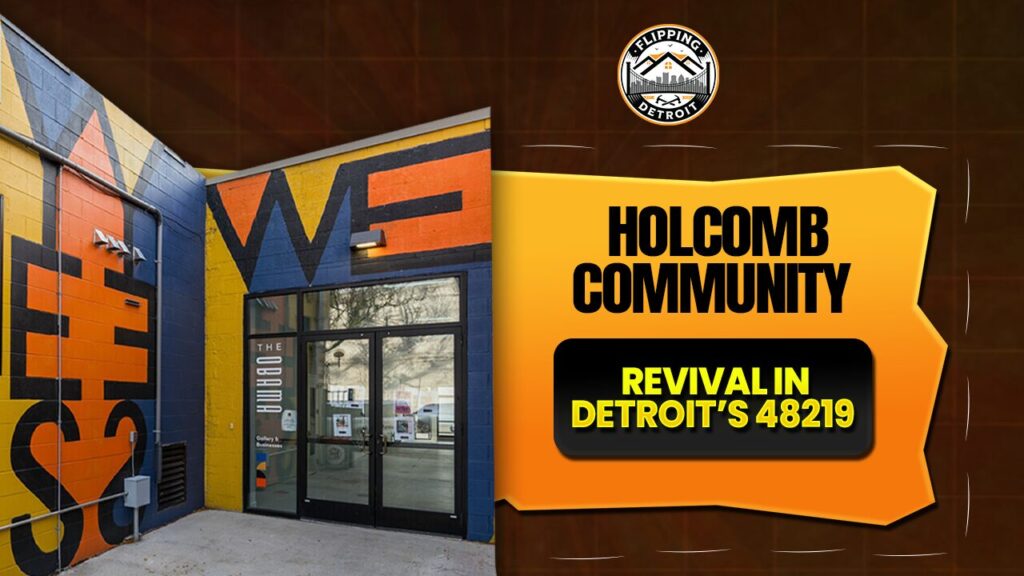
Holcomb Community: Northwest Detroit’s Quiet Corner of Connection and Community

Holcomb Community may not be leading the charge in Detroit’s transformation, but it’s one of its most quietly consistent and enduring communities all the same.

Located within Wayne County’s 48219 ZIP code, Holcomb Community is a small but tight-knit neighborhood backed by modest charm, civic pride, and deep neighborhood bonds.

It’s a place defined by its peaceful streets, sturdy brick homes, and deeply rooted pride, one that provides its residents with a suburban atmosphere right within Detroit city limits.

Holcomb proves that strength doesn’t always have to be a matter of spectacle…that it often grows at a slower rate – block by block, household by household. 

History and Housing

Holcomb Community got its start during Detroit’s mid-century housing boom, a time that saw builders favoring classic designs like sturdy brick ranches and colonials with attached garages and modest lawns – many of which still stand strong today, having been passed down through generations of loyal locals.

It was a time when auto workers, first-time homeowners, and young professionals were seeking suburban charm without having to sacrifice the amenities that come with city living.

As for its name, “Holcomb Community” comes from Holcomb Street, the roadway that runs through the neighborhood and eventually became its main residential corridor. 

Residents often describe life here as steady and peaceful, not to mention charming.

Today, the homes in the area are mostly one-story or story-and-a-half brick ranches, Cape Cods, and small colonials with tidy front lawns and busy sidewalks that are always full of joggers and children.

Property upkeep is also a real point of pride, and though the population has become more diverse, the shared values of maintaining curbside appeal and retaining homeownership have remained constant since Holcomb’s inception. 

The area is also well served by great local school options through Detroit Public Schools Community District institutions like Cooke STEM Academy and Communication and Media Arts High School, as well as churches and youth ministries that offer mentorship, tutoring, and food pantries. 

Food, Parks, and Community Life

Holcomb Community residents are in close proximity to plenty of great food and shopping options thanks to nearby Grand River Avenue and Seven Mile.

There is no shortage of family-owned restaurants serving soul food, barbecue, and Caribbean cuisine as well as coney islands, bakeries, and small local markets.

For larger grocers, Southfield and Redford offer all the usual chain options.

The neighborhood also benefits from being close to several of northwest Detroit’s best parks, such as Eliza Howell Park with its 250 acres of trails, open fields, and picnic spots.

There’s also Lahser Playground, which hosts youth programs, summer barbecues, and clean-up days organized by residents.

Final Word

Although Holcomb continues to fight back against blight, crumbling infrastructure, and a lack of sustained city services, its strong homeowner presence is a positive sign of what’s to come. 

What the future holds for it, only time will tell. 

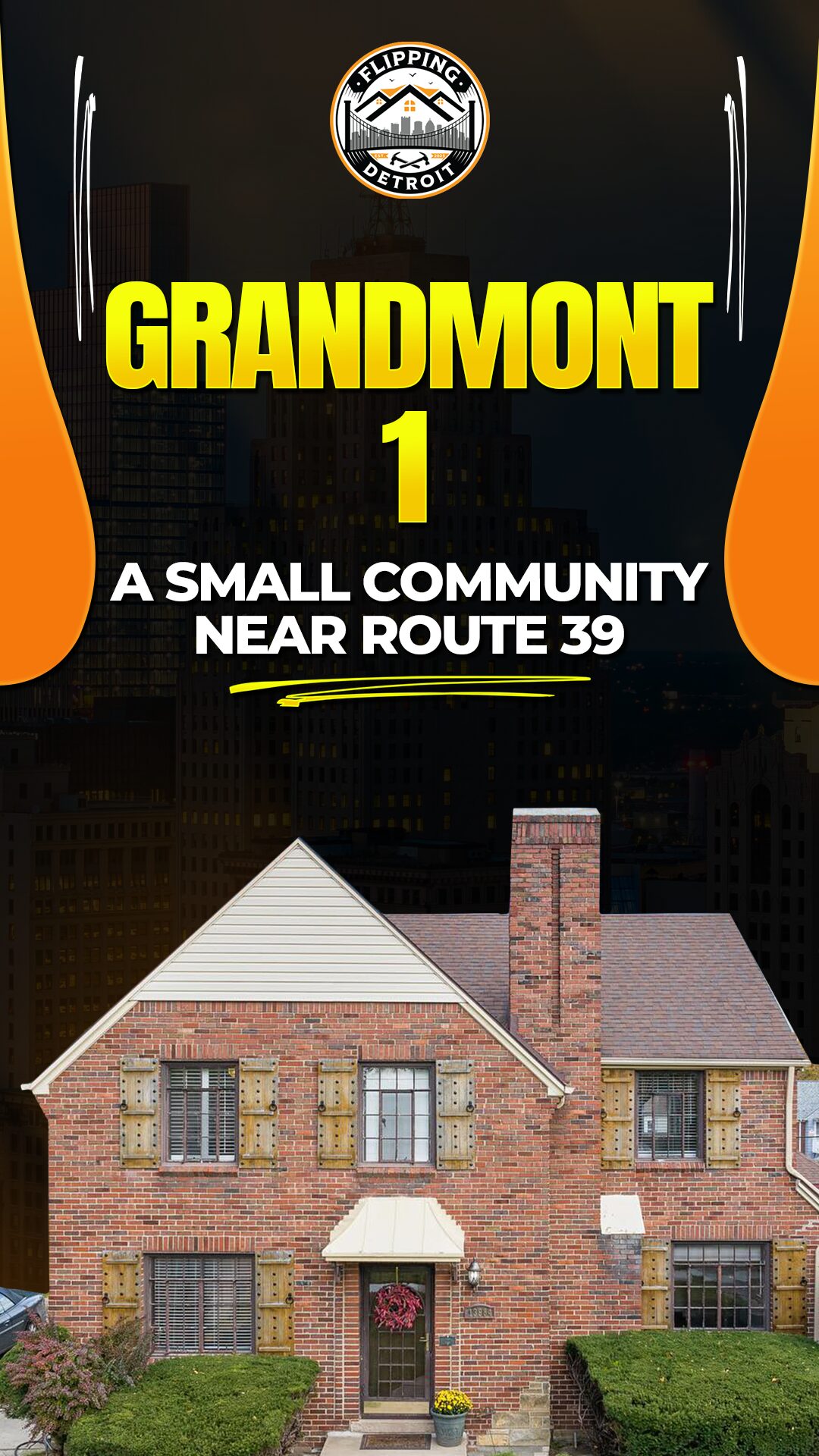
Grandmont #1: Detroit’s First “Grand” Neighborhood

Detroit’s Grandmont #1 is a perfect embodiment of its finest qualities: endurance through times of struggle, creative renewal, and everyday pride. 

Located within Wayne County’s 48223 ZIP code, Grandmont #1 is a charming residential enclave that forms part of the trio known as “Grandmont–Rosedale,” which also includes nearby Rosedale Park, North Rosedale, and Minock Park.

Founded nearly a century ago, the neighborhood serves as proof that strong roots and collective responsibility can keep a community going through every era and its challenges.

It set an early standard for what Detroit would one day evolve into with its sturdy mid-century style homes, shaded streets, resident-led groups, and deeply rooted civic pride.

First developed in the early 19th century during Detroit’s westward expansion, Grandmont #1 initially came into being due to the need for affordable housing for the city’s auto industry employees and their families, who craved the comfort of suburbia without having to sacrifice the amenities of big city living.

As for its name, “Grandmont” is derived from “Grand Mountain,” which was intended to evoke prestige, strength, and permanence. 

Housing and Curbside Appeal

Grandmont #1 was fully built out by the 1940s, its brick homes and well-maintained lots reflecting a high degree of craftsmanship and care.

The community managed to maintain that cohesion even in Detroit’s toughest periods, with homeowners sticking around and doing the work to keep Grandmont #1 beautiful and safe even in the face of widespread blight and economic instability.

From this came the Grandmont #1 Improvement Association, which was founded in 1941 and continues to be one of the city’s most active neighborhood groups, not to mention one of the main pathways used by residents to preserve property values and curbside appeal. 

It’s the kind of place that manages to feel both historic and on the rise, its eye-catching Tudors, brick colonials, and bungalows among some of Detroit’s finest examples of early- and mid-century residential design. 

Recreation, Schools, and Dining

Grandmont #1 residents are zoned through Detroit Public Schools Community District, with Cooke STEM Academy and Communication and Media Arts High School two of the top schools in the area based on enrollment.

Residents are also in close proximity to Rouge Park, Detroit’s largest park with its endless sports fields, trails, and picnic areas.

For those looking for a more laid-back outdoor experience, there are smaller pocket parks all around the community, many of which host seasonal block-club events, youth programs, yard sales, and gardening days.

As for dining, Grandmont #1’s prime location along Grand River Avenue and Outer Drive puts residents right in the heart of the action.

Here, you’ll find everything from grocery stores, bakeries, and small markets to family-run restaurants serving up Detroit favorites like barbecue, soul food, coney dogs, and Caribbean.

There really is something for everyone here.

Final Word

Like much of Detroit, Grandmont #1 has faced its fair share of struggles, going up against everything from crumbling infrastructure to lack of property-maintenance and city funding.

Regardless, it remains a beacon of stability thanks to its active and engaged residents, homeowner solidarity, and bustling recreation options.

What the future holds for Grandmont #1, we can only guess.

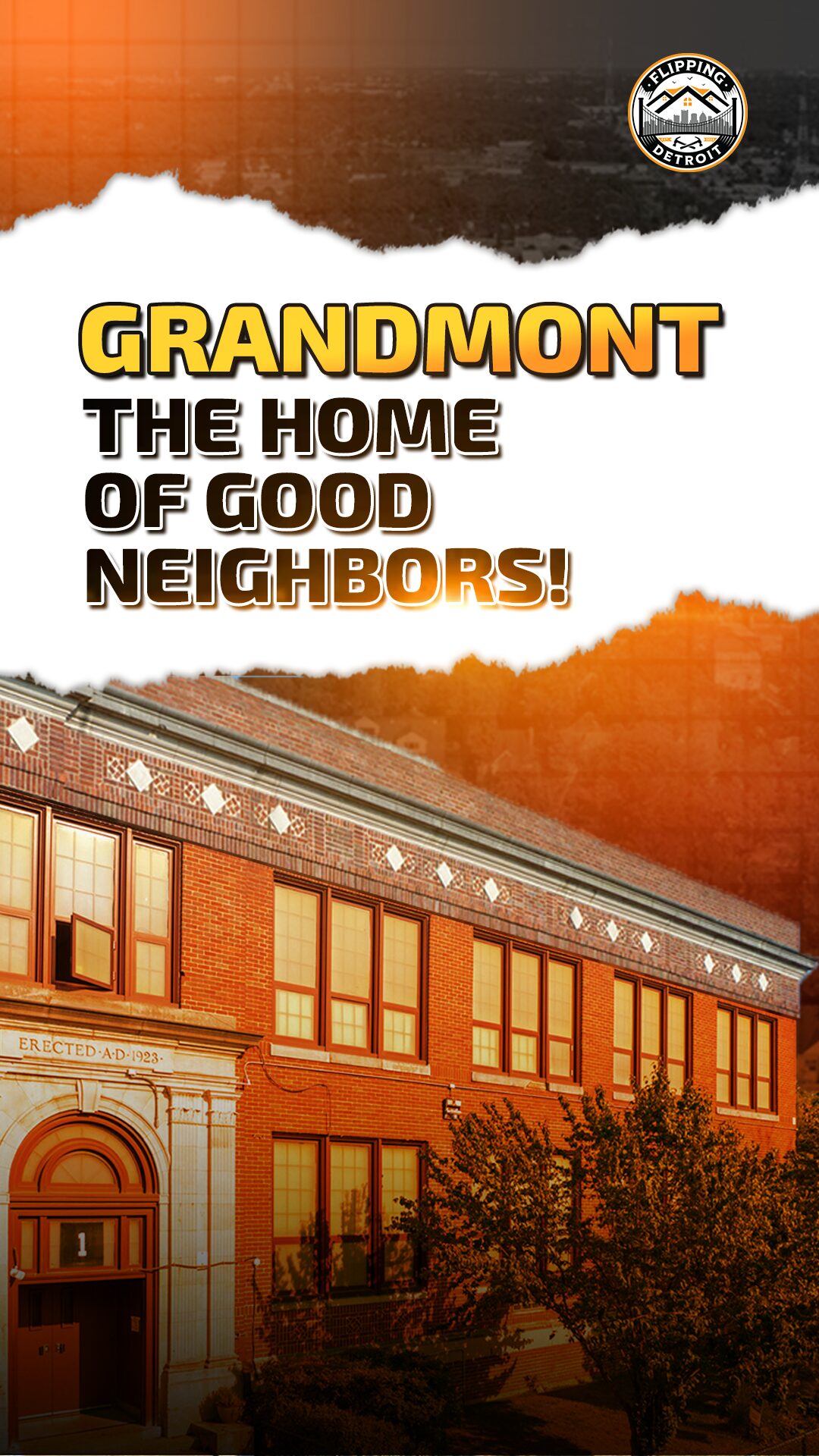
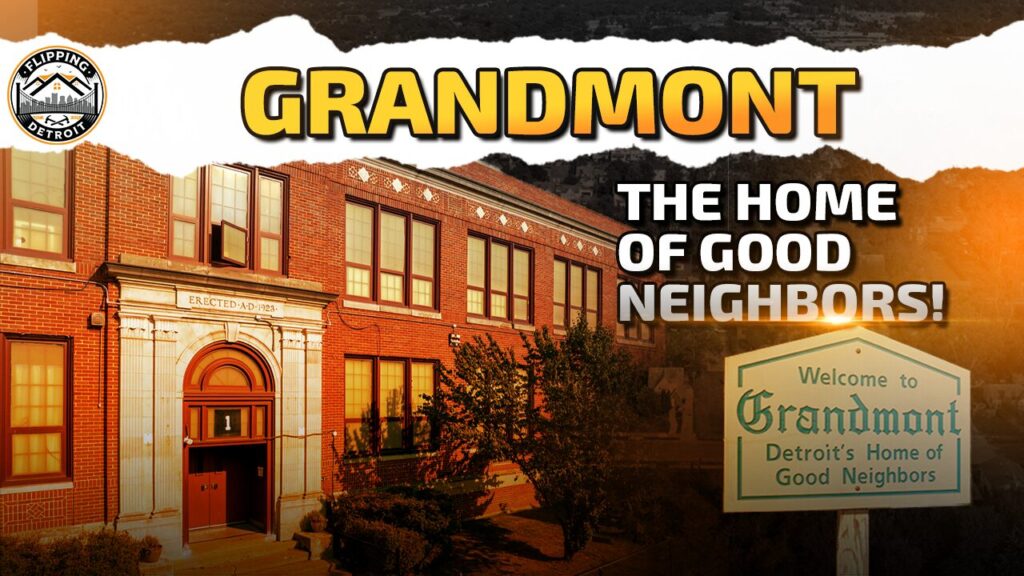
Grandmont: District 1’s Model of Resilience and Community

Nearly a century after its founding, Grandmont continues to stand tall as a model of Detroit’s very best traits: self-reliance, resident pride, and endurance under pressure.

Located in northwest Detroit within Wayne County’s 48227 ZIP code, Grandmont is best known for its strong roots and neighborly values, which can keep the community thriving generation after generation.

Here, you’ll find sturdy brick homes, canopy tree-shaded streets, and a peaceful suburban energy right in the heart of the city, all of which exist right on the boundary of the broader Grandmont-Rosedale region that includes neighboring communities like North Rosedale, Rosedale Park, Minock Park, and Grandmont #1. 

History, Schooling, and Architecture 

Grandmont got its start in the early 19th century at a time when Detroit’s growing automobile industry brought an increased need for affordable housing in the area.

Real-estate developers responded by giving them exactly that, creating a charming yet affordable neighborhood where everyone from factory workers and their families to the city’s expanding middle class (teachers, engineers, and small business owners) quickly flocked in search of a stable living environment close to major roadways and good schools.

By the middle of the century, Grandmont had earned a reputation for being a very pleasant place to call home, a reputation it managed to maintain even in the face of Detroit’s rapid economic decline thanks to the presence of active resident groups like the Grandmont Community Association, which continues to see locals doing their part in giving back by participating in beautification projects, security patrols, and neighborhood events that keep the community well-connected and invested.

As for what kind of housing you can expect to find in Grandmont, most properties here reflect classic postwar craftsmanship, with sturdy brick colonials, bungalows, and Tudors leading the way. 

Grandmont residents also take curbside appeal very seriously, which is clear by its well-kept lawns, regularly maintained flower beds, and overall peaceful outdoor atmosphere.

For schooling, the neighborhood is served by Detroit Public Schools Community District, which brings highly acclaimed local institutions such as Cooke STEM Academy and Communication and Media Arts High School.

Recreation, Dining, and Everyday Life

Recreation and culture are two core parts of Grandmont’s culture, which is why it’s not uncommon to smell BBQ wafting from a church cookout or block party or lively community festivals unfolding in the streets on warmer months.

For year-round dining and recreation, Grandmont locals enjoy quick access to a number of great cafes, delis, small grocery stores, bakeries, and long-running local establishments over on nearby Grand River Avenue, or for larger-scale shopping you can simply head on over to the Greenfield and Southfield shopping corridors.

More of an outdoorsy type?

You’re in luck.

Grandmont residents are within close proximity to District 1’s O’Hair Park, a treasured green space that offers trails, sports fields, and picnic spaces where local families gather for youth sports, evening walks, and seasonal community events like outdoor movie nights and gardening competitions.

In other words, there really is something for everyone here.

Challenges and Looking Ahead

Although Grandmont has not managed to escape many of the concerns that plague the city of Detroit as a whole (shortage of resources, aging infrastructure, rising maintenance costs), its dedicated residents continue to meet these challenges head-on.

Through collective effort, the area is slowly climbing out of the ashes of Detroit’s recession period, with a number of active community associations working overtime to safeguard its beauty and prioritize resident safety.

If this continues, it just may become known as one of District 1’s most desirable areas to live in.