Stand out as a trusted local business with the Verified Business Profile Upgrade! Get a Verified Badge on your profile, lead priority in search results, increased trust with buyers & sellers, placement in the Professional Directory, and an SEO-optimized profile to boost your visibility. Upgrade today and get noticed!
💳 Total: $30.00
Checkout Details
Agent Registration
Account Created!
Thank you for your subscription and registration. You'll be redirected shortly. Please check your email for your login details.
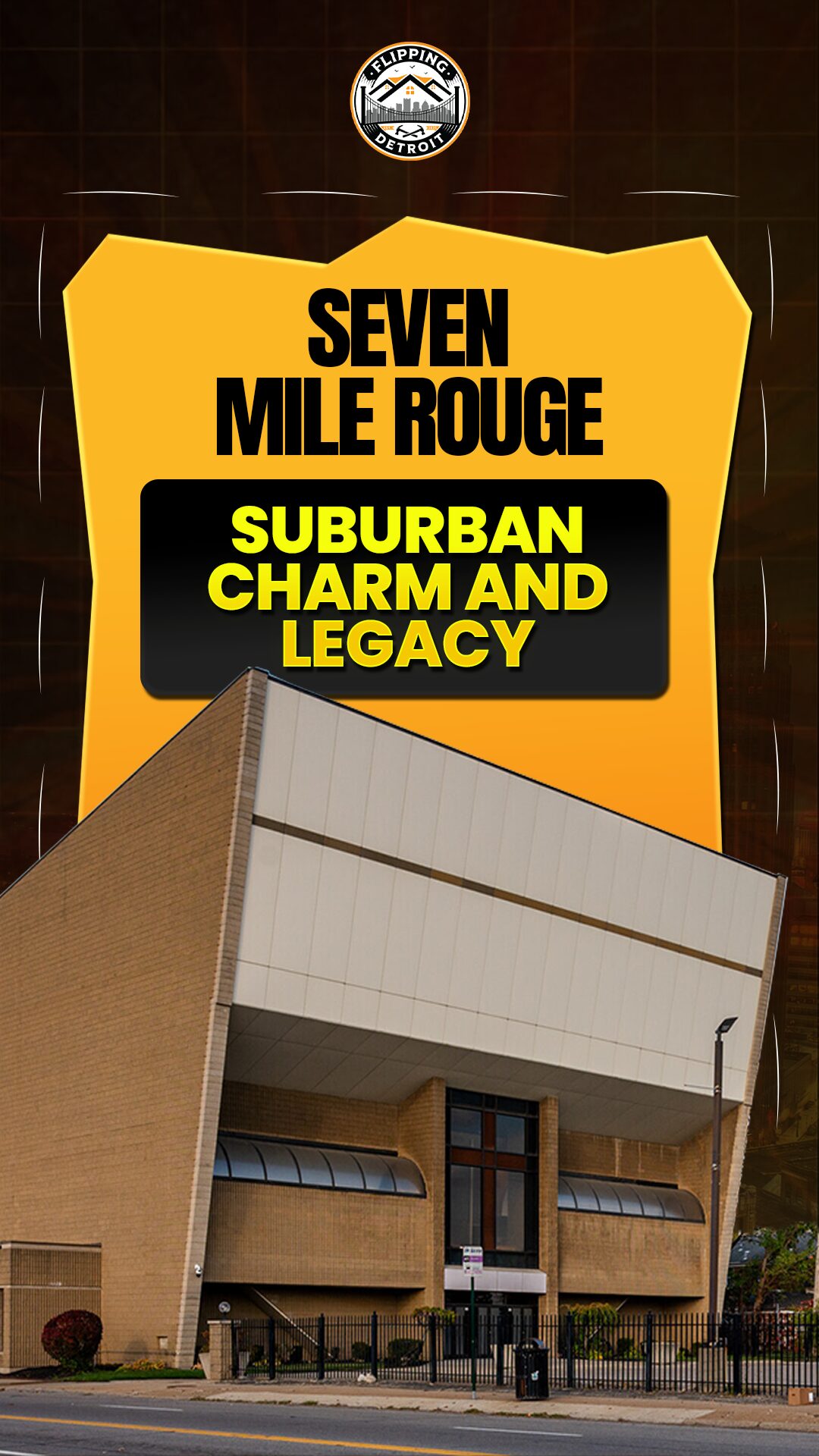
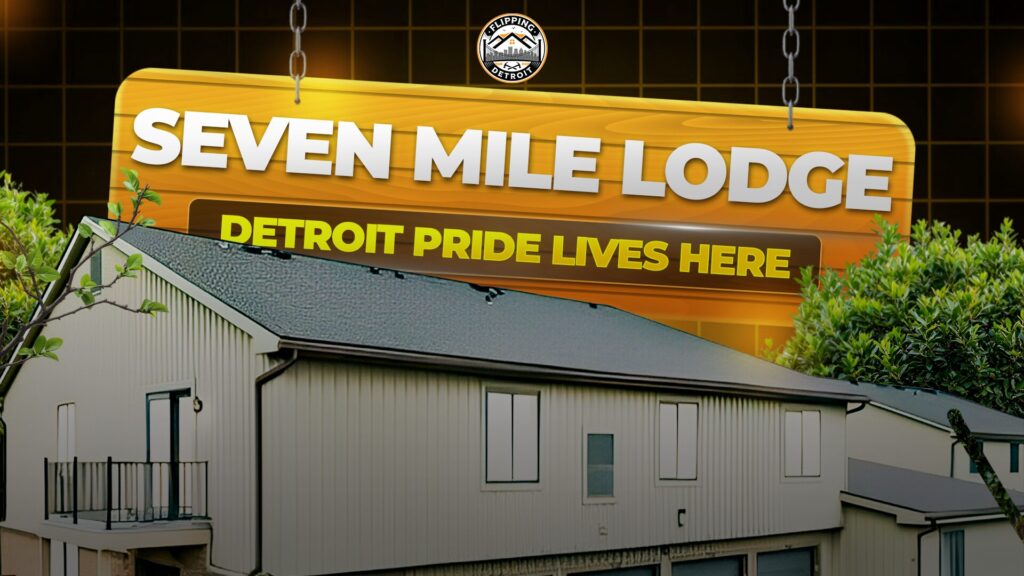
Seven Mile Lodge is a District One Detroit neighborhood that may not receive a lot of attention, but that doesn’t mean it doesn’t have a lot to offer.
Situated on the western side of Seven Mile Road near Lahser and Telegraph, Seven Mile Lodge is the kind of place where front lawns are well maintained, and neighbors still know each other by name.
If you’re looking for a Detroit neighborhood where the American Dream still feels alive and well, look no further than Seven Mile Lodge – a portrait of persistence under pressure.
Here, life-long residents and first-time homeowners enjoy gorgeous historical architecture, close proximity to Southfield’s retail and dining hubs, and churches that anchor the community with youth mentorship, family outreach and food drives.
Seven Mile Lodge has also begun to benefit from the city of Detroit’s efforts to improve street lighting and resurface roads, which is in turn leading to the once vacant lots sprinkled throughout the area being plucked up and repurposed into lush green spaces.
In short, Seven Mile Lodge is the kind of living community where it feels like revitalization is uplifting what’s already here, not aiming to price people out.
Its nickname “the Lodge” is more than just a clever play on its geography.
It represented belonging – a place of refuge for everyone from upwardly mobile Black professionals to teachers, postal employees, nurses, and foremen.
Origin Story, Hardship, and Resilience
Seven Mile Lodge was born out of Detroit’s early twentieth-century westward expansion.
It was a time when the Motor City’s automotive boom was transforming farmland into sprawling neighborhoods for factory workers and their families as well as other middle-class families seeking to escape the city’s dense center in search of a quieter way of life.
As for its architecture, Seven Mile Lodge’s homes reflect the era it came alive in: think solid brick colonials and ranch-style houses with spacious front porches, large lawns, and ornate detailing like arched doorways and bay windows.
Of course, even the very best neighborhoods aren’t without their struggles.
Like most of northwest District One, Seven Mile Lodge faced immense decline during the city of Detroit’s recession periods that saw jobs vanishing, homes being foreclosed on, and storefronts going belly up practically overnight.
That said, the neighborhood’s identity remained strongly rooted through it all.
Those who stuck through the stormy weather organized community patrols and block clubs, tended to gardens, volunteered to watch over and assist elders, and took over for city services themselves when they began to lag.
Here, maintenance became a form of defiance.
A way of saying: “That’s right…We’re still here.”
Heart of the Lodge
At its core, Seven Mile Lodge is a place of endurance.
Rather than blindly seeking out reinvention, it’s a place telling its own story on its own terms.
Here, every block serves as living proof that Detroit’s strength isn’t measured in its million-dollar construction projects or flashy headlines, but in the resilience of its devoted residents.
What the future has in store for the Lodge…only time will tell.
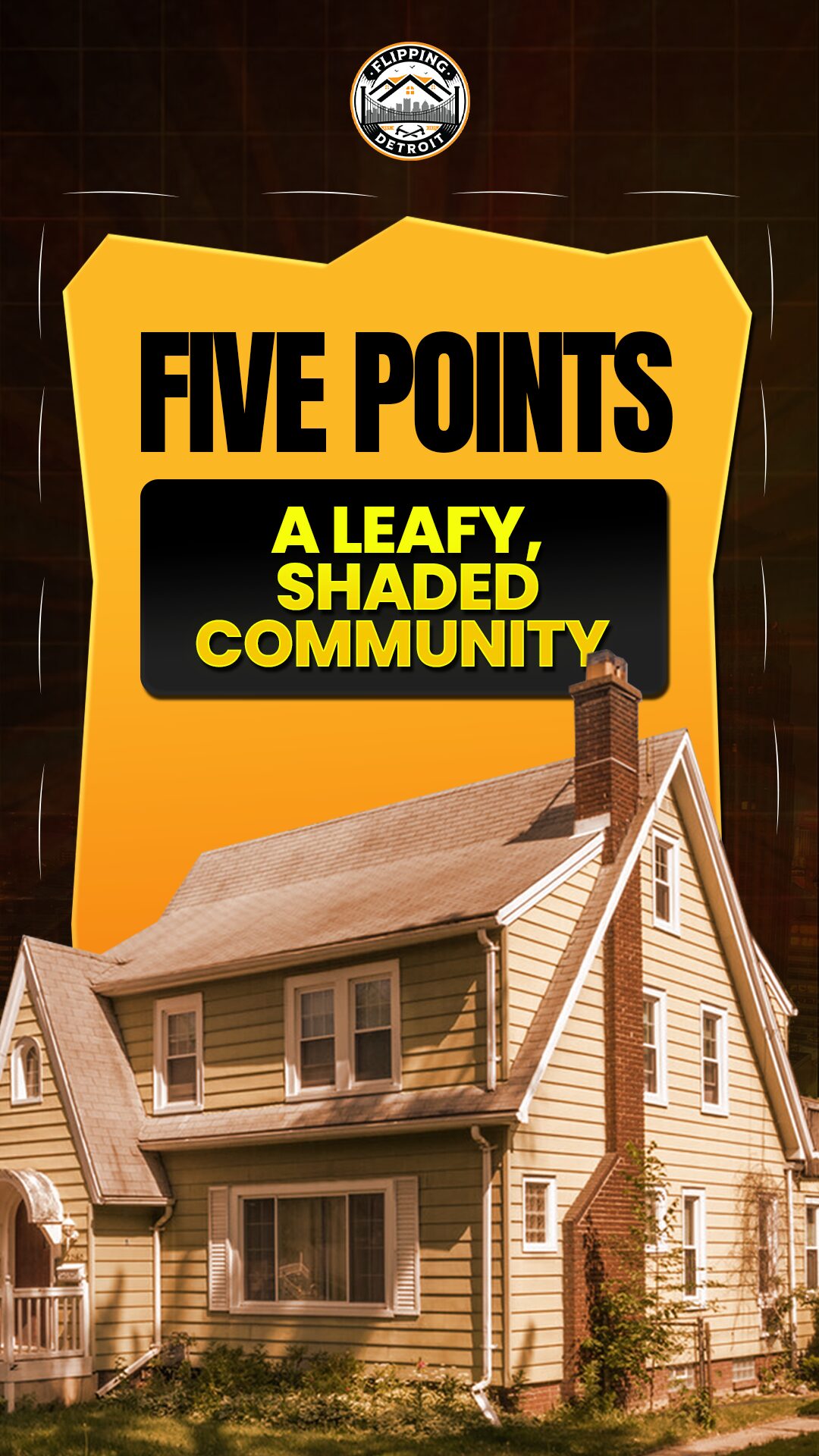
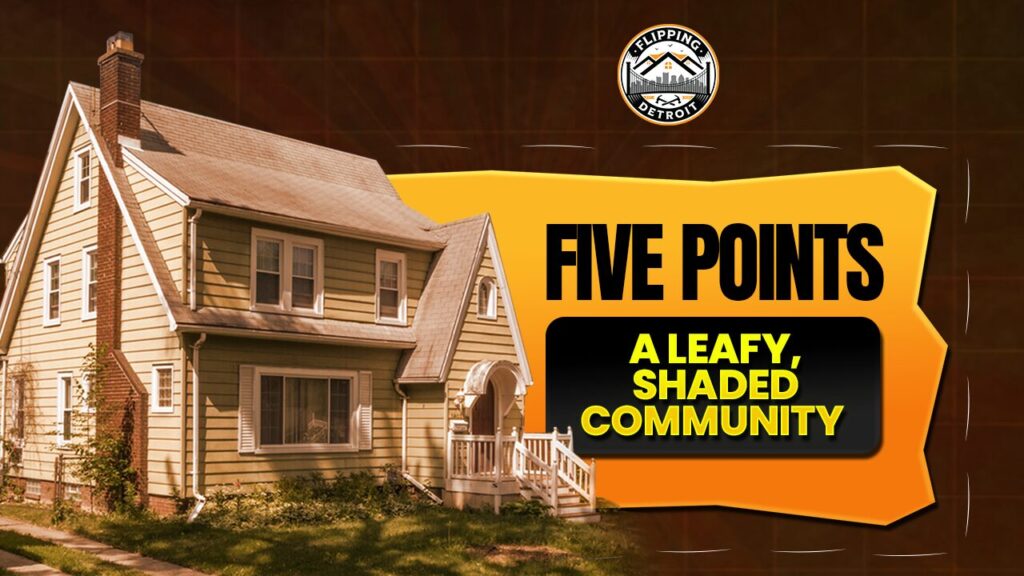
Five Pointsis a Detroit neighborhood situated at the edge of the city’s northwest border, where Seven Mile, Grand River, and Five Points Street intersect.
It gets its name from the unique geometry of that intersection, which has a long-standing reputation as a meeting place where culture, history, and multiple generations converge in an area that somehow manages to feel both suburban and big city at the same time.
Birth of a Cultural Hub
In the mid-twentieth century, Five Points was known as a place that welcomed Detroit’s upwardly mobile Black families with open arms, leading many of them to flee the more uptight east-side neighborhoods to settle there.
However, if you were to rewind further back, the area now known as Five Points was nothing more than old Redford Township farmland – a rural outpost that existed on the outermost edge of the Motor City as it was booming.
It wasn’t until the city of Detroit finally annexed Redford in 1926 that the area became known as Five Points, a move that brought everything from streetlights to paved roads – not to mention brand new homes for the employees at Ford’s Rouge Plant and other busy factories of the day.
These were modest, sturdy, eye-catching brick colonials and bungalows that can still be seen lining the shaded streets of Five Points today – homes that tell the story of ambition, growth, and self-sufficiency even in the face of struggle.
A Place to Belong
Five Points is one of those rare pockets of Detroit that still feel suburban and well-maintained despite being within arm’s reach from the city’s industrial districts.
Even as Detroit’s population started declining in the 1950s and 1960s, Five Points held on to its unique identity, with churches, local clubs, and small businesses along Seven Mile and Grand River helping anchor its reputation as a place of pride, ownership, and connection.
With curving roads contrasting with the tighter layout of the blocks closer to downtown, residents often describe Five Points as the kind of place where you can sit out on your porch in the summer, converse with neighbors, have weekend barbecues, and never feel even remotely unsafe.
That said, it’s still unmistakably Detroit.
The street art, the corner stores, the combination of old-school charm and new-gen hustle – it’s all easy to come by here.
Community Life and Challenges
Like most of Detroit’s District One neighborhoods, Five Points has faced its fair share of struggles over the years, most of which stem from the 2008 housing crash and the many homes it left behind.
This was a traumatic time that saw many lifelong Five Points residents losing everything they had to foreclosure and mass migration.
That said, those who hunkered down and stayed through the storm fought long and hard to preserve the original spirit of the neighborhood, implementing everything from community patrols to beautification projects to prevent the area from slipping into neglect.
Today, a number of grassroots groups continue to fight that battle, focusing the bulk of their attention on reclaiming abandoned lots and turning them into lush community gardens and recreation spots.
Not only that, but Five Points schools have also seen a comeback in recent years thanks to renewed support from local parents, alumni networks, and volunteer efforts from devoted residents.
Churches also remain a solid community anchor.
Look no further than Greater Grace Temple, which provides not only spiritual guidance but also mentorship, outreach, and job resources.
The Path Forward
The future of Five Points is looking bright, but it all depends on the city’s ability to balance out its reinvestment efforts with working-class authenticity.
As for investors and first-time home buyers, the area definitely serves as an appealing option for those seeking out the best of both worlds: city living with a down-to-earth neighborhood feel.
Its close proximity to major thoroughfares and its stable housing stock are also a huge plus.
In short, Five Points is more than just an iconic intersection.
It’s Detroit’s symbol of endurance and integration – a place where stories intersect, streets converge, and residents still hold the line between past and future.
Detroit is on the cusp of a once-in-a-generation equity boom.
Rising demand, low market entry prices, and numerous upscale redevelopment projects have created a perfect storm for investors and first-time homeowners alike.
We are entering a time when interest rates are finally beginning to stabilize, infrastructure spending is improving Detroit’s urban centers, and corporate migration is accelerating at a major pace.
In short, an urban renaissance is underway.
Detroit’s affordability is drawing attention from REITs and national institutional investors, and large-scale construction projects like the Joe Louis Greenway and the Hudson’s Tower are redefining livability and accessibility, especially thanks to multiple new transit expansions across the city.
The grassroots movement is also thriving, with various local institutions and city programs restoring community trust, bringing safety back to heavily blighted blocks, and increasing homeownership in zip codes that were once largely ignored.
In short, Detroit’s long-running “comeback city” reputation is now being backed by verifiable evidence, not just optimistic thinking.
It feels as if the city is moments away from taking off, even if most residents and outsiders are still skeptical of the immense progress to come.
To the educated spectator, an investment in Detroit today is an investment in the next decade of its iconic resurgence.
Detroit’s residential market is a smart investment due to the area’s exceptional cap rates of about 9-14%, as well as the city’s growing rental demand, driven by traveling nurses, tech employees, and trade workers.
That said, the proper investment strategy is crucial here.
For first-time homeowners and flippers alike, Detroit offers a rare balance between affordability and growth, with programs such as the Detroit Home Mortgage and the Detroit Land Bank Authority Auction providing the funds needed for full-scale restorations of the city’s most blighted properties.
Detroit’s Residential Property Trends
With residential renovations averaging in the $40,000-$80,000 range in Detroit’s most sought-after fix-and-flip zip codes, many local and outside investors are realizing six-figure resale profit potential for the first time in decades.
In fact, appreciation in Detroit’s most stable neighborhoods has far outpaced projections, with a 8-12% year-over-year growth in some areas that is expected to further increase due to widespread corporate relocation and multiple big-ticket construction projects currently unfolding downtown and elsewhere.
Final Verdict
In summary, if your investment horizon is anywhere between 2 and 10 years out, buying up residential property in Detroit is a solid move.
With patience, local partnerships, and the right strategy, the returns are expected to rival those of other major U.S. markets – at a fraction of the cost.
As with any real estate market, timing is everything when it comes to purchasing property in Detroit.
Don’t wait.
While the city’s property values still range about 30-40% below the national average, the window to scoop them up at an affordable price is closing fast.
Consider the fact that many of these properties are located within quickly appreciating zones – blocks where newly constructed commercial corridors, restored infrastructure, and city-facilitated demolitions are beginning to create scarcity in move-in-ready housing.
This comes on the heels of the Covid-19 pandemic, which had a real effect on Detroit’s real-estate migration patterns and attracted an entirely new pool of investors to the city in the face of an extreme drop in pricing.
With mortgage rates not expected to even out from that period until late 2026, today’s prices may very well be some of the lowest of the decade, which means that smart buyers who acquire properties now can secure solid appreciation and rental yield.
This climate is especially appealing to investors and first-time buyers alike, who have already begun staking a claim in lucrative Detroit zip codes like 48228, 48219, and 48235 that are projected to greatly benefit from coming redevelopment.
So yes, now is indeed a good time to buy, buy, buy – but only if you have realistic expectations and a solid plan in place for renovation and long-term holding.
After all: Today’s affordable inventory is tomorrow’s high-demand housing stock.
Many residential real estate investors get spooked by the idea of investing in Detroit due to the significant repairs most properties here will likely need.
Whether or not it’s worth it comes down to your resources, budget, contractor network, timeline, and end goal – factors that will significantly vary from person to person.
For starters, you’ll want to consider the fact that the majority of Detroit’s most affordable properties require $30,000–$100,000 just in renovations. The upside is that once these properties are finished, they often far exceed the purchase and repair costs, especially in up-and-coming, highly sought-after corridors such as Bagley, Aviation Sub, and Grandmont-Rosedale.
Sweat Equity = Value
Although Detroit’s repair-heavy inventory may scare off casual buyers and first-time homeowners, the market here poses real opportunity for investors with long-term vision and patience.
It also helps that there are a number of mortgage programs, city grants, and neighborhood renovation funds in place for first-time buyers and investors alike, as well as low-interest loan opportunities.
Look no further than the Rocket Community Fund and the Detroit Land Bank, both of which greatly reduce the risks associated with renovation by subsidizing the cost of improvements.
All in all, if you’re prepared to put in the work or can afford to hire the right contractors to do it for you, the payoff in Detroit’s residential market is huge.
If you’re wondering whether or not Detroit’s real estate market is a lucrative investment, you’re in luck.
The metro area is indeed one of the most dynamic US urban markets undergoing major transformation and renewal in 2025 and beyond.
It’s a comeback story that’s been a long time in the making.
Detroit has an unfortunate reputation as a city marked by blight, disinvestment, and decline, so to see it now turning so sharply in the other direction is nothing short of a miracle made manifest.
Today, new life is being breathed into Detroit’s most neglected blocks in the form of local investment, public-private partnerships, corporate expansions, and expansive neighborhood redevelopment efforts.
With that in mind, the question is no longer, “Is Detroit a good investment move?” …it’s “How can I best position myself to win before prices skyrocket and critical mass is reached?”
Detroit’s Market Fundamentals
Lucky for potential investors, Detroit’s median home prices are still among the lowest of any major metro while its rental costs consistently outperform national averages.
Historic zones such as East English Village, Bagley, and Grandmont-Rosedale offer attractive entry points in the $120,000 range, despite these areas seeing double-digit appreciation in recent years.
Not only that, but thanks to new mortgage programs targeting first-time homebuyers and cuts to statewide property taxes, Detroit’s liquidity is also on a steady upswing.
Economic Factors
Detroit’s suburban real estate market isn’t its only sweet spot.
Billions are being injected into the city in the form of lucrative construction projects downtown and elsewhere.
Look no further than the Gordie Howe Bridge linking Detroit to Canada by way of Windsor, or the Henry Ford Health renovation.
The latter of which (the Henry Ford Health project) is poised to bring endless logistics facilities, real-estate redevelopment initiatives, and most importantly…a boom of jobs, including in tech.
This means long-term economic growth is right on the horizon.
Final Verdict
Make no mistake:
Investing in Detroit’s real estate market isn’t for those looking for an easy route.
It requires discipline and the right investors – primarily those who have a deep understanding of turnaround cities.
Not all neighborhoods here are equal when it comes to factors like safety ratings, school scores, and market momentum.
That said, for those willing to put in the work and do their due diligence when it comes to things like renovation, property management, and ensuring zoning rules are closely followed, Detroit offers a lucrative access point into a high-potential market – one that will only become even more attractive in years to come.
The key here is proper targeting.
Go after stable, emerging blocks, take advantage of local expertise whenever possible, and ride the city’s macroeconomic upswing.
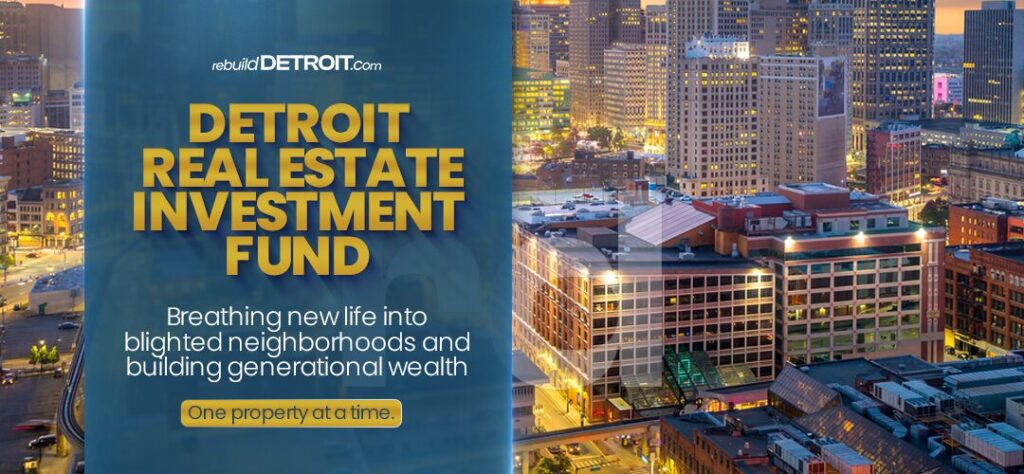
Breathing New Life into Blighted Neighborhoods and Building Generational Wealth, One Distressed Property at a Time
At Rebuild Detroit, we are firm believers in a basic truth: Detroit’s neighborhoods don’t need to be reinvented by outsiders with no stake in its story.
They need to be reclaimed by the people who are already here.
That’s where Phase I of the Detroit Real Estate Investment Fund comes in.
Here, we are focused on restoring blighted properties in historically significant areas of Detroit.
Unlike speculative investing, our method is targeted, local, and focused on hands-on restoration centered around equity.
The process is simple:
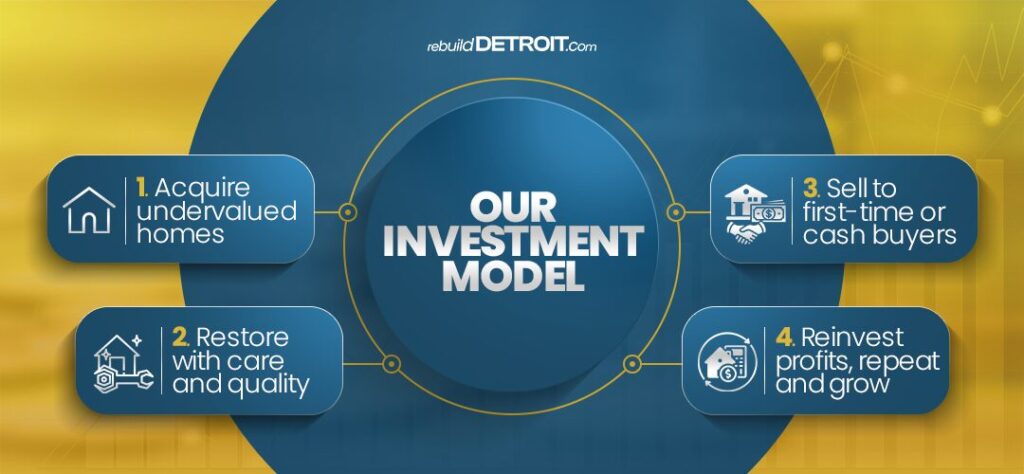
We purchase distressed homes, restore them with care and an eye for quality, and flip them to first-time homeowners and qualified cash buyers.
This creates a pipeline of generational wealth for Detroit locals, all while delivering high returns to investors.
As for the main neighborhoods we are targeting in Phase one, our initial focus is on four key Detroit ZIP codes that have proven themselves to be overflowing with potential:
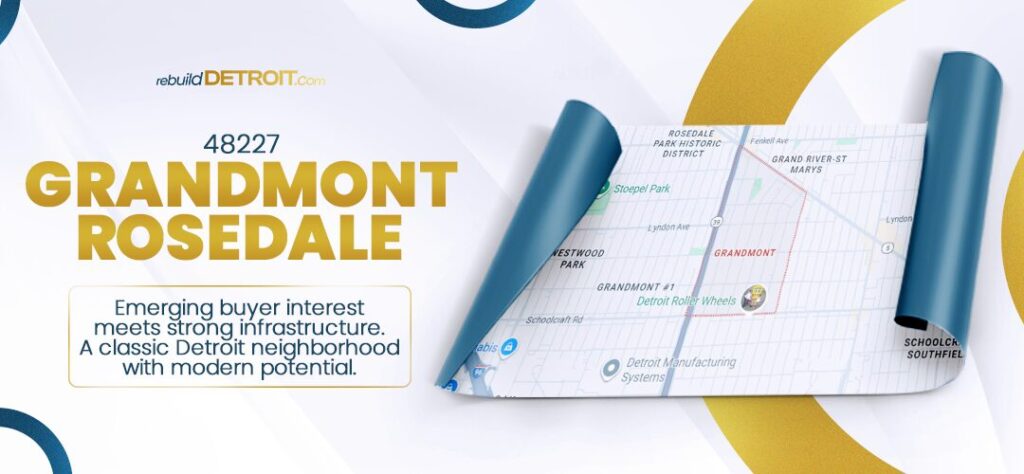
48227: The Grandmont-Rosedale zone, which has seen emerging interest from buyers and investors thanks to its accessible infrastructure
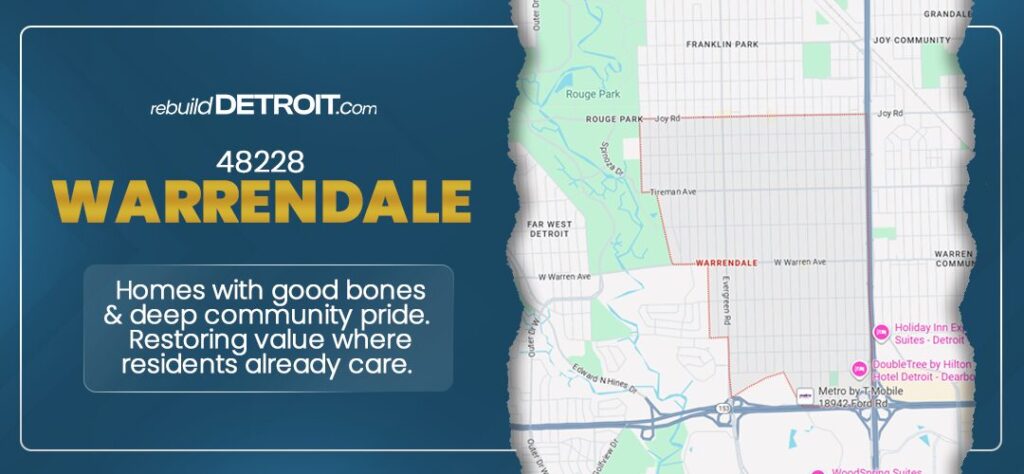
48228: The Warrendale area, known for its homes with good bones and fierce resident loyalty
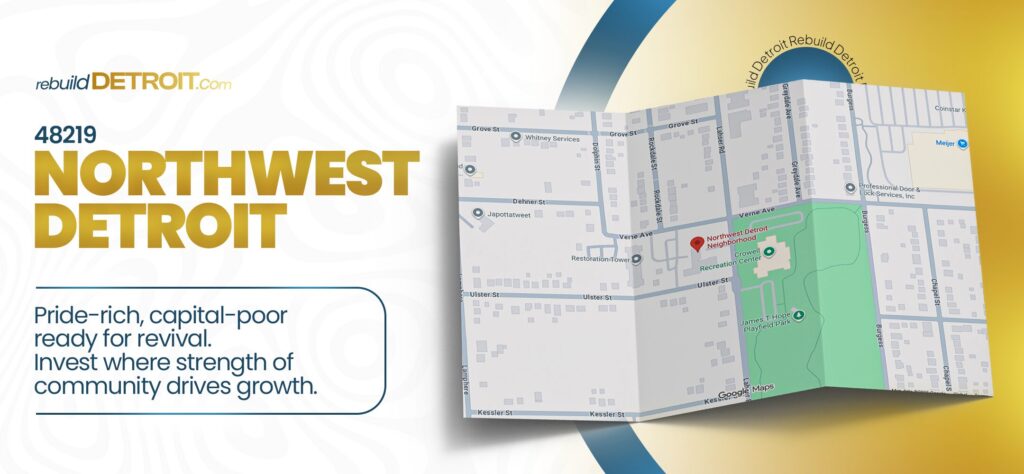
48219: Northwest Detroit, an area heavy on pride yet low on capital
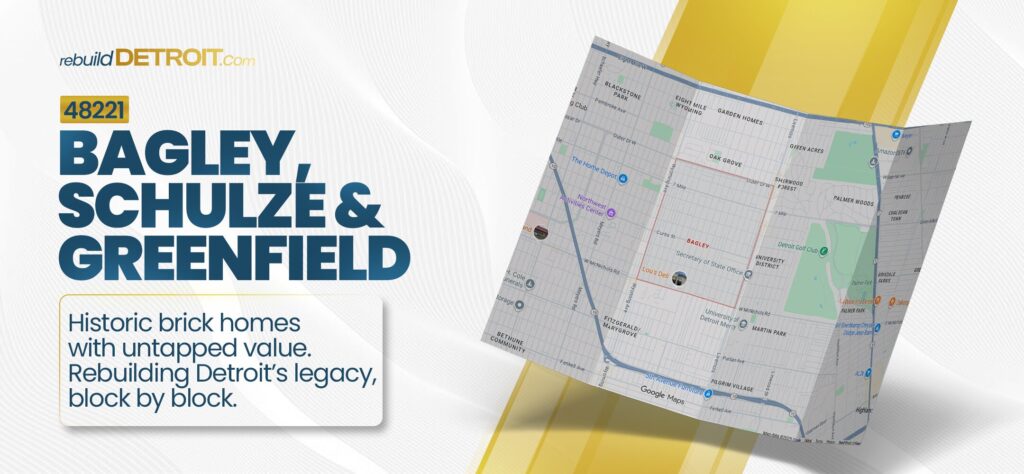
48221: The zone that is home to the iconic Bagley, Schulze, and Fitzgerald, where you’ll find gorgeous classic brick homes that carry a high value even if they are heavily neglected
These areas are our Phase I focus thanks to their winning combination of location, architectural quality, and low entry, making them popular choices for first-time homeowners such as millennials and Gen Z buyers, cash investors, and returning residents.
Investment Theory
Detroit’s suburban real estate has been one of the most overlooked and undervalued markets in the country for decades, despite its downtown and midtown areas attracting much institutional capital and corporate attention.
Phase I of Rebuild Detroit’s Real Estate Investment Fund looks to fill that gap. Our plan is to:
Obtain deeply undervalued homes through land bank auctions, off-market deals, and tax foreclosures
Restore properties to make them code-compliant and move-in-ready
Resell rehabbed properties to mortgage-ready first-time homeowners and cash buyers
Rinse, wash, and repeat by reinvesting gains into new acquisitions, which will in turn benefit the entire community and foster stability in the neighborhoods that need it the most
With Rebuild, each property acquired is treated as a long-term investment, not just a flash-in-the-pan flip.
Investor Benefits
By signing up as a Phase I investor, you aren’t just guaranteed a constant stream of returns. You’ll be securing a piece of Detroit’s bright future.
With Rebuild, your capital goes to work for you immediately right here in your own hometown, rather than being funneled into abstract markets or foreign developments.
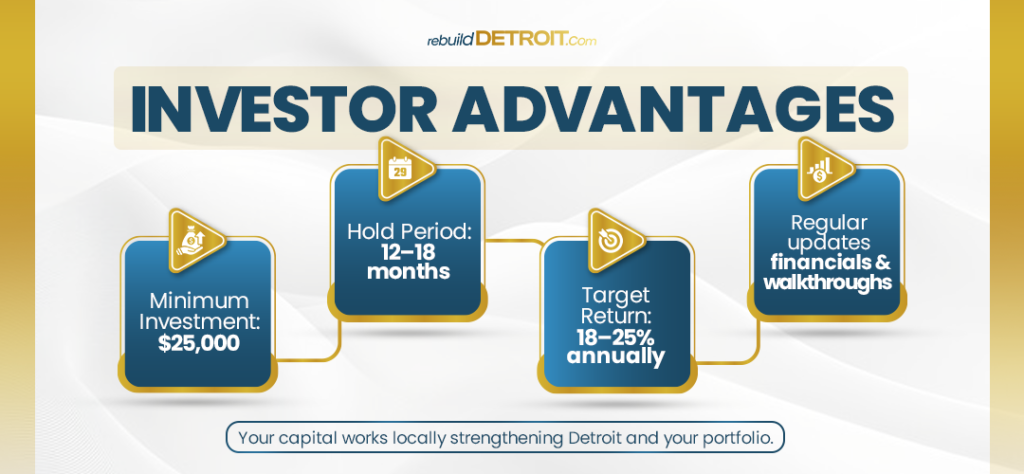
Here’s the rundown:
Minimum investment needed: $25,000
Projected hold period: 12-18 months maximum
Target return: 18-25% annually
Investor updates: Regular meetings, monthly reporting, quarterly financials, as well as video and photo walkthroughs
At its core, Rebuild Detroit is hyper-local, value-centered, and rehab-savvy.
We offer:
· Local Advantage
Our real estate team includes everyone from Detroit natives to renovation specialists to licensed brokers and market-aware data analysts.
· Off-Market Access
Our properties are sourced long before they’re listed, utilizing a combination of auction tracking, quiet title processes, and referrals.
· Block-Focused Strategy
Our investments aren’t scattered. Instead, we cluster them, focusing our attention on neighborhoods with at least 50% owner-occupancy rates.
· High-quality Renovation
All of our renovation work is well-crafted, code-compliant, and done under the proper permits and licensing.
By partnering with nonprofits and mortgage advisors, we prepare Detroit locals for home ownership and reduce buyer churn, all while stabilizing property values, benefiting local construction contractors, and creating safer, cleaner blocks.
Don’t just invest with us.
We encourage you to get involved: walk properties, meet with buyers, and witness the change firsthand.
After all, we’re playing the long game here.
Detroit is a legacy city in the middle of a groundbreaking reinvention.
Phase I of Rebuild’s Real Estate Investment Fund is just the start.
After we build out a strong proof-of-concept across our first cluster of targeted ZIP codes, Phase II and III will further expand our reach and scale, affording early investors first look rights for future rounds as well as special terms for multi-property bundles.
Join the Cause
Invest your money where it matters.
Use it to transform blocks, bottom lines, and to rewrite stories.
Rebuild Detroit warmly invites you to be part of Phase I of our Investment Fund.
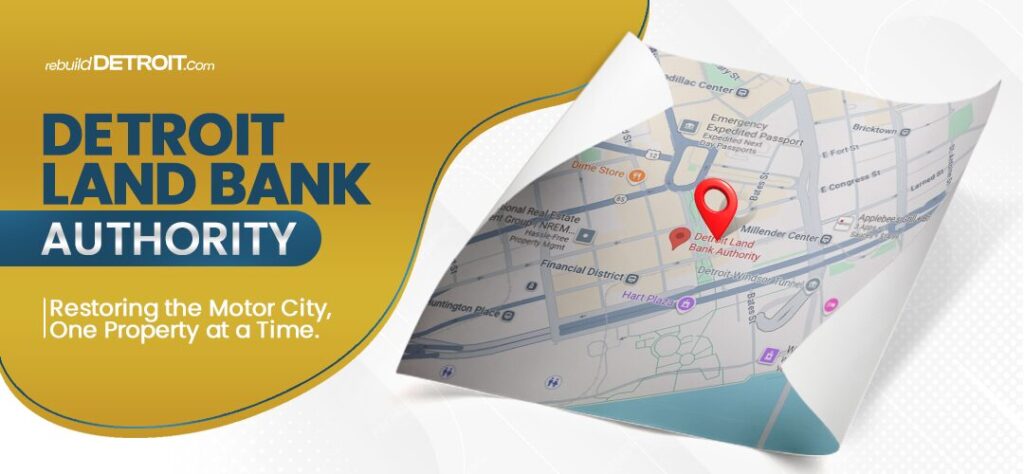
The Detroit Land Bank Authority (DLBA) is a renewal-focused public entity established in 2008 that exists right at the intersection of Detroit’s ongoing struggle and its hope for a brighter tomorrow.
The DLBA operates the largest land bank in the United States and has played a significant role in Detroit’s empowerment since its 2013 bankruptcy as the holder of tens of thousands of parcels (most of which are vacant lots and abandoned homes).
It is one of the city’s top resources to combat blight, promote private homeownership, and foster reinvestment in heavily disinvested neighborhoods.
The Mission
DLBA’s main purpose is to take Detroit’s vacant, abandoned, and foreclosed properties and restore them so that they can be used in a productive manner again.
That said, the implications associated with that mission are surprisingly complex due to the fact that Detroit’s housing stock has become significantly hollowed out since its Motor City boom period. White flight, population decline, and deindustrialization all played a hand in that, and today the DLBA holds the legal title to more than 75,000 parcels of land (about 20% of the entire city of Detroit’s land area) in the face of that.
Michigan’s Public Act 258and the DBLA’s Core Programs
DBLA got its start under Michigan’s Public Act 258 of 2003.
Since it operates through both state statute and municipal partnership, it’s able to clear titles, forgive back taxes, and quickly sell off properties without the hiccups that typically come along with traditional real estate market mechanisms.
DLBA’s work is centered around four primary channels:
Own It Now Own It Now is a fixed-price listing real estate platform offering properties for immediate purchase on a first-come, first-served basis. It’s a program that mainly appeals to buyers who are ready to act quickly and do not want to wait for an auction to secure a property.
Occupied Buy Back The Occupied Buy Back Program exists for current occupants of foreclosed homes to purchase their homes back at a low cost, typically with the assistance and support of various local housing counseling organizations centered around blight prevention.
Auctions The online auction platform allows prospective homeowners and investors to bid on vacant homes, especially in neighborhoods where properties typically get ignored. The starting price is usually around $1,000, and all auctions require buyers to bring the home up to code within six months of purchase.
Side Lots Side lot is a popular program that allows homeowners to purchase adjacent vacant lots for as low as $100–$250, which provides them with the opportunity to expand their yards and create thriving community gardens and gathering spaces. It’s a clever blight solution that stabilizes disenfranchised blocks and rewards those who wish to help save them.
Controversies and Pushback
Like any public entity, DLBA has faced its fair share of scrutiny, investigations, and criticism despite its commendable mission:
Demolition Contract Issues: Inflated costs, poor oversight, and no-bid contracts during demolitions have led to federal investigations, especially during the peak demolition years following the city’s bankruptcy.
Transparency Double Standards: Over the years, many have alleged that the auction process favors out-of-state speculators and investors over long-time Detroit residents. It’s also been alleged that shell companies are able to manipulate the bidding process.
Gentrification: As much as the Land Bank prioritizes owner-occupants and community-based development, many native Detroiters still worry that their work is a prelude to displacement.
Neighborhood Revitalization Impact
All worries aside, DLBA has been a mostly positive force in Detroit’s fight for renewal, stabilization, and growth.
By fixing titles and consolidating land under public control, the Land Bank has become a vital resource in the city’s coordinated renovation efforts.
Restored Land Bank homes in neighborhoods like Bagley, Boston-Edison, and East English Village have brought entire blocks back to life, attracting new homeowners and helping to restore the city’s tax revenue in a major way.
Another major plus is the fact that many DLBA lots have been used to construct community gardens, urban farms, art installations, green infrastructure projects, and even parks.
Look no further than projects like the Fitzgerald Revitalization Project, where the Land Bank took abandoned homes and vacant lots and turned them into lush parks and gardens.
Looking Forward
Detroit Land Bank Authority’s future is still in flux.
Detroit’s real estate market is only just beginning to heat up, which means the Land Bank is now facing an entirely new challenge: ensuring that development remains local, equitable, and accessible to all.
In short: In a city as deeply scarred yet spirited as Detroit, there is no perfect formula—only dedicated entities such as the Detroit Land Bank Authority that are slowly chipping away at decades of decline.
It’s far from a cure-all, yet it remains one of the most powerful avenues of urban transformation in the city today.
Detroit is the kind of city used to rising from the ashes and rebuilding itself from the ground up – a city too often reduced to traumatic headlines and statistics, where everyday citizens are forced to put in real work to restore a sense of peace in the face of widespread governmental failure.
Here, Community Violence Intervention (CVI) groups are a lifeline, a way for neighborhoods to survive that would have otherwise been lost to gentrification and blight.
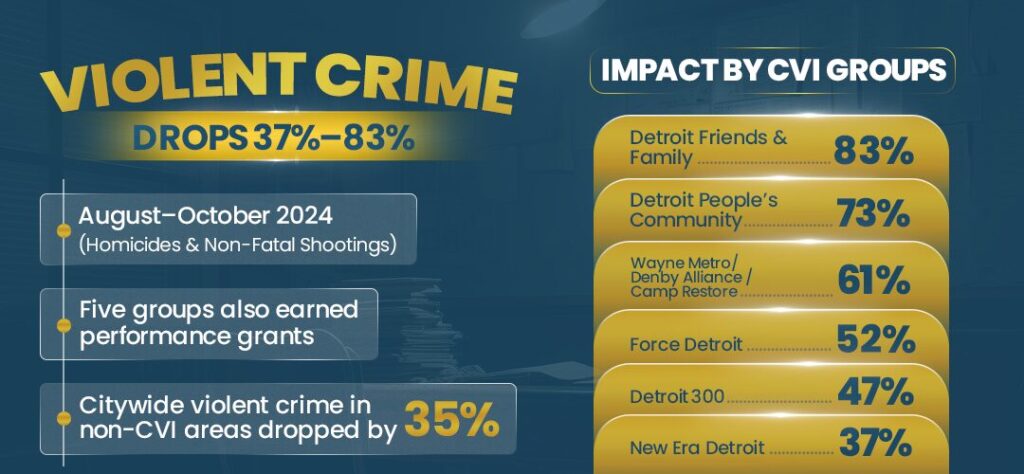
The stats speak for themselves:
Below are some of the powerful local CVI organizations redefining what community safety means in Detroit, each with its own unique methodology and outlook on approaching crime prevention and healing.
A product of Detroit’s East Side, People’s Action is about as real and raw as any community upliftment group can get.
These aren’t volunteers that wait on securing funding or getting permission to act.
Instead, they simply do what’s needed in the here and now: showing up after shootings to de-escalate tension, comforting families, mentoring youth, delivering groceries to families in need, diffusing street conflicts, and offering people rides to work or job interviews.
As part of the ShotStoppers program, People’s Action also created the “Adopt the Block” program, which serves as an avenue for neighborhood residents to take back their blocks with a sense of dignity, accountability, and love.
Since its founding in 2014, New Era Detroit has been a loud, proud, and unapologetically Black CVI combing street-level credibility with well-organized activism.
NED not only patrols the streets – they also provide at-risk residents of the Metro with food access, educational empowerment resources, and conflict mediation, connecting youth to resources that aim to minimize the chances of a crime occurring before it can happen.
It’s a model that has produced results, with there being an impressive 53% drop in crime in their zone in 2024.
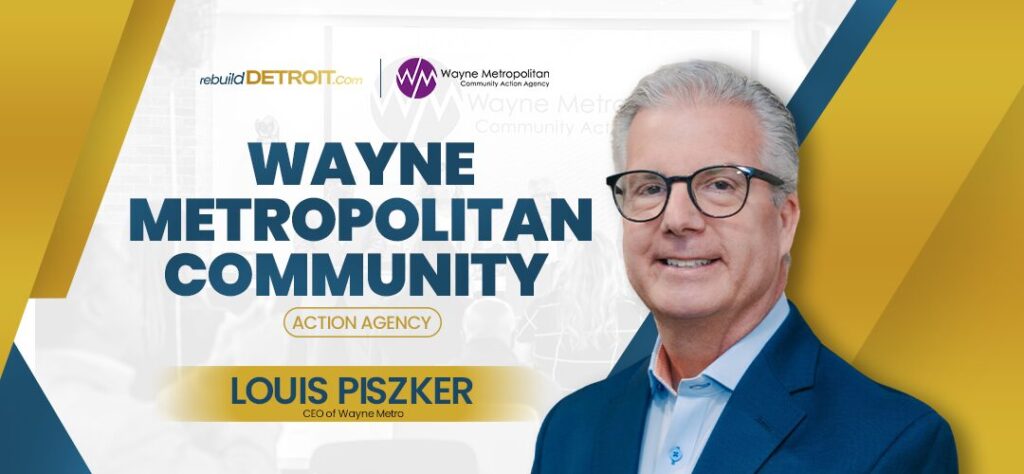
Wayne Metro is proud to be one of the largest nonprofits in Southeast Michigan.
Here, you’ll find devoted volunteers that support the city’s grassroots community violence intervention efforts by offering residents funding, trauma-informed outreach services, and resource management.
They also do their part in addressing the root causes that lead to crime, such as housing instability, poverty, and at-risk youth, even partnering up with local orgs like Denby Neighborhood Alliance to make sure smaller CVI groups across Detroit have the tools they need to make a lasting impact
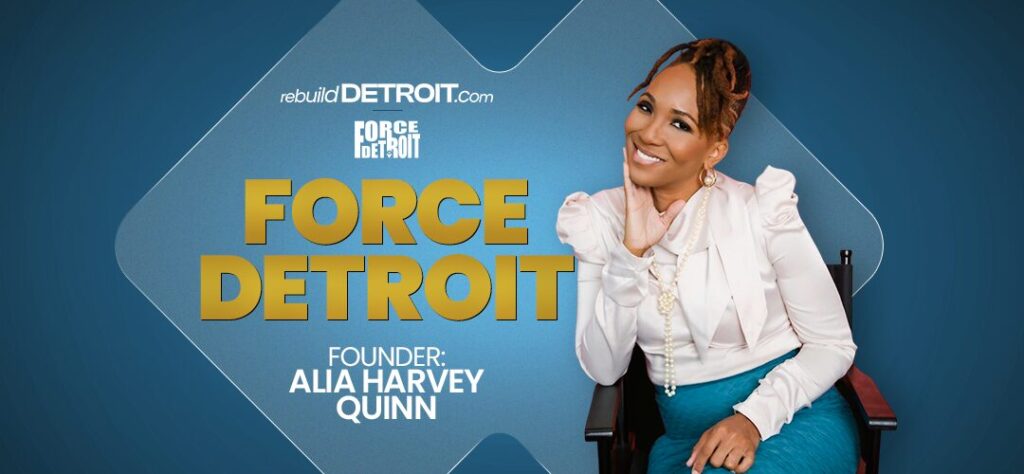
Founded in 2015 by activist Alia Harvey-Quinn, Force Detroit is a CVI that hopes to restore peace to Detroit’s most blighted areas, rebuilding trust in the process.
They don’t rely on police.
Instead, they do what the police often won’t, utilize credible local advocates with deep ties to the very same streets they serve for everything from trauma response to mentorship programs.
Under new leadership since 2025, they continue to lead with dignity, healing, and results.
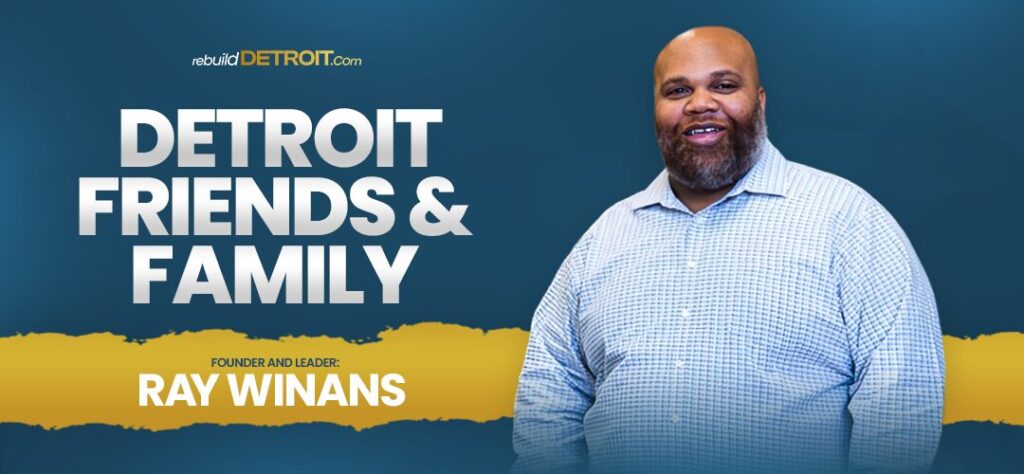
Detroit Friends and Family is a crime prevention and community upliftment organization that firmly believes violence can be stopped with love, not just lectures.
Founded by Ray Winans, the organization is proud to provide everything from gang meditation to court advocacy to jail visitation and neighborhood outreach.
Their “safe surrender” model has also helped reduce violent crime in their zone by an impressive 80%, proving they don’t just wait for youth to show up…they go out and find them themselves, getting to them before the streets can.
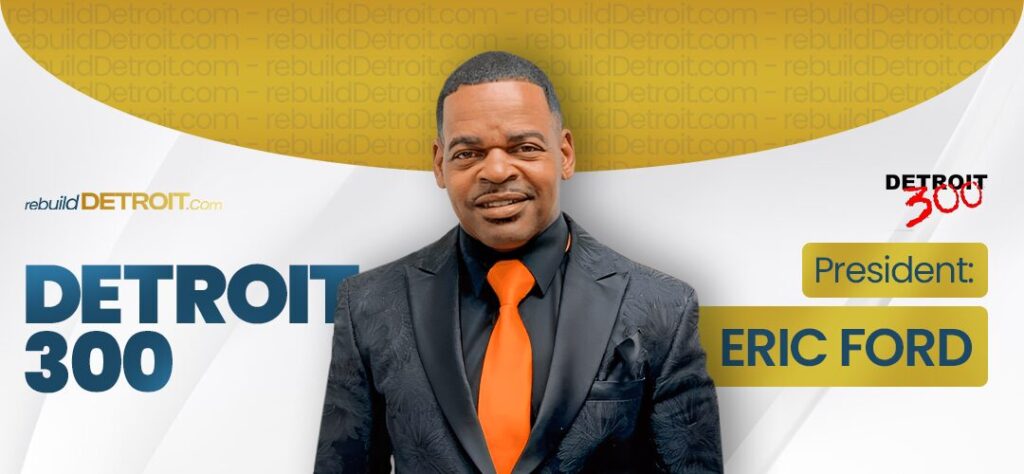
Detroit 300—a neighborhood patrol that utilizes citizen volunteers— is a community violence intervention organization that was founded in the wake of a child’s tragic murder.
Since then, they’ve evolved into the Detroit 300 Community Action Team, their work spanning everything from mentorship to conflict resolution and self-defense classes.
They’re the type of people that always show up – whether it’s 1 PM to talk to troubled youth at a school or 1 AM after a shooting has occurred—they’re always there, no questions asked.
Denby Neighborhood Alliance is a CVI with a mission to transform at-risk youth into future leaders.
Under Denby’s guidance, area teens don’t just attend events – they run them themselves, acting as peace ambassadors and conflict mediators that do everything from organizing walks and peace circles to holding trauma-response training classes alongside block captains.
In short: Denby proves that investing in Detroit’s area youth isn’t mere charity work—it’s strategy in and of itself.
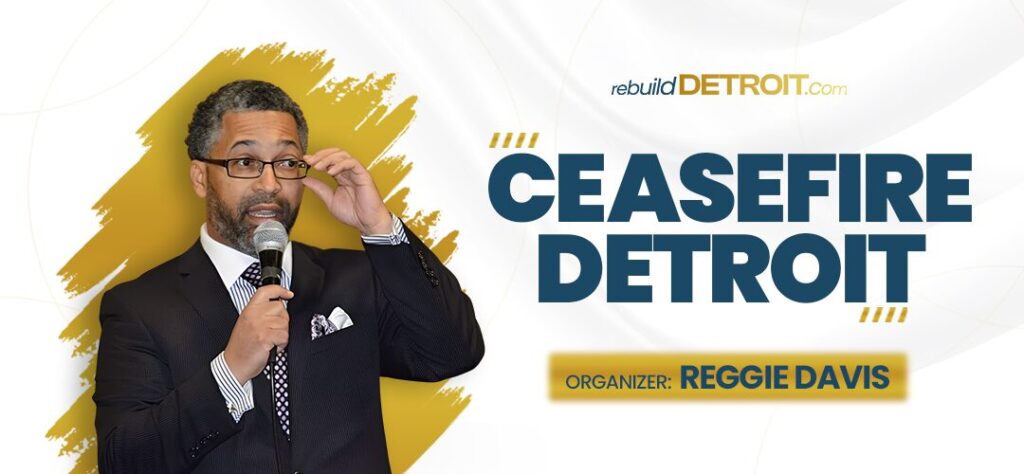
Ceasefire Detroit is the Metro’s longest-standing CVI program, one that brings a little bit of everything to the table: social work services, law enforcement, clergy, and above all else, community outreach.
The organization is best known for providing high-risk individuals with a choice: they can either take full accountability for their actions and work to pave out a brighter future for themselves, or they can become just another statistic.
Though considered controversial to some due to their “scared straight” nature, the organization continues to evolve, partnering with Detroit’s ShotStoppers as well as other local grassroots orgs to stop the next senseless death from occurring before it can.
They may not always have all the right answers, but they always show up with the right question: “what do you need?”
Camp Restore is a faith-based community violence intervention organization that aims to transform Detroit’s most battle-scarred, trauma-filled neighborhoods through hands-on volunteer work.
These are activists that sacrifice their time to do everything from mowing lawns to delivering groceries and rebuilding abandoned homes, beautifying the city’s most blighted blocks and greatly reducing the triggers that lead to violence erupting in the first place.
They also work closely with Denby Neighborhood Alliance, teaming up with them to provide at-risk residents with spaces of healing and safety.
Beat Da Odds is a youth-focused CVI tackling violence head-on, one backed by volunteers that are no stranger to struggle.
In fact, many of them have had to overcome extreme adversity themselves, taking that experience and wisdom into jails, schools, and rec centers to intervene with at-risk youth before the streets can swallow them whole.
Through active mentorship, engaging youth panels, and even a CVI basketball league, Beat Da Odds has proven that early intervention is not just preventive—it’s a vital part of ensuring a brighter future for everyone.
One City, Many Frontlines
In summary, all of these Community Violence Intervention organizations form a living framework of resistance and resilience in a city that has grown far too comfortable with being let down.
These are Detroit’s devoted peacemakers, protectors, possibility-builders – each with their own unique flavor, each united by a shared truth:
No outsider is coming to save Detroit’s most blighted areas.
The people of the city will have to save themselves.



 Please check your email for your login details.