
or

By signing in, I accept the Rebuildetroit.com Terms of Use.

Agent Registration

Find Your Agent Profile

Agent Registration

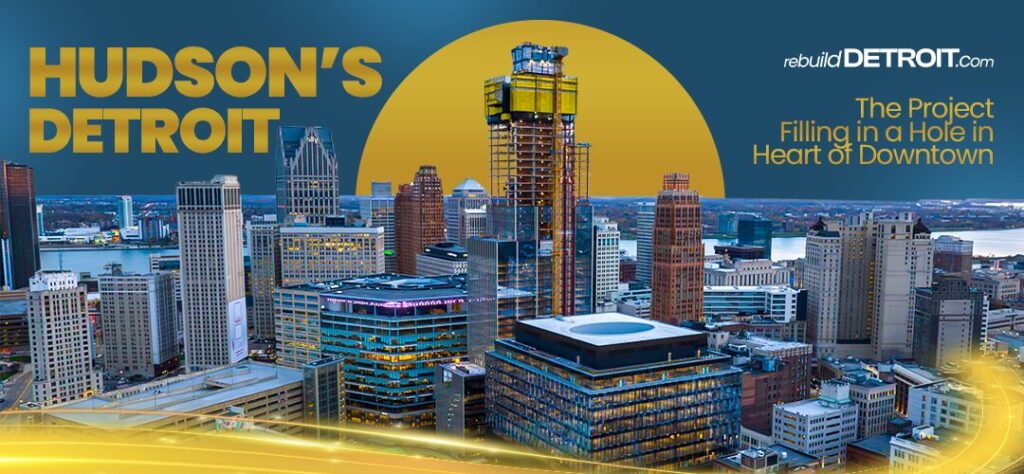
Hudson’s Detroit: the Project Filling in a Hole in the Heart of Downtown

For years, the old Hudson site in downtown Detroit was nothing more than an empty parking lot, leaving many locals wondering, “When will this ever get developed?”

It was a clear reminder of just how far the city had fallen: Detroit’s biggest, flashiest department store reduced to nothing more than a vacant patch of land riddled with signs of blight.

Only now, things are looking up.

A new skyscraper, Hudson’s Detroit, is rising out of that empty canvass, set to open in 2025.

This is no ordinary building.

Hudson’s is expected to house a hotel, close to 100 luxury condos, an office tower, and plenty of restaurant and shop space, which will completely transform the look and feel of downtown Detroit.

On top of that, the headquarters of General Motors is also poised to move to Hudson’s when its development is complete, leaving behind the RenCen to stake their flag in a much more central location – a clear signal that this building matters – and that downtown Detroit is on its way to a major comeback.

Why this Project Hits Different for Detroiters

Hudson’s is a very emotional project for many longtime Detroiters.

The original building was more than just a department store.

It was where families bought back-to-school clothes every year, where couples went out on first dates, where kids pressed their noses against the windows to take in the Christmas displays. 

When it fell in the 1990s, it felt like part of Detroit’s soul came crashing down with it.

With this in mind, this new Hudson’s project feels like the city finally nursing a wound that has long been left open to fester.

The collective hope is that it will lead to more people living in the downtown area and not just visiting, as well as offer plenty of restaurants, shops, and events, which will in turn create lots of new job opportunities for Detroit locals.

Asking the Important Questions

That said, not everybody can afford a million-dollar condo or a posh hotel room, which has some Detroiters watching this project and wondering, “Is this really for us or just another shiny thing for outsiders?”

It’s a fair question – one that the developers will eventually have to answer, but for now, the Hudson project is simply impossible to miss.

Anyone who has been downtown lately has seen it. 

The thing is huge, with many people stopping just to photograph it.

A Promise Made Manifest

Detroiters usually aren’t quick to believe big promises, yet the reality is that the Hudson Tower is one project that is actually panning out exactly as envisioned.

Doors should open by late 2025, and the opening ceremony will have everything from ribbon cuttings to speeches and perhaps even some fireworks. 

Of course, opening day is not the real test.

The real test will be how the place feels about a year or two later.

Will people still be living there, working there, recommending it to visitors?

If the answer is yes, then Hudson’s won’t just be another tall building. 

It will prove Detroit can take its past, rework it, and pave the way forward toward a better future.
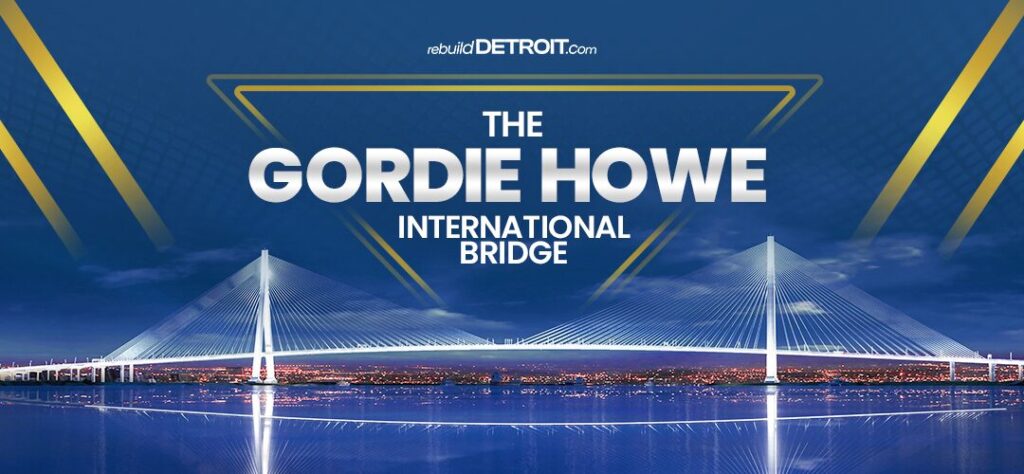
The Gordie Howe International Bridge: A Restored Connection

Anyone who has ever sat in traffic on the Ambassador Bridge muttering under their breath in annoyance knows exactly why Detroiters have been begging for another crossing into Canada for decades now.

That bridge is old, overworked, and feels like it might shake under your tires some days. 

Enter the Gordie Howe International Bridge – a new $4.8 billion project set to open in the fall of 2025.

Giving the People What They Want

Gordie Howe is more than just a bridge.

It’s a new kind of doorway, one located directly across the way from Windsor with more lanes, modernized facilities, and the kind of capacity that can handle the next 100 years of trade and travel between the US and Canada.

Picture a modern, huge suspension bridge with traffic on six lanes and devoted custom plazas on each side – one that doesn’t just serve cars and trucks, but also pedestrians and cycling paths.

It’s one of the largest cable-stayed bridges in North America, which means that when you see it from across the Detroit River it will be just as iconic as the Ambassador. 

Why Gordie Howe International Bridge Matters

Detroit is a border city, and Windsor is our closest Canadian neighbor.

With that in mind, millions of dollars worth of goods travel between the U.S. and Canada every day, and most of it is squeezed over the Ambassador – that’s like putting half of the Midwest supply chain through a straw.

This new bridge changes that.

For businesses it means faster shipping, less gridlock, and a backup crossing if the other one is blocked. 

For regular folk, it means easier trips into Windsor for dinner, concerts, or just to feel like you’re traveling even if it’s only across a river.

This is Detroit saying, “We can play on the global stage, and do it well.”

After all, strong cities attract strong investment.

Moving goods, commuting workers, and whether or not a place is ready for the demands of the future based on its current infrastructure are all factors companies need to consider before doing business with a city.

Lucky for Detroit, Gordie Howe is poised to check all the necessary boxes.

The Long Wait & Pushback

Ground was broken on Gordie Howe in 2018, and work has continued slowly since then.

Drive down Delray in southwest Detroit and you’ll see new interchanges and construction sites. 

That said, the side effects of its construction for those who live nearby have been mixed. 

On the one hand, it’s brought plenty of new jobs to an area that has long been ignored.

On the other, concerns about traffic, pollution, and whether the average Detroit local will actually benefit from all this high-end investment linger.

It’s that classic Detroit conundrum – progress versus those who actually get to enjoy it.

What Comes Next

As previously mentioned, Gordie Howe International Bridge is officially set to open in the fall of 2025, with a ribbon-cutting ceremony, speeches, and maybe even a ceremonial hockey puck drop all in the works.

In short, It isn’t just concrete and cables.

It’s a symbol of connection, bringing together Detroit and Windsor in a modernized way.

So don’t fret next time you get stuck in line on the Ambassador – simply exhale and rest easy knowing help is coming.

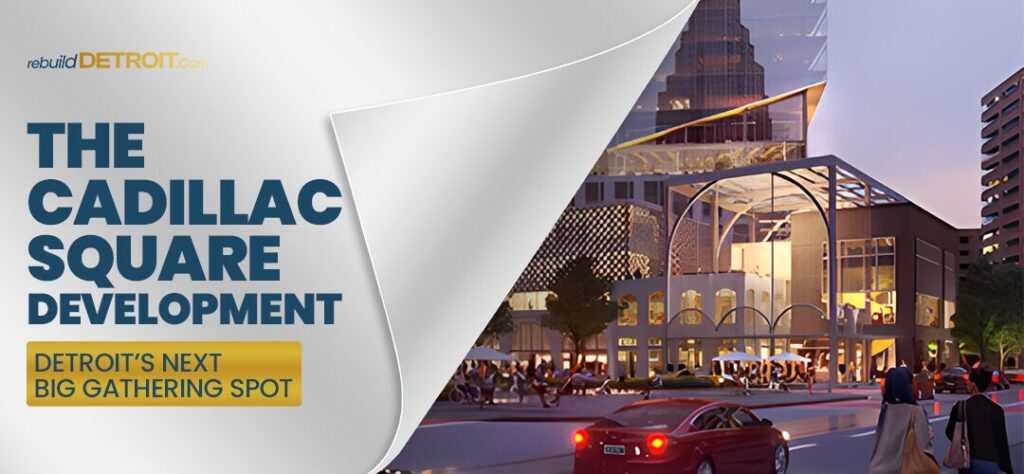
The Cadillac Square Development: Detroit’s Next Big Gathering Spot

If you’ve walked through downtown Detroit near Campus Martius in recent years, chances are you’ve probably seen the empty stretch of land where the Monroe Blocks were supposed to rise.

It always felt like one of those “Detroit someday” stories that never quite materialized. 

That is until the moment comes when the plan gets real.

Starting in 2025, the Cadillac Square Development project has been off and running – and it looks like it might very soon entirely change how people experience downtown.

What’s Coming

Cadillac Square’s big headliner is an immersive entertainment venue called “Cosm.”

For those who haven’t heard of it: think giant wraparound screens, mind-bending visuals, and tech so real you feel like you’re in on the show.

Cosm will be one-part planetarium, one-part concert hall, and one-part futuristic arcade, a one-of-a-kind setting for live events, sports, or experimental art unlike anything residents have ever seen before.

There will also be market/retail spaces, restaurants, and other cool hangouts, although it’s marketed as more than a development – it’s being pitched as a destination – the kind of place where locals bring out-of-towners to show off what Detroit is all about.

Why It Matters

The downtown Detroit area has always been built for crowds.

It’s the kind of place where you’ll find everything from food trucks to sand volleyball to ice skating and concerts, all of which make Campus Martius and Cadillac Square come alive every summer.

The Cadillac Square development will simply shift a major missing piece into place, bringing a permanent, year-round venue that will draw people downtown even on a Tuesday night in the dead of winter.

The Long Road Here

Years ago, the city of Detroit was busy planning the Monroe Blocks – big towers, offices, housing – but like many Detroit mega-projects, it stalled. 

Since then, the developer, Bedrock, has revived the project, but instead of dumping out more corporate towers they have shifted focus to what people truly want: entertainment, food, experiences.

While the Cadillac Square development is set to be done by late 2025, Cosm itself will open in 2026, one of the most anticipated attractions of Detroit’s new age.

With that said, with such projects the question is always: who is this really being built for – locals, or tourists?

After alI – Detroit city officials have long been criticized for placing too much stock in the interests of out-of-towners and suburban commuters and not enough in long-time Detroit residents. 

With that in mind, if the Cadillac Square Development is just another expensive playground, it’ll likely flatline before it ever truly finds its footing.

However, if the market spaces themselves feel accessible – local vendors, local Detroit chefs, cheap places to eat – then it might just be able to strike that perfect balance between a flashy attraction and a beloved community hub.

Only time will tell.

The Bigger Picture

Along with the Cadillac Square Development, Hudson’s Detroit is also set to open in 2025, as well as other highly anticipated projects like the University of Michigan Innovation Center and the Music Hall expansion, all of which are bringing more buzz to downtown Detroit than it’s experienced in decades. 

Cadillac Square’s Cosm fits right into that momentum, because it’s one of the most entertainment-heavy projects on the horizon.

It’s not just a shiny tower. 

It’ll be a place you can go, grab food, watch something epic on a screen the size of a building, and then enjoy a drink – a place where memories will be formed, not just another point on a map.

Once completed, it will turn a part of downtown Detroit that has long been a dead zone into one of its busiest corners.

Stay tuned – big things are coming.

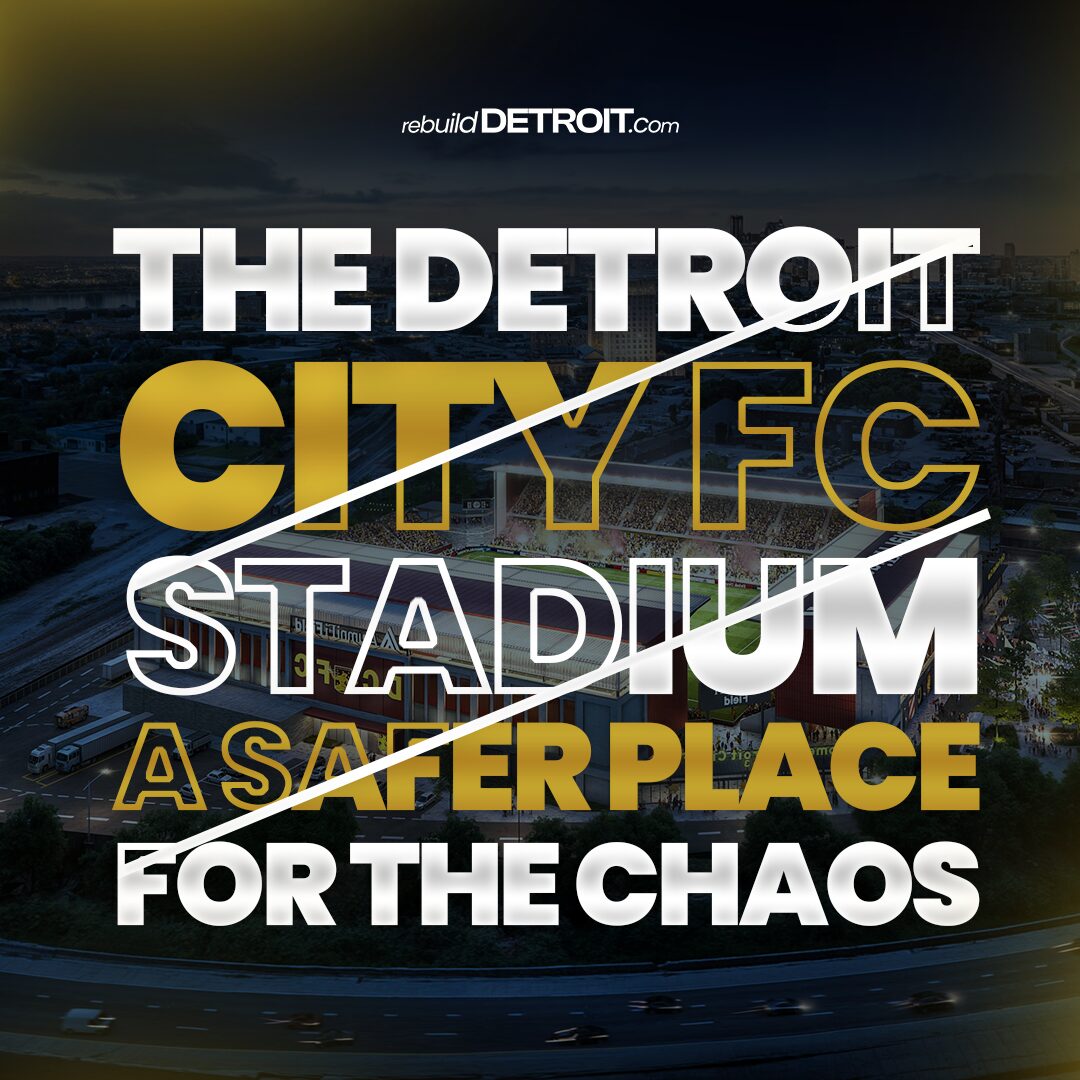
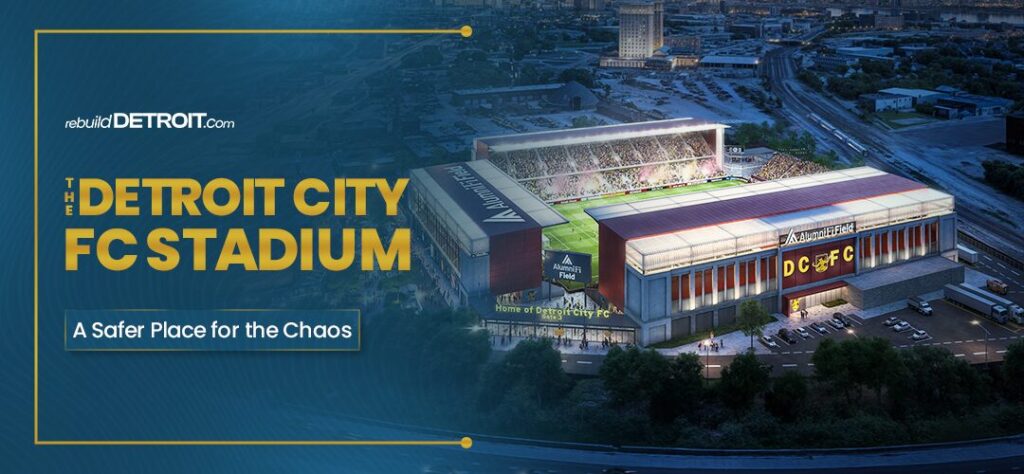
The Detroit City FC Stadium: A Safer Place for the Chaos

Detroit City FC games at Keyworth Stadium in Hamtramck are a lot different than any other sporting event.

It’s loud.

It’s messy.

There’s smoke coming from the stands, drums pounding for 90 minutes, kids on shoulders waving flags, and people chanting.

It feels alive in a way the other big four professional teams do not.

Keyworth Stadium is also far older than most stadiums.

You can feel it in the seats, in the crowded bathrooms, in the way the whole place seems to shake when everybody jumps at once.

It has character – yes – but it’s also running on borrowed time…which is precisely why the fact that DCFC is getting its own stadium (in Corktown on the site of the old Southwest Detroit Hospital) is such a big deal.

The team isn’t just getting a level up.

The entire city is.

Why Detroit City FC Stadium is Such a Major Development

Anyone who has ever driven past the Southwest Detroit Hospital knows its story:

Busted out windows, weeds crawling over brick – an abandoned lot just waiting for someone to decide what to do with it.

Only now, it’ll be knocked down and replaced with a high-traffic soccer stadium.

That’s Detroit in a nutshell. 

Something broken, something left behind, reworked into something loud and new.

Soon, fans of one of Detroit’s most talked-about sports teams are going to walk into a stadium built just for them – not for corporate sponsors or investment bigwigs.

Corktown already feels like old Detroit meets shiny new Detroit, but this stadium could become one of its busiest venues if it’s willing to lean fully into the chaos that makes DCFC what it is.

Because if it’s too clean, too sterile, too “corporate”, it simply won’t have the same energy the current Keyworth stadium brings.

The fact of the matter is, no one who truly loves DCFC wants “family-friendly” chants on a jumbotron and security telling people to sit down. But if they build this place up right, keeping the smoke, the chanting, and the grit, it’s bound to be a win. 

The Timeline

Detroit City FC stadium is set to be finished by the spring of 2025, with doors opening in 2027.

It may seem like a long wait, but Detroiters are used to that by now, and when it comes to a project this exciting most are more than willing to stick it out.

In short, DCFC is more than just a team. 

It’s a perfect mirror of the city itself:

Scrappy, underfunded, underrated, and far louder and prouder than anyone would ever expect.

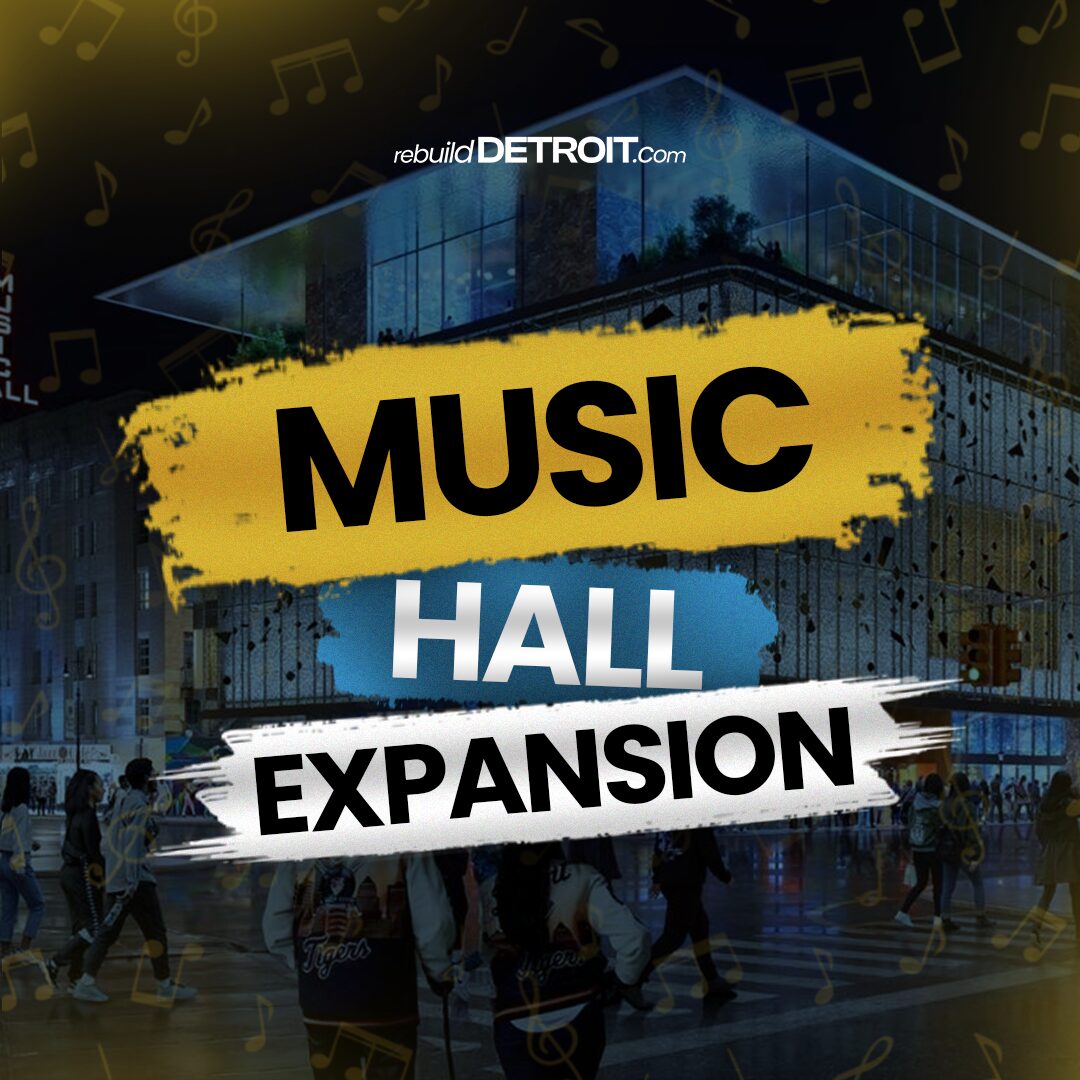
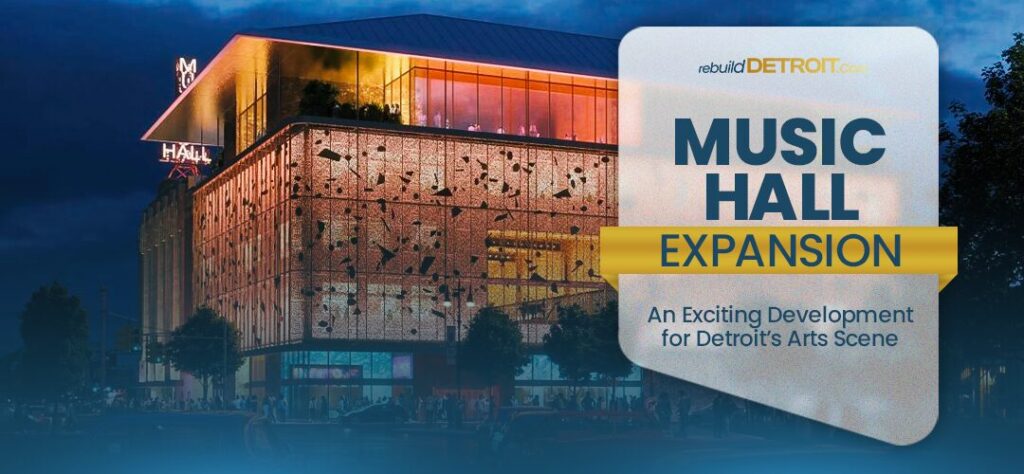
Music Hall Expansion: An Exciting Development for Detroit’s Arts Scene

Detroit’s iconic music hall sneaks up on you. 

It looks pretty modest from the outside – just one more old building downtown nestled between parking lots and office towers. However, upon entering, you can feel it – the history, the style, the sound emanating from the walls. 

It is one of the few genuine reminders that Detroit has always been a music city first.

Now, it’s being updated.

An additional 100,000 square feet that will cost about $125 million total is slated to be finished by 2027.

Developers say this will include new concert halls, rehearsal studios, and plenty of space for rising performers looking to strengthen their craft, something long overdue for a city that prides itself in being a safe space for musicians. 

After all, Detroit has a wealth of talent. 

Every kid who has ever picked up a guitar, learned piano in a church basement, or started rapping with friends in a garage is proof of that, and yet, there simply aren’t enough active venues to accommodate this degree of raw ingenuity.

Small performance spaces never have enough room for the kinds of crowds many artists attract. The Fox Stadium doesn’t have enough seats, and the current Music Hall is far too compact.

This expansion feels like a solution to this issue.

Sure, we’ve all seen “arts expansion” projects that have led to nothing more than ritzy galas and donor dinners rather than actual opportunities for regular people to create and experience art, but Detroit has always been different…it has never been a city that is only welcoming to the rich and famous. Plenty of its biggest music legends started out as complete unknowns, and this new music hall development hopes to be one of the pillars behind the rise of an entirely new generation of artists.

It’s a place intended for Detroit children with a deep love of music.

A place where working musicians can go to grind it out week after week.

And an affordable option for artists working on a tight budget who can not necessarily afford to shell-out big bucks for a Broadway ticket just to experience something live and real.

You can see construction booming everywhere you go downtown lately – Hudson’s tower, the University Project, even the new soccer stadium.

Most of it is about business, housing, or just commercial entertainment, but this expansion is one of the few that deals with culture – and above all else, keeping Detroit’s soul alive even as its skyline radically changes.

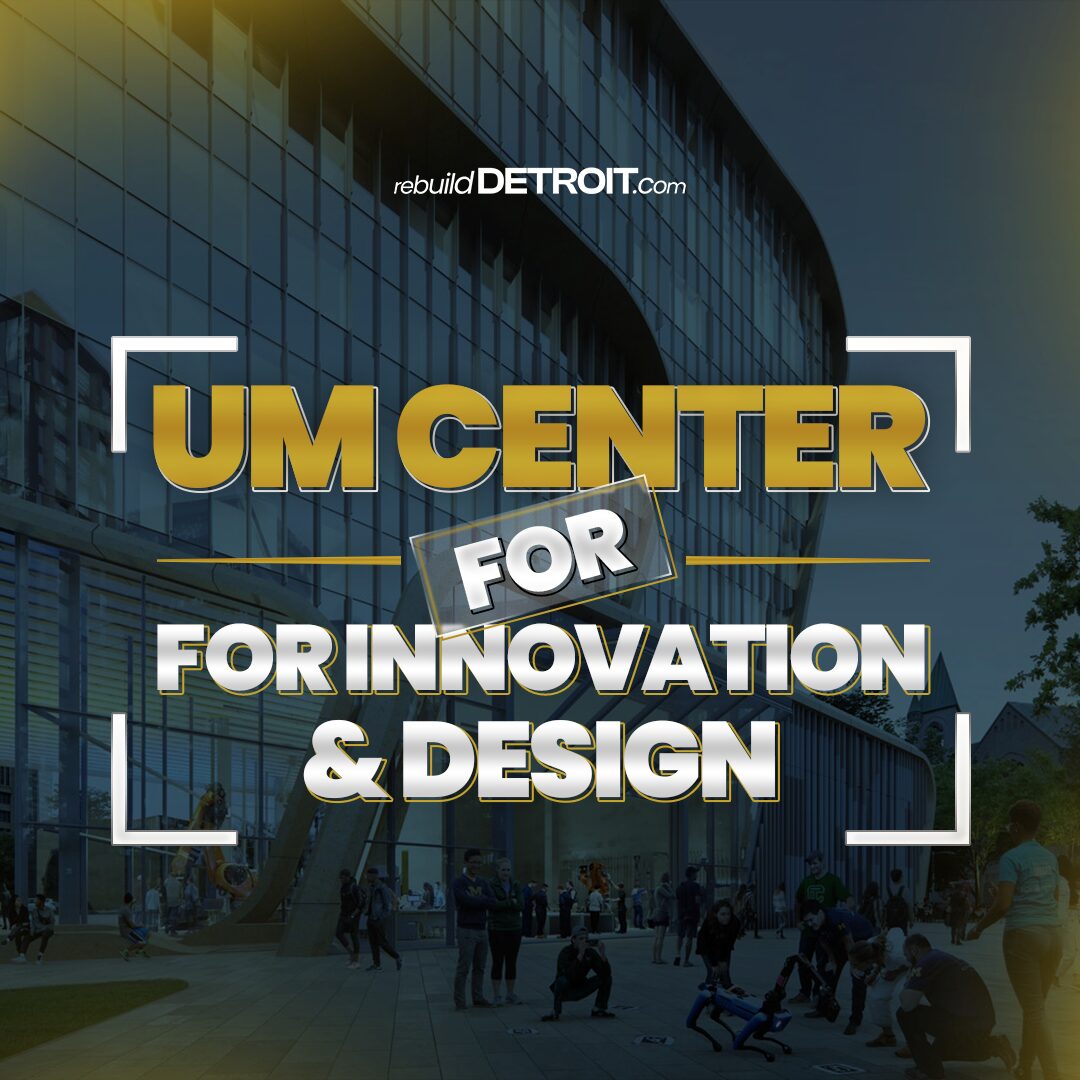
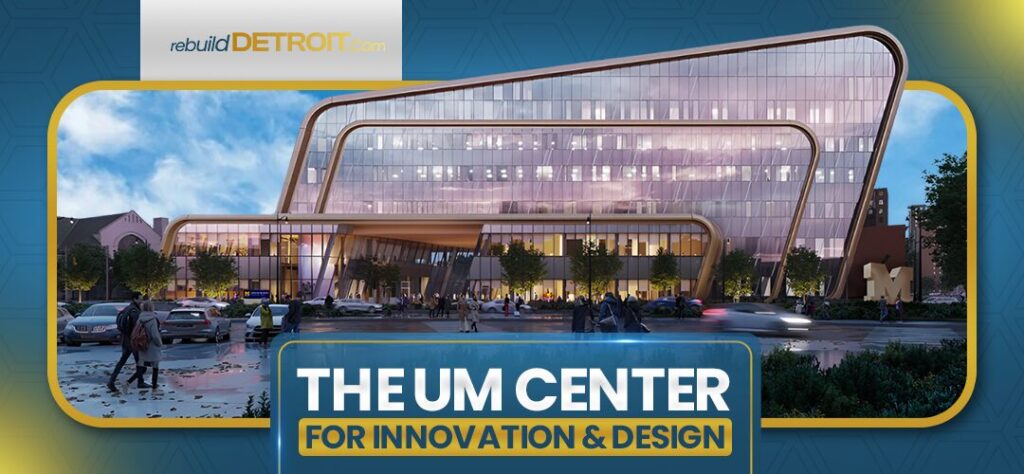
The UM Center for Innovation & Design

Detroit has been waiting for a genuine research hub for years. 

Now, the University of Michigan is staking a claim for one in downtown Detroit, which will be called the UM Center for Innovation & Design, a building that started construction in early 2025 and is set to be finished by 2027 – the kind of place where students, scientists, and businesses will all have a place to call home.

The pitch is straightforward: Detroit has intellectual capital, but the brains often get educated and then leave for nearby cities like Ann Arbor or out-of-state locations, typically on the east or west coasts.

The hope with the UM Center for Innovation & Design is to encourage students to stay in Detroit and build something in the city that nurtured them, rather than graduating and quickly leaving. 

Imagine: labs, classrooms, startup spaces, and partnerships with local companies – a place where research doesn’t just sit on paper but actually creates new jobs and businesses.

The project is backed by the University of Michigan as well as the Ilitch family, which may raise concerns among some locals, given the Ilitch family’s reputation for not always meeting expectations with their projects in the Metro area. 

However, the fact that this is a University of Michigan development gives it more credibility, as the University of Michigan is not known for letting its reputation rest on unfulfilled promises.

Moreover, anyone who has driven near District Detroit recently knows that the area is in dire need of revitalization.

Outside of the arena and some new bars and apartments, there are still many empty lots where nothing is happening, and the addition of a large research center could bring much-needed balance. 

Picture it: students walking to class, tech startups renting offices, and restaurants staying open past dinner time.

The success of the UM Center for Innovation & Design ultimately depends on the long-term vision of its developers.

If it’s just another Ann Arbor satellite dropped into town or a glass box for a select few, it will likely fail. But if it feels welcoming and inclusive, it may serve as the encouragement some students need to stay in Detroit and put down roots, giving the city the research anchor it has wanted for decades.

We’ll know whether it has succeeded by 2027. 

For now, it’s just another crane in the sky…one that may very well play a hand in shaping Detroit’s future.

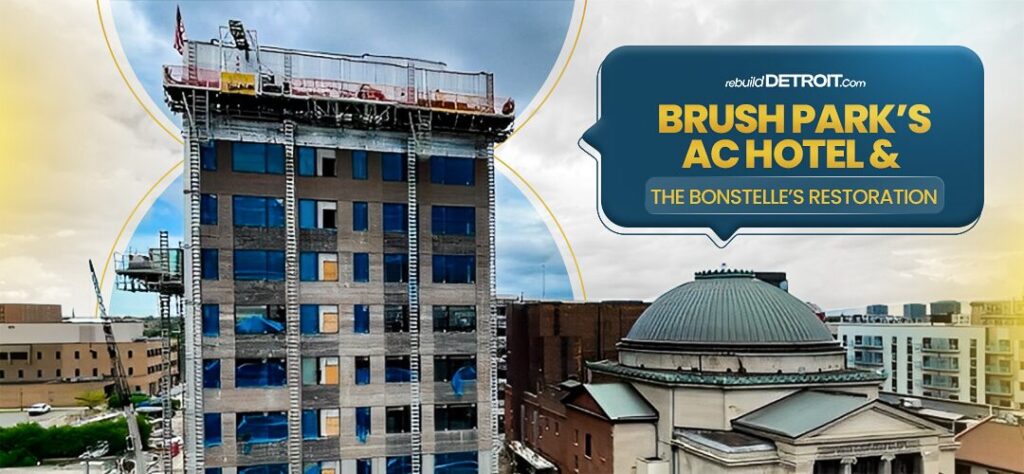
Brush Park’s AC Hotel & the Bonstelle’s Restoration

If you’ve spent any amount of time in Detroit’s Brush Park area since early 2024, you’ve probably seen the signs of it changing fast.

What was once a smattering of empty lots that were the former home to old mansions will now be a hub of townhomes, restaurants, and new apartments, including the recently opened AC Hotel and the restoration of the old Bonstelle Playhouse.

The AC Hotel has 154 rooms and a clean, modern design that is already attracting business travelers and out-of-towners who want to be central to downtown.

As for the Bonstelle, this historic synagogue turned theater turned Wayne State performance hall for student productions was sitting vacant and closed off for years prior to its restoration.

Considering the fact that Detroit tends to let old buildings rot until there’s no saving them, any second chance a historic property like the Bonstelle gets is considered nothing short of a miracle.

After all, this isn’t some random relic – it’s one of Detroit’s most beloved cultural backbones – and it being lit up and accepting patrons again means Brush Park has a real entertainment anchor beyond just the usual restaurants and coffee shops.

Another huge plus is that Brush Park is located close to Detroit’s most beloved arenas and stadiums, making it a very high-traffic area for sports fans, concert-goers, and visiting families alike.

The AC hotel gives them somewhere to lay their heads, but the Bonstelle theater feeds their souls.

The Balance

As uplifting as the AC Hotel and the Bonstelle renovation may seem, there’s been grumbling already:

“Oh greattt…another hotel, another revitalization project…”

It has many Detroit locals wondering who benefits: locals, or tourists?

After all, many Detroit natives can’t even afford to live in the Brush Park area, and another boutique hotel and a fancy theater certainly won’t improve matters any.

That said, many other Detroit natives are hopeful, viewing the Bonstelle restoration in particular as the city saving something iconic that may have otherwise been lost to time – a place for locals to attend the theater in the same historic space where their parents and grandparents did decades ago.

In short: Brush Park just got a major boost…only time will tell if these two projects will prove to be the success developers were hoping.

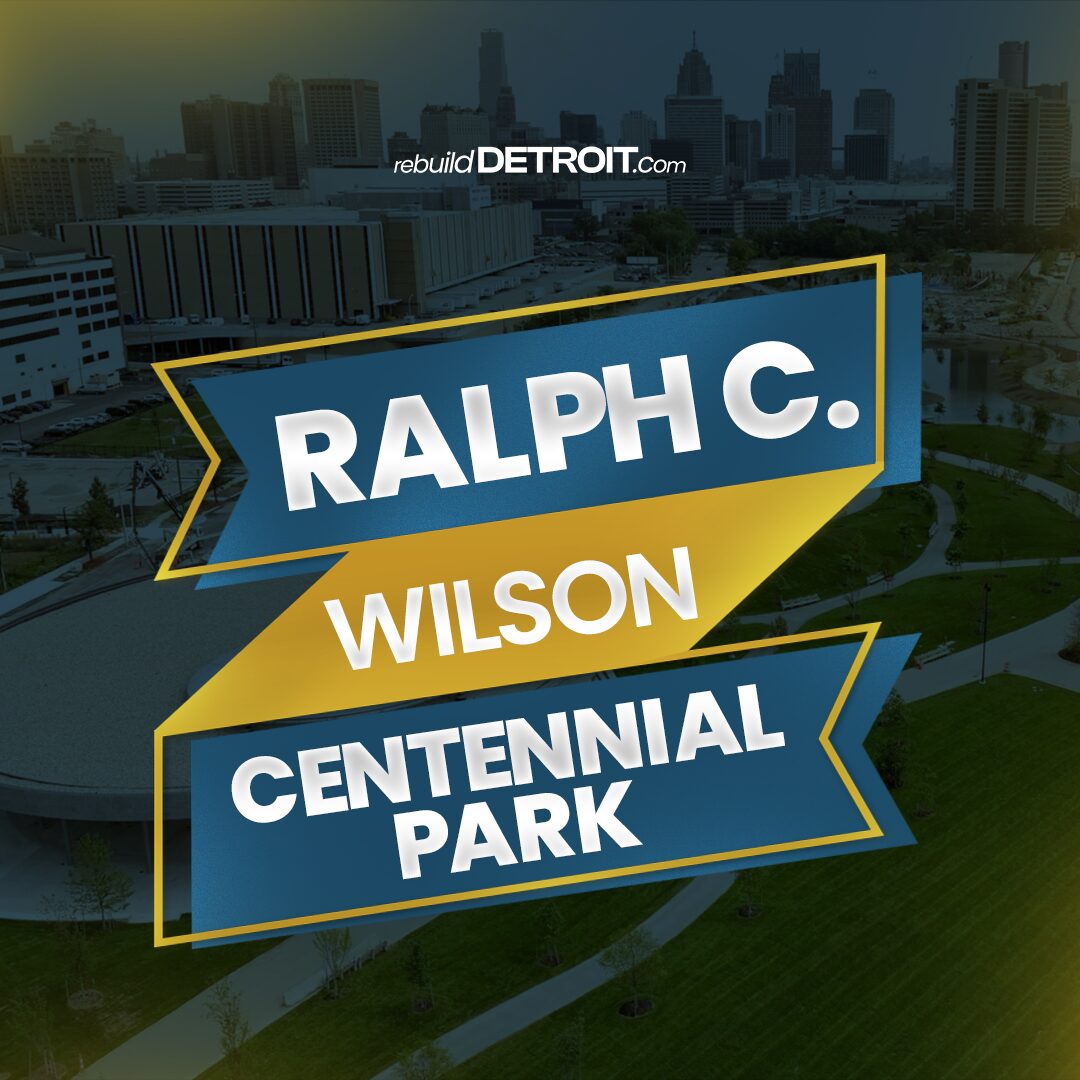
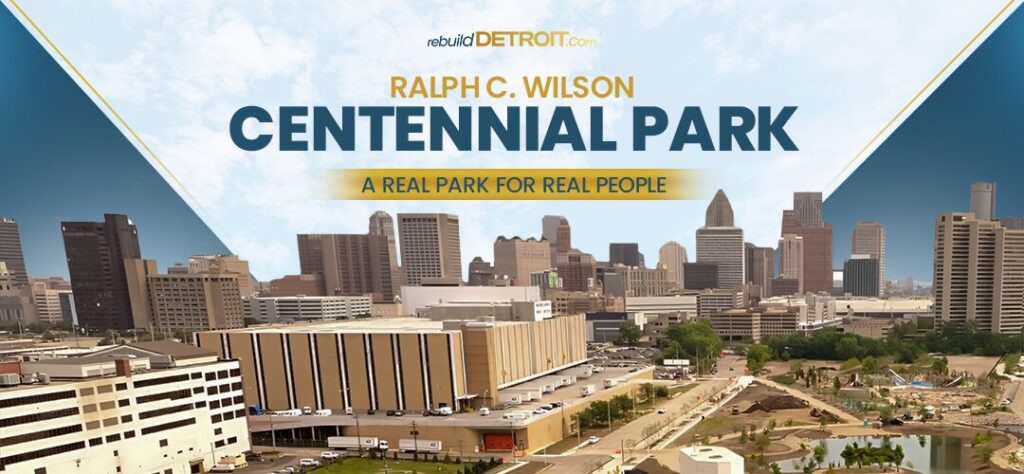
Ralph C. Wilson Centennial Park: A Real Park for Real People

Anyone born and raised in Detroit knows that unless you’re heading to Belle Isle on a trip, the river isn’t exactly a huge part of day-to-day life.

Water is mostly just something most people drive right past, especially since the majority of the Detroit River is lined with warehouses, fences, and factories.

However, that’s changing fast.

The Ralph C. Wilson Centennial Park is the biggest thing to hit Detroit’s west riverfront in years. 

It will turn 22 acres of bare land into one of the most people-friendly parks the city has ever had by the time it’s completed, which developers say will likely be in the fall of 2025.

We’re talking gardens, a big lawn, a water play area for kids, basketball courts, walking paths, trees – plenty of open space right along the river that will be accessible to everybody, not hidden behind a paywall or tied to some new ritzy development intended only for the rich.

You won’t need a wristband or a reservation. 

Just show up with your kids, your dog, your lunch, your thoughts, and enjoy the great outdoors with a front-row view of the water.

As for its namesake, the park is named after Ralph Wilson, the Buffalo Bills owner raised in Detroit whose foundation returned a huge chunk of his money back to the city after his death.

That donation and Ralph’s legacy as a whole led to this park – a gift from a man who considered Detroit to be a huge part of his come-up story.

Construction has been going on since 2022, and you can see signs of the park’s progress anytime you’re down by the river. 

It isn’t just a bunch of drawings on a board – it’s a place that will bring Detroiters together in a way that concrete and buildings alone cannot.

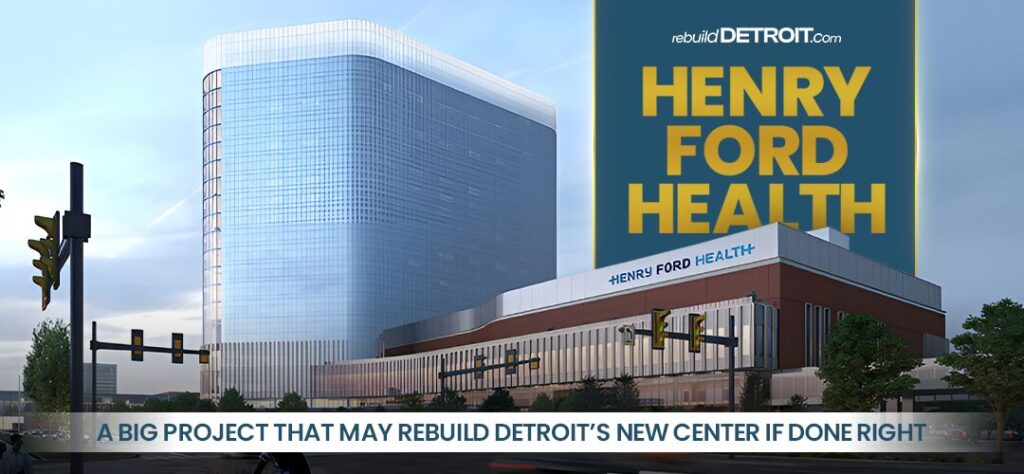
Henry Ford Health: A Big Project that May Rebuild Detroit’s New Center If Done Right

Detroit’s New Center area has always felt like it’s lacking something.

On one side, there’s the Fisher Building, on the other, the hospital, but in between, there are endless parking lots, chain-link fences, and vacant lots.

It’s not quite Midtown, not quite downtown, and for years, it’s been waiting for a developer to take notice and do something about it.

Now, that may finally be happening. 

Henry Ford Health is investing more than $3 billion into a $1.5 billion redevelopment of their campus and surrounding area, which they are calling the “Future of Health.” 

This is more than just a marketing line; it means a new hospital tower, research facilities, residential buildings, retail, and public areas – turning a chunk of the New Center into a full-on medical innovation district.

The first major piece will be the hospital itself. Construction will begin vertically in mid-2025, with the new hospital expected to open by 2029. 

It will replace and enhance what’s currently there, updating the infrastructure, patient care areas, and adding the kind of technology and layout you’d expect from a 21st-century facility.

However, this isn’t just about medicine.

Mixed-income housing and restaurant plans are also in the works, along with the overall redevelopment of the entire neighborhood. 

This is significant, as it means what is currently New Center – a place people mostly just drive into for work or appointments – may finally be backed by a real sense of community that will make them want to stay after hours.

That said, like with all major redevelopments that happen in Detroit, there are obviously questions being posed, such as:

Will longtime Detroit residents benefit from Henry Ford’s rebuild, or is this just another project to make the city appealing for outsiders and investors that will push natives out, as seen elsewhere in the city?

In response to these concerns, Henry Ford says they are working closely with the community and plan for equity, but Detroiters are used to hearing that.

What really matters is follow-through.

This project could really change the north side of the city if done right. 

Think: More jobs. Better care. An actual neighborhood feel. 

And above all else…the kind of investment that sticks for decades to come.

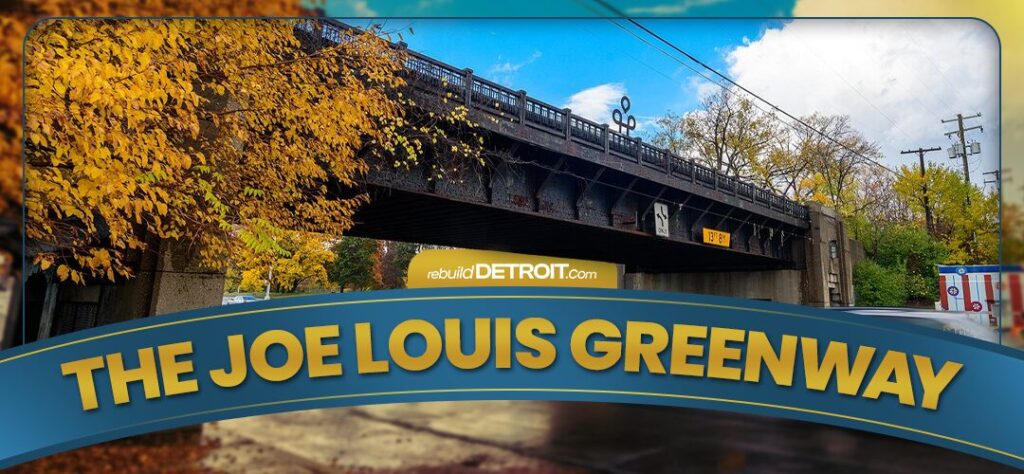
The Joe Louis Greenway

It’s impossible to grow up in Detroit and not know about Joe Louis.

He’s more than a statue downtown; he’s a symbol – of power, determination, and someone who fought his way out of the city and into the annals of history.

With that in mind, the city’s decision to name its new trail system after him makes sense.

It’s huge, ambitious, and set to connect parts of Detroit that have never before been connected – a 27.5-mile greenway that will wind through neighborhoods and connect them to the riverfront, parks, and each other.

It’s no quick sidewalk fix; it’s a new main line for the city of Detroit and a new way to travel the city without a car, one that is expected to be well used by bike riders, joggers, families, and anyone who prefers commuting by foot – a rarity for big city living.

After all, Detroit has always been a car town. 

Walk anywhere and you’re taking a risk – there are no sidewalks, traffic is always flying by, and there’s nothing to stop commuters who aren’t paying close attention to the road from getting seriously injured. 

A true trail changes everything, affording the safety measures many Detroiters have long been asking for.

Why It Matters

In short, the Joe Louis Greenway is about more than just recreation. 

It’s about access, allowing neighborhood children to ride their bikes to parks they’ve possibly never even been before and older residents to walk there safely. 

It’s a perfect example of how you build a city up brick by brick, properly navigating freeways and putting to use vacant lots.

Soon enough, Detroiters will be able to tell someone outside the city that Detroit boasts one of the nation’s largest urban greenways. 

Not only that, but some residents have even been allowed a platform to offer their input on the trail’s development, from where it will run to what features will come along with it, allowing them to feel as if they have some say in the process and reassuring them that the trail won’t lead to the displacement that’s so commonly seen when major cities build new greenways.

The Work Ahead

Pieces of the Joe Louis Greenway are already open, even though it’s not entirely finished. 

After all, building 27 miles of interconnected paths takes time, money, and patience.

This is a loop that connects Southwest to the West Side, Highland Park to Hamtramck, and all of those areas directly to the river.

It’s a trail named after a man who carried Detroit’s name clear across the world, and though it’s far from done, big things are coming.

It’s much more than just another construction project.

It’s a new way of moving, seeing, and connecting – which is really what Joe Louis stood for above all else:

Putting up a fight, bringing people together, and showing the world what Detroit is capable of accomplishing even in the face of extreme adversity.